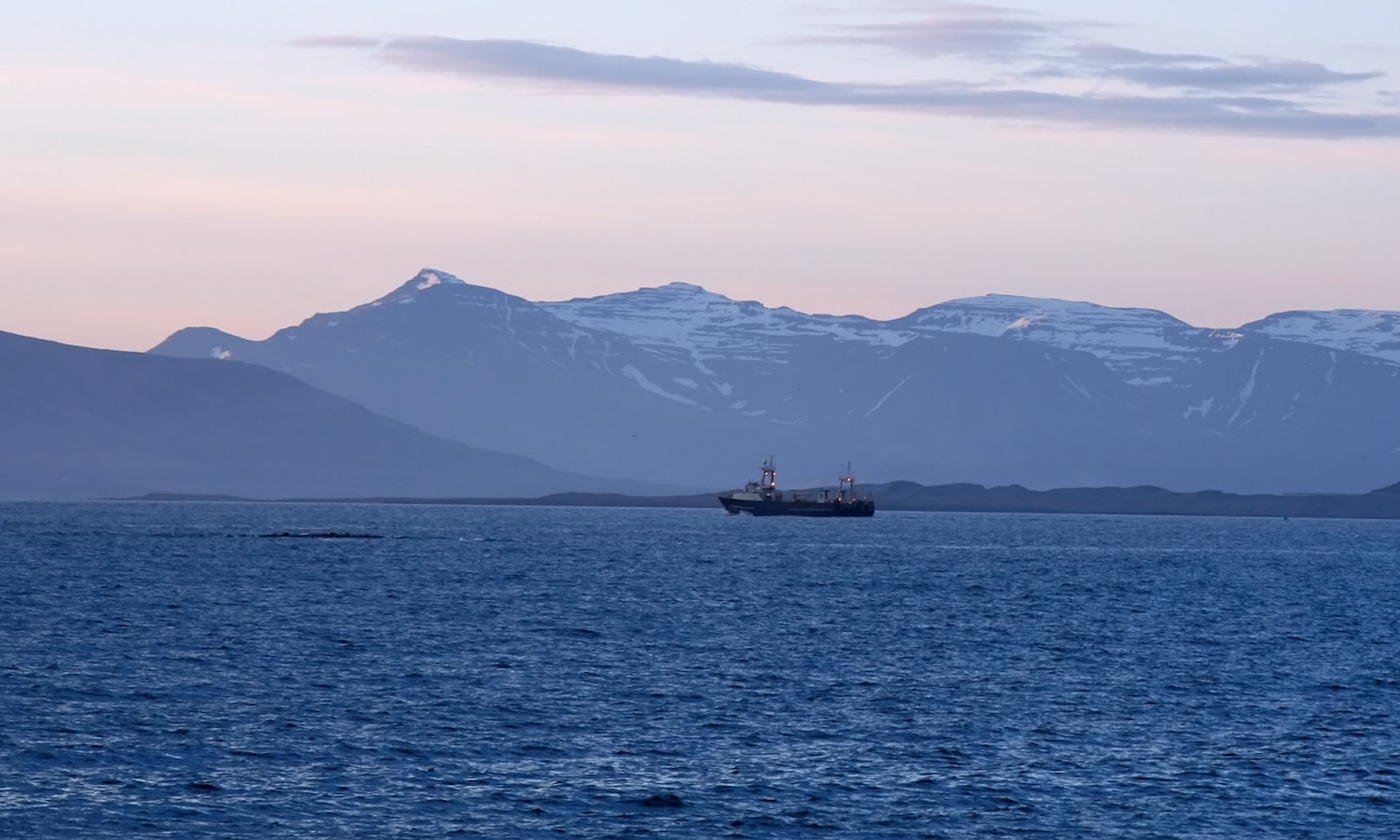
The 100% Fish Program, created by the Iceland Ocean Cluster, is working to transform fish byproducts into new economic value chains. The program is committed to using every part of the fish, from eyes to livers to skin, to reduce food waste while helping breathe new life into coastal economies.
Fishing is the pillar of Iceland’s economy, accounting for 40 percent of export earnings, according to the U.N. Food and Agriculture Organization.
In 1983, Iceland introduced a temporary quota system to protect declining fish stocks, setting a Total Allowable Catch (TAC) for the first time. It became permanent in 1990 as an Individual Transferable Quota (ITQ) system, with TACs now issued annually based on scientific research.
While this was great news for the conservation of Iceland’s fisheries, it left fisherfolk and the industry asking “how do we do more with less?” Alexandra Leeper, CEO of the Iceland Ocean Cluster, tells Food Tank.
In 2011, Thor Sigfusson started the Iceland Ocean Cluster. His doctoral research revealed that companies in natural resource industries tended to shy away from networking, preferring to close off markets and keep others out. According to Leeper, Sigfusson wanted to highlight existing work and identify entrepreneurs, fishing businesses, and researchers who could drive further innovation once connected.
The 100% Fish Program began with high-volume, lower-value applications, such as streamlining fillet processing to preserve more meat. It championed drying fish heads for export. Eventually, the cluster began working toward low-volume, high-value innovations, like medical skin grafts, pharmaceuticals, and supplements like Dropi, a cold-pressed fish oil.
“It’s also building on heritage,” says Leeper, pointing to fish skin leather as an example of a traditional product reimagined as a modern textile.
The Iceland Ocean Cluster estimates that in Europe and North America, over 50 percent of a cod’s material weight is wasted in the production process. That waste represents not just lost material but lost economic potential.
“What we calculate today is that there’s about US$5,000 being created from a single fish when we look at all these potential opportunities,” says Leeper. For comparison, in the 1970s one Icelandic cod was worth roughly US$12 in its entirety.
Organizations around the globe reach out to the Iceland Ocean Cluster to launch their own 100% Fish Programs. There are now sister ocean clusters on five continents. Each new ecosystem offers a unique opportunity for the Icelandic team to work alongside local industries, governments, and community partners to tailor the program to their circumstances.
“The first place we really tested this out and built an understanding of how to adapt the steps and lessons from Iceland and cod to a new, very different ecosystem was in the Great Lakes,” says Leeper.
David Naftzger is the Executive Director of Great Lakes St. Lawrence Governors & Premiers, where, with the support of the Iceland Ocean Cluster, he helped launch the 100% Great Lakes Fish Project. He says there have been significant environmental gains as some of the program’s most immediate and important wins.
Since 2022, more than 40 companies and organizations, representing over 90 percent of the region’s commercial fish production, have signed the 100% Great Lakes Fish Pledge to end landfilling and fully utilize each fish by the end of 2025.
“Environmentally, landfilling organic waste is highly emissions-intensive, generating nearly 400 kg CO₂e per ton,” Naftzger tells Food Tank. “Diverting fish waste from landfill to even a low-value alternative, such as composting, can reduce emissions by roughly 90 percent.”
For the Namibia Ocean Cluster (NOC), which brings together six of the nation’s largest vertically integrated hake fishing companies—including Hangana Seafood and Seawork Seafood—much of the work comes down to building trust. “Generally, all of Namibia’s fishing companies are fiercely competitive, and the culture is one of operating independently,” Pierre Le Roux, Chairperson of the NOC, tells Food Tank.
“In the hake sector alone, at least 30 percent of the fish is lost as waste,” says Le Roux. “In this day and age, how many industries can afford to throw away 30 percent of their product?” He sees collaboration as the key, arguing that if more companies join the NOC, the shared research and marketing costs of developing high-value products from processing waste become manageable for everyone.
These cross-sector connections are one of the program’s greatest assets going forward, Leeper believes. The Iceland Ocean Cluster is currently developing a 100% Fish Program playbook to help disseminate knowledge and build systems that benefit both the environment and the evolving needs of the global fishing economy.
“Sharing these stories,” says Leeper, “and sharing them in unlikely places and connecting with people is hugely powerful.”
Articles like the one you just read are made possible through the generosity of Food Tank members. Can we please count on you to be part of our growing movement? Become a member today by clicking here.
Photo courtesy of Ville Oksanen, Wikimedia Commons