
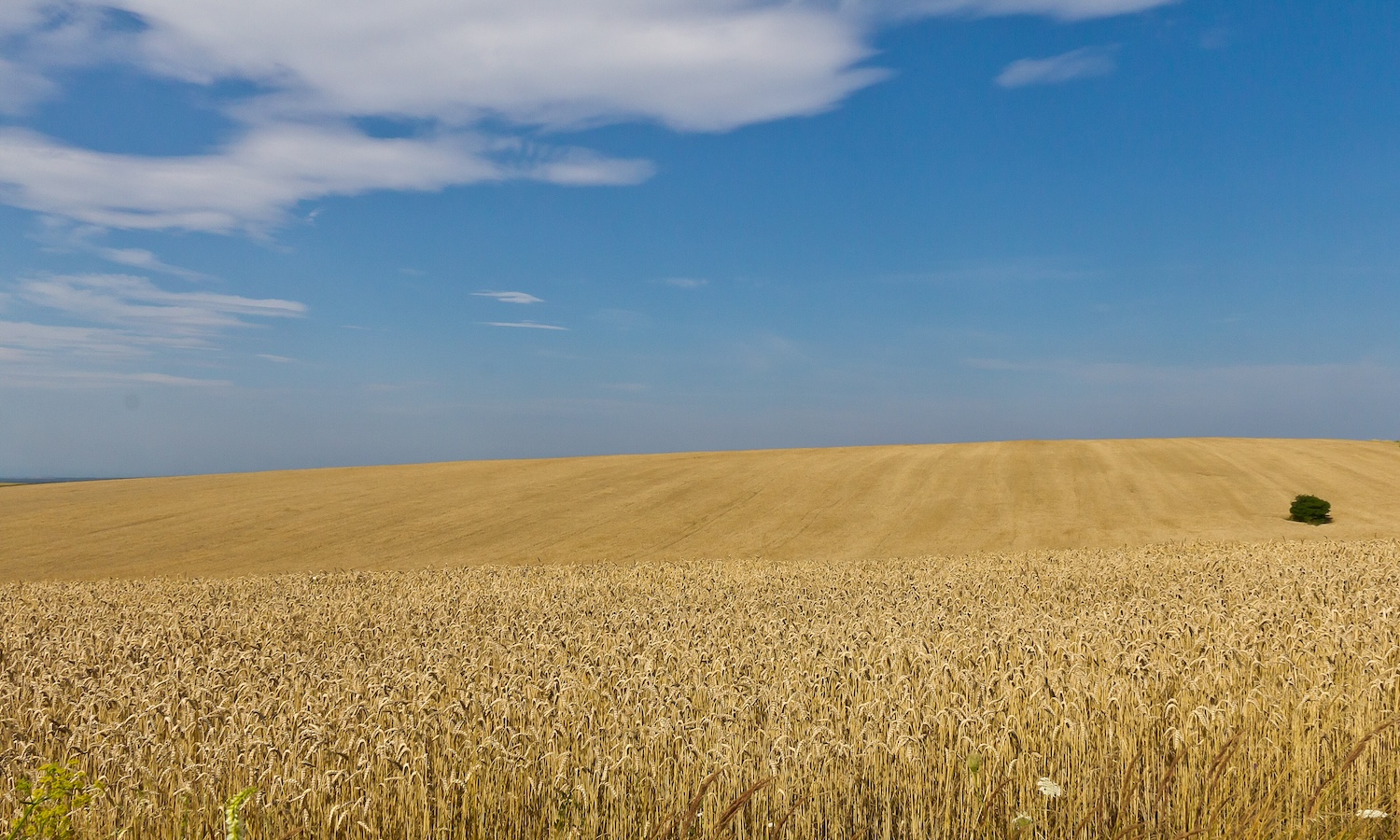
Ukraine may be heading toward one of its strongest harvests since the start of the full-scale war. But in 2026, the central question is no longer how much grain the country can produce. It is how much of that harvest can actually reach buyers.
According to the Ukrainian Grain Association, Ukraine’s combined grain and oilseed harvest could reach 84.6 million metric tons in 2026, up from roughly 80 million metric tons in 2025. As of September 15, 2026, the Ministry of Agrarian Policy and Food of Ukraine reported over 24.9 million metric tons of wheat and 6.4 million metric tons of barley being harvested. The country is expected to harvest 32.1 million metric tons of corn. If logistics operate without major disruptions, Ukraine’s export potential could approach 52 million metric tons in the 2026/27 marketing year, compared with 41.1 million metric tons in the previous season.
These figures highlight the extraordinary adaptability of Ukrainian agriculture. Farmers continue to work through air raid alerts, cultivate land near the front lines and in mined lands, and cope with labor shortages, damaged machinery, unstable electricity supplies, and rising production costs.
These numbers are impressive, although they should not be read in isolation. For many producers, the situation on the ground remains considerably more difficult than aggregate harvest data would suggest.
Yet a strong harvest alone does not guarantee food system resilience. Ukraine’s challenge is increasingly shifting from production to access. Farmers may be able to grow the grain, but whether they can move it efficiently, safely, and affordably to international markets will determine the real value of the 2026 harvest.
For Ukraine, that difference matters not only for export revenues. It will also shape farmers’ ability to finance the next planting season, maintain stable production, and remain economically viable under prolonged wartime conditions. And for the rest of the world, the stakes extend far beyond Ukraine’s borders. The country remains a key supplier to global grain markets, meaning that disruptions to its exports can reverberate through food prices, trade routes, and economies dependent on food imports. Ukraine may have the harvest. The harder question is whether the world will be able to receive it.
The harvest is there. Logistics are the bottleneck. In August and September, the scale of Ukraine’s logistics challenge became especially clear. According to the Ministry of Agrarian Policy and Food of Ukraine, between August 1 and 26 the country exported 1.423 million metric tons of grains, oilseeds, and processed agricultural products—only about one-third of its potential export volume. Grain exports alone totaled 822 thousand metric tons, or roughly 21 percent of the potential volume needed. Logistics issues worsen grain storage shortages, with slow exports threatening an 8–11 million ton domestic deficit by November.
The problem, then, is not a lack of grain or a lack of buyers. It is the physical ability to deliver agricultural products from Ukrainian farms to global markets. Black Sea ports remain essential to Ukraine’s agricultural trade. According to the Ukrainian Grain Association, seaports handle around 90 percent of the country’s grain and oilseed exports, while overland and other alternative routes cannot fully replace maritime shipping. Due to continuing logistics constraints caused by the war, Ukraine could lose nearly US$10 billion in potential agricultural exports.
There is another problem—the cost of alternatives. According to the Ministry of Agrarian Policy and Food, shifting agricultural exports to alternative routes in August increased logistics costs by at least US$50 per metric ton. In particular Atria Brokers reports an increase in freight rates for shipping corn on 6-thousand-ton coasters from Danube River ports to the Mediterranean reaching US$105 per ton as of September 10, 2026, compared to US$28 in June-July 2026. For a relatively low-value bulk commodity such as grain, that additional cost can absorb a significant share of a farmer’s margin. The result is a striking paradox. Global grain prices can rise as Black Sea supplies become tighter, while prices received by Ukrainian farmers can fall because grain accumulates inside the country. In other words, the same disruption that makes Ukrainian grain more valuable on the world market can make it less profitable for the farmers who produce it.
Global markets are already responding to lower Ukrainian supplies.This is no longer only a Ukrainian problem. In August, the FAO Food Price Index rose to 133.3 points, up 1.9 percent from the previous month and 2.5 percent from a year earlier. The FAO Cereal Price Index increased by 2.2 percent, while international wheat prices rose 2.6 percent over the month and were already 15 percent higher than a year earlier. FAO identified disruptions to Black Sea logistics as one of the factors contributing to higher prices. The wheat market has reacted even more sharply. According to Reuters, by August 20 Chicago wheat futures had risen by more than 17 percent since the beginning of July.
Black Sea wheat was trading at roughly US$260-280 per metric ton for August-September arrivals, while replacing those supplies with Australian wheat could cost Asian buyers around US$315–320 per metric ton. For wealthier countries, this mostly means paying more for grain. For import-dependent economies, the consequences can be far more serious. According to Reuters, Egypt sourced more than 82 percent of its imported wheat from Russia and Ukraine combined during the first half of 2026. Algeria, Jordan, Tunisia, Indonesia, Bangladesh, and other major importers also remain highly dependent on supplies from the Black Sea region.
For these countries, higher grain prices are not simply a trade issue. They can translate into larger food import bills, greater pressure on public budgets, and higher prices for basic foods. That is why disruptions to Black Sea trade are increasingly shifting from a regional logistics problem into a driver of global food price inflation.
When Ukraine cannot export, other countries fill the gap. One of the clearest signs of how global grain trade is shifting comes from Argentina. According to Reuters, Argentina’s corn exports are expected to reach a record 10 million metric tons in August and September 2026 while the usual export volumes for August-September reach about 3 million tons. Argentina is also getting more active in the global sunflower and soybean oil and meal markets due to tighter supply from the Black Sea region, increasing competition. This is especially relevant for India and the EU, which remain key destinations for both Argentine and Ukrainian products.
Competition is also increasing in oilseed markets. Argentina is expanding its supplies of soybean and sunflower oil to Europe and India, while Brazil continues to strengthen its position as a major soybean supplier to China. Russia is also redirecting grain and vegetable oil exports to alternative markets, further intensifying competition for Ukraine.
One reason is that buyers are looking for alternatives to Ukrainian supplies disrupted by the war and constraints on Black Sea shipping. The shift is especially visible in North Africa, a region that has traditionally been an important market for Ukrainian grain. During the first seven months of 2026, Argentine corn shipments to North Africa increased by 45 percent. Morocco’s imports of Argentine corn jumped 133 percent year over year, while Egypt increased purchases by 48 percent and Algeria by 10 percent. These figures point to an important economic shift. When Ukraine loses export capacity for several months, the consequences extend beyond lost revenue. Buyers find new suppliers, shipping companies reorganize routes, and commercial relationships begin to shift toward competitors.
And once those relationships are established, they may not immediately reverse. Even if Ukraine restores the full capacity of its ports, regaining some export markets could take time. The longer disruptions persist, the greater the risk that what begins as a temporary logistics problem becomes a longer-term loss of market share. In this sense, the cost of disrupted exports is not measured only in the grain that fails to leave Ukraine today. It may also be measured in the markets Ukraine has to win back tomorrow.
The biggest risk is not this year’s harvest, but the next one. Ukraine’s export problem is quickly becoming a liquidity problem for farmers. Grain sales finance the next production cycle. They pay for seeds, fertilizer, fuel, land rent, wages, machinery repairs, and loan repayments. When grain remains in storage, a farmer’s working capital is effectively locked up with it. That is why a large harvest can paradoxically weaken the producer who grew it. As of September 15, 2026, at Ukrainian ports, prices for food and feed wheat stood at $167-177 per ton and $146-155 per ton CPT port, respectively. If farmers are forced to sell at depressed domestic prices while absorbing higher logistics costs, they may respond by cutting fertilizer use, delaying machinery purchases, or reducing the area they plant the following season. Small and medium-sized farms are particularly vulnerable because they typically have less working capital and less capacity to store grain while waiting for better prices.
A U.N. Food and Agriculture Organization assessment of more than 2,800 rural households across nine frontline regions of Ukraine illustrates the scale of this pressure. One in three surveyed households reported declining income over the previous year. Among families that rely primarily on agriculture for their livelihoods, 48 percent reported income losses. More than three-quarters of surveyed households were already drawing down savings, borrowing money, or cutting essential expenses, including spending on health care and education, to cope with financial pressure.
These figures point to a broader lesson about agricultural resilience. Resilience cannot be measured only by how many tons of grain Ukraine harvests this year; it should be assessed in terms of the production sustainability, which depends on whether farmers have enough liquidity to buy inputs, maintain equipment, keep workers employed, and plant again next season. A record harvest today means little if producers cannot afford to produce another one tomorrow.
Storage can buy time, but it cannot solve the problem. If export constraints persist, Ukraine will face another challenge—where to store the new harvest. Logistics issues worsen grain storage shortages, with slow exports threatening an 8–11 million ton domestic deficit by November. According to the Ministry of Agrarian Policy and Food of Ukraine, international partners have already confirmed around US$10.5 million in support for temporary storage solutions, including grain bags. Ukraine is also finalizing discussions with the World Bank over an additional US$25 million in assistance.
This support is important, especially for smaller farms and producers in front-line regions. But storage can only buy time. It does not create a buyer. It does not lower transportation costs. And it does not restore the working capital that farmers need for the next production cycle. Temporary storage can help prevent immediate losses and give producers greater flexibility in choosing when to sell. But it cannot substitute for functioning export routes. The real solution is stable and predictable access to international markets. Without such access, additional storage risks becoming nothing more than an enlarged “waiting room” for grain that still has nowhere to be sold.
One question is will Europe and the Danube replace the Black Sea? The European Union has already helped build one of the most important backup logistics systems for Ukrainian trade. According to the European Commission, the EU-Ukraine Solidarity Lanes have enabled the export of nearly 230 million metric tons of Ukrainian goods since May 2022, including around 94 million metric tons of grain, oilseeds, and related products. Without these routes, the consequences of disruptions to maritime trade would have been far more severe. But August 2026 also showed the limits of an overland solution. According to the Ukrainian government, between August 1 and 26, roughly 600,000 metric tons of agricultural products moved by rail and another 600,000 metric tons through the Danube, while road transport accounted for only about 80,000 metric tons.
For grain, this difference matters. Maritime shipping can move enormous volumes of relatively low-value bulk commodities over long distances at lower cost. Moving the same quantities by thousands of railcars and trucks is slower, more expensive, and constrained by border capacity, infrastructure, and transshipment bottlenecks. The Danube, rail links, and road corridors are therefore indispensable as alternative routes. They provide resilience when Black Sea access is disrupted and reduce Ukraine’s dependence on a single export channel.
But due to their limited throughput capacity, they cannot fully replace deep-water seaports. Europe’s overland routes should be treated as a strategic backup and a permanent part of a more diversified export system—not as a substitute for secure Black Sea shipping. For Ukraine’s grain economy, resilience ultimately requires both: strong connections to Europe and reliable access to the sea.
Ukraine needs more than one corridor. It needs a resilient food system. Ukraine’s first priority must remain the security of maritime exports. That means protecting ports, transport networks, and energy infrastructure, while expanding war-risk insurance mechanisms for shipping companies and agricultural businesses.
The second priority is protecting farmers’ financial cycle. Affordable credit, guarantees, grants, warehouse-receipt financing, and access to insurance can help producers avoid being forced to sell grain when domestic prices are at their lowest. Without that financial buffer, even a strong harvest can leave farmers short of the cash they need to plant the next one.
A third priority is expanding the capacity of the Danube, rail, and border infrastructure. The EU–Ukraine Solidarity Lanes have already demonstrated their strategic value. But the current crisis also shows that these routes need greater capacity, faster border procedures, and continued investment if they are to serve as a reliable long-term component of Ukraine’s export system.
And Ukraine needs to move further up the agricultural value chain. Producing more flour, animal feed, vegetable oils, starch, bioethanol, and other higher-value products would reduce the country’s dependence on a model in which economic performance is determined largely by how many tons of raw grain can physically leave through a port. Processing cannot replace grain exports. But it can diversify revenue, create jobs, reduce the value lost to high transport costs, and make the agricultural economy more resilient to logistics shocks.
Ukraine also needs predictable trade rules with the European Union. Farmers make production decisions months before harvest. Uncertainty over quotas, transit conditions, or national restrictions adds another layer of risk to an already unpredictable wartime environment. The broader lesson is that Ukraine does not need a single replacement for the Black Sea. It needs a diversified food and export system in which secure maritime trade, European land routes, financial support, storage, processing, and predictable market access reinforce one another. Resilience will come not from one corridor, but from having multiple options when any one of them fails. Ukraine will have bread. The question is what the world will pay.
Ukraine does not currently face a physical shortage of grain for domestic consumption. The Ukrainian government has stressed that the country is producing enough to meet its own food needs. But the global market is already feeling the effects of disruptions to Black Sea trade.
Ukrainian grain can theoretically be replaced by supplies from Argentina, Australia, the United States, Canada, and other major exporters. But that substitution comes at a cost. It reshapes trade flows, lengthens shipping routes, increases freight and insurance expenses, and adds pressure to food-importing countries that are often the least able to absorb higher prices. That is why Ukraine’s 2026 harvest is more than a test of the country’s agricultural sector. It exposes one of the central vulnerabilities of the global food system: producing food is not enough. Food must also be moved safely, predictably, and affordably to the people who need it.
There is also a broader point here. Ukraine’s experience since 2022 has shown how closely agricultural production, transport security, trade policy, and global food security are now connected. Treating them as separate policy questions no longer makes much sense. Ukrainian farmers have already proven that they are capable of continuing grain production under the extraordinary conditions of a full-scale war. The question now is whether the international community can help ensure that this grain reaches global markets. Because the success of Ukraine’s harvest should not be measured only by what is grown in its fields. It should also be measured by whether that food can reach the tables that depend on it.
To read more pieces by Vitalii Dankevych on Food Tank, click HERE.
Articles like the one you just read are made possible through the generosity of Food Tank members. Can we please count on you to be part of our growing movement? Become a member today by clicking here.
Photo courtesy of Raimond Spekking, Wikimedia Commons