“The child who is not embraced by the village will burn it down to feel its warmth.” — African proverb
Africa stands at a demographic crossroads.
The African Development Bank projects that Africa will be home to 830 million African youth by 2050. But while roughly 12 million young Africans reach working age each year, the continent’s private sector creates only a few million formal jobs annually. This week’s Africa Food Systems Summit in Kigali is confronting that gap head-on: the GoGettaz Agripreneur Prize is putting more than US$160,000 behind young African agrifood innovators, and one of the summit’s five thematic tracks is built entirely around young people building agritech ventures and startup ecosystems that are changing how the continent grows and sells food. It follows the Africa Prosperity Network‘s own gathering earlier this year—the Africa Prosperity Dialogues in Accra, which was themed Empowering SMEs, Women & Youth in Africa’s Single Market. The Dialogues focused on how young entrepreneurs can take advantage of the African Continental Free Trade Area (AfCFTA), which is creating a single market connecting 1.3 billion people and a US$3.4 trillion economy. Participants explored ways to expand regional trade and close the skills gaps that prevent many young people from participating. Organizers also launched a youth-led campaign seeking more than 10 million signatures in support of a more borderless continent.
A single market means little to a young farmer, though, if she cannot get her harvest across a border without it rotting in customs. The question is no longer whether Africa can feed itself. It is whether we will finance its young people to do it.
For too long, farming has been cast as a fallback, not a future—a poverty trap pushing rural youth toward overcrowded cities or dangerous migration routes. This narrative is dangerous: unemployed youth fuel instability, while a mobilized, tech-enabled agricultural workforce builds continental power.
The African Union’s Comprehensive Africa Agriculture Development Programme (CAADP) 2026–2035 offers a continental framework to fund agritech hubs, modernize university curricula, and build youth-focused agricultural extension services across all 55 member states. Nigeria is already showing what implementation looks like: its 42 youth agribusiness innovation centers, converted this year from underused youth development facilities, are training a new generation in climate-smart farming and enterprise-building. Several organizations attending this year’s summit in Kigali already run youth-focused agriculture programs of their own.
That power is also an economic necessity. Farming remains the single largest source of work on the continent—most estimates put it at somewhere between two-thirds and three-quarters of all African livelihoods. And smallholders alone grow roughly four-fifths of the food Africans eat, even though output per worker still lags far behind global norms. Closing that gap is not charity—it is GDP growth. Consider the scale of what targeted investment can do: the African Development Bank’s ENABLE Youth Programme, launched to put young people to work in agribusiness, has so far reached close to 100,000 young beneficiaries and generated well over 200,000 jobs across 18 countries, on its way to a goal of 300,000 new enterprises. Every youth-led farm, cooperative, or agritech venture funded today compounds into tomorrow’s tax base, export revenue, and reduced import bill.
Fertilizer use across Africa fell by roughly a quarter in 2022 in the aftermath of Russia’s invasion of Ukraine, and the U.N. Food and Agriculture Organization has estimated that disruption pushed 8 to 13 million more people worldwide into hunger, with sub-Saharan Africa among the regions hit hardest. In East Africa alone, the World Food Programme has tracked a 23 percent rise in the cost of its local food basket in a single year, with Sudan’s costs climbing 92 percent. Now a separate war centered on Iran has choked off shipping through the Strait of Hormuz, stalling an estimated third of the world’s fertilizer trade—several million tonnes a month—and analysts expect African grain importers to absorb the impact first. Africa cannot out-produce geopolitics it does not control. It can build youth-led, homegrown food systems resilient enough to absorb the next shock.
This is why global platforms matter. The U.N. General Assembly’s SDG Moment on September 18 this year will convene youth voices alongside world leaders to assess progress on the Sustainable Development Goals—including SDG 2 (Zero Hunger) and SDG 8 (Decent Work and Economic Growth), both of which hinge on whether Africa’s youth are employed in food systems or left out of them. Climate Week NYC, running alongside the Assembly and drawing more than 1,000 events to New York, has folded youth leadership into nearly every one of its themes this year. African youth agripreneurs deserve a seat at both tables, not a passing mention.
The innovation is already here. In Rwanda, AYuTe Africa Challenge finalist AgriResearch Unguka is helping smallholders with seed selection and profitability forecasting. In Kenya, DroFarmer uses data to help farmers cut crop losses and access insurance.
We challenge the African Union, the African Development Bank, multilateral institutions, private investors, and philanthropy: fund Africa’s youth through a genuine do-no-harm approach—investment that strengthens local food sovereignty rather than deepening dependency, drawing on the lesson that global food-policy experts have long urged for crisis response. More importantly, we encourage individual governments to do more.
Articles like the one you just read are made possible through the generosity of Food Tank members. Can we please count on you to be part of our growing movement? Become a member today by clicking here.
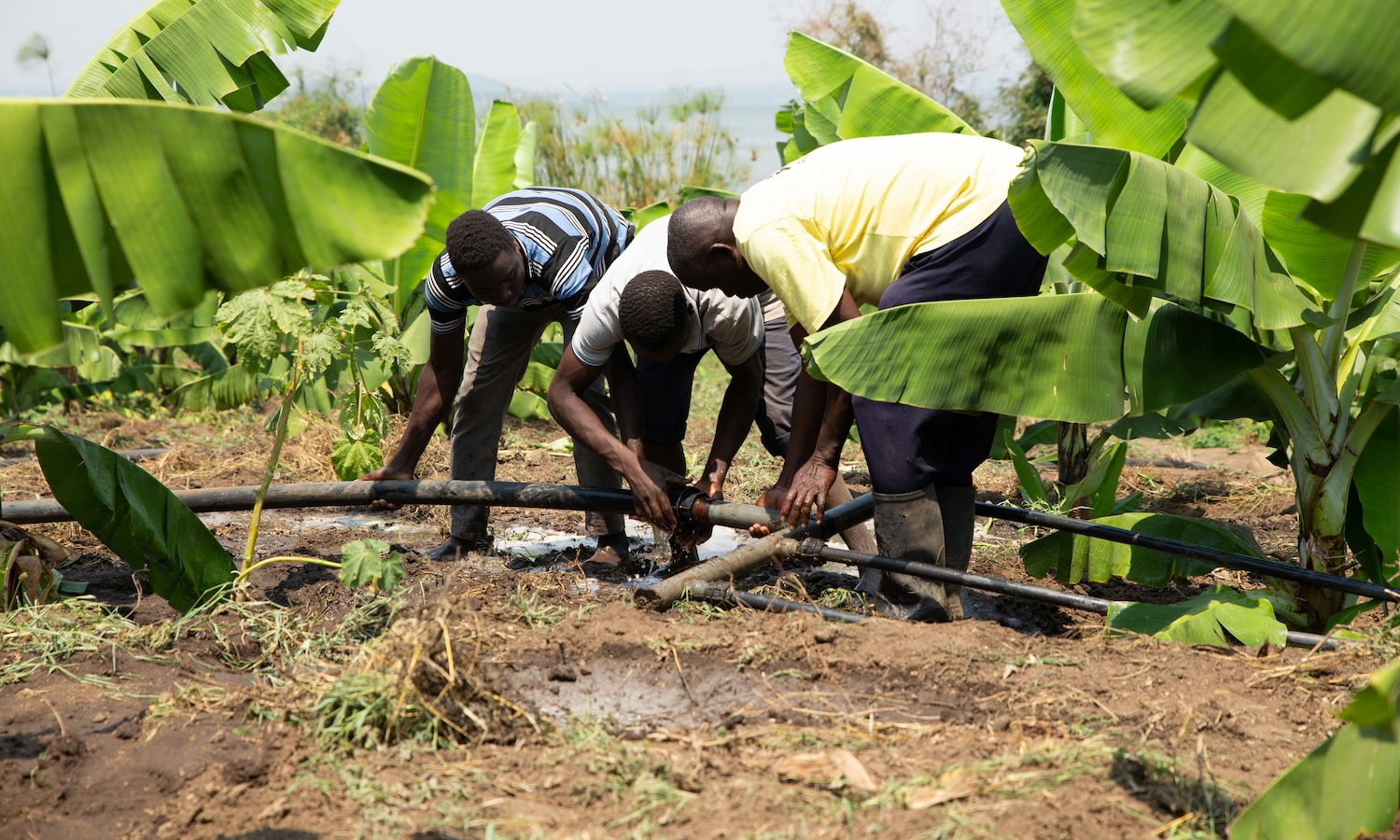
Photo courtesy of Daniel Kawed, Unsplash