Climate change is already affecting what farmers can grow, when they can plant, and how much they can harvest. Across the globe, they are navigating drought, unpredictable rainfall, and extreme heat. Meanwhile, public investment in agricultural research is uncertain, global conflicts are contributing to hunger and displacement, and food is becoming more expensive.
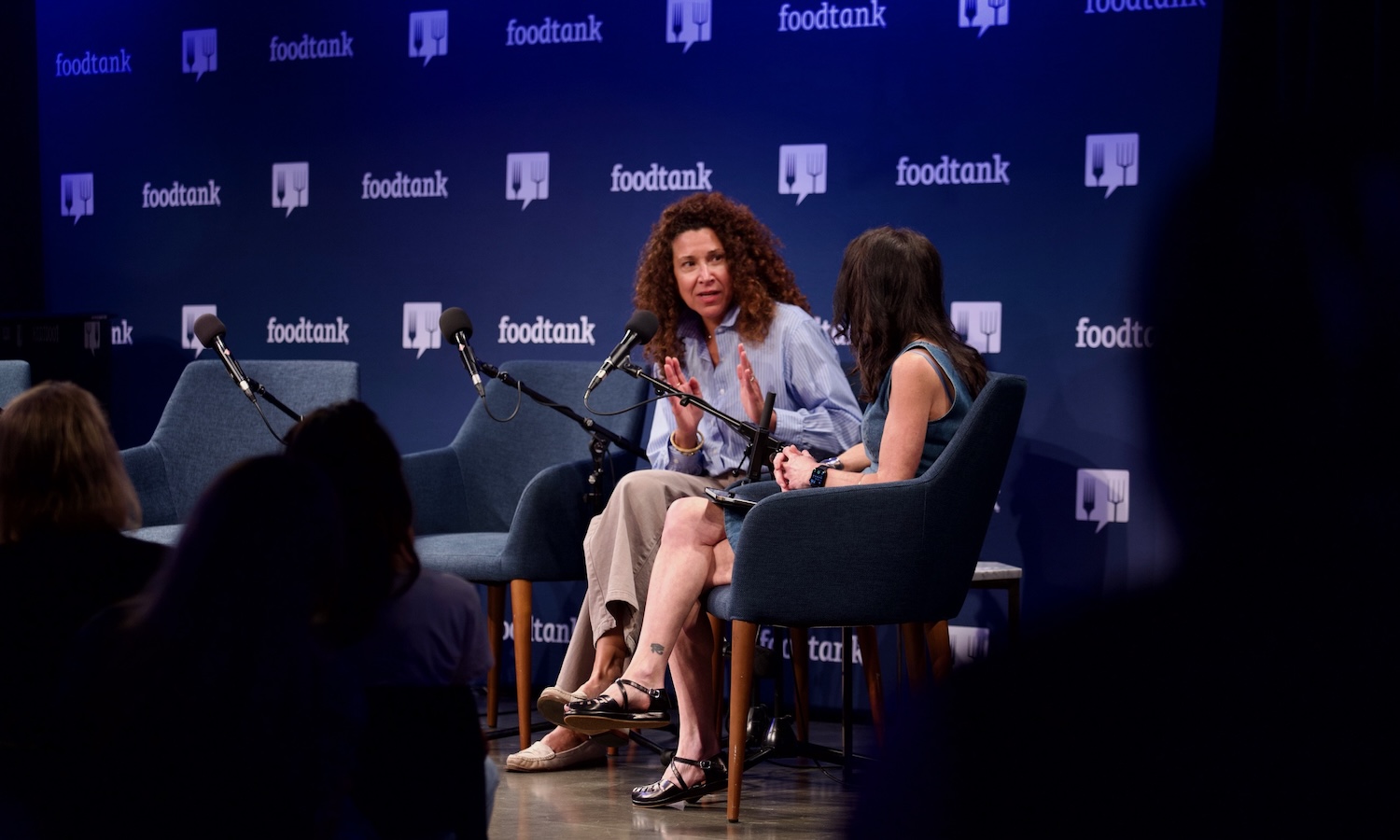
“I can’t overstate how intense climate impacts are for young farmers across the country right now,” says Michelle Hughes, Executive Director of the National Young Farmers Coalition, at “Putting Farmers First: How Young Farmers are Shaping the Future of Food,” which Food Tank hosted at Climate Week NYC 2026 in partnership with Whole Foods Market. You can watch the entire Summit replay on YouTube now.
“Farming is starting to feel not only hard but borderline impossible for some folks,” says Hughes.
And the pressures facing farmers extend beyond climate change. Sarah Jones of Jones Farms Organics, a fourth-generation, family-owned farm in Colorado’s San Luis Valley and the region’s first Regenerative Organic Certified grower, described the many roles farmers must take on to keep their businesses operating.
“We’re biologists, environmentalists, mechanics, engineers. We do marketing, sales, social media, we’re distributors, brand designers, customer service…it doesn’t end,” says Jones.
Farmers also face significant financial risks and difficult working conditions. Brita Lundberg, Fourth-Generation Farmer and Communications Manager at Lundberg Family Farms, highlighted the demands of agricultural work and the challenges of maintaining a viable livelihood.
“Farming is hard, it’s risky, and it’s capital-intensive. And still, data from the USDA shows that 84 percent of U.S. farmers take on second jobs to support their livelihoods,” says Lundberg.
For Amalia Colón-Nava, Farmer and Co-Director of Dirtbaby Farm, these economic challenges affect both farm owners and agricultural workers—and they are rooted in a long history of exploitation.
“Whether you are a farm owner or a farm laborer, there’s a huge gap in how we can pay ourselves…So many farmers are actually not able to sell vegetables for a profit. Our food system is built off of slavery, exploited labor, and that culture still exists,” says Colón-Nava. “Food is a human right; it’s not a privilege.”
For DeVonne Jackson Perez, Co-Founder of Good Ground and Director of Brooklyn Supported Agriculture, conversations about climate resilience must account for farmers’ basic needs and working conditions.
“We can’t really talk about climate resilience or supporting farmers without using them as if they too are a product,” says Jackson Perez. “Farming is one of the most dangerous careers that you can choose, but many don’t have healthcare.”
Speakers also pointed to gaps between consumer demand and the markets farmers need to adopt more sustainable practices. Jones says many farmers are prepared to transition to organic production but lack the buyers to make that change financially viable.
“We’ve got to get back to community over commodity,” says Jones. “Farmers are ready and willing. I could list 10 farmers that would go organic tomorrow if you give them the market.”
Creating those markets is one of the most important ways retailers can support farmers, says Sonya Gafsi Oblisk, Whole Foods Market Chief Merchandising & Marketing Officer and Vice President, Amazon Worldwide Grocery Stores Private Brands & Marketing.
“As a retailer, the number-one thing we can do is really create a market and demand…There can’t be supply without demand,” says Gafsi Oblisk, who also emphasizes that transforming the food system requires changes in consumer behavior: “To change the food system at scale, we need to be able to change demand, not just supply…Vote with your wallet.”
Speakers also said that businesses must prioritize farmer input when developing sustainability initiatives.
“The first thing we need to do is listen. We have to put farmers’ voices first,” says Caitlin Leibert, Global Head of Sustainability at Amazon Grocery and Whole Foods Market. “We can’t just say as a retailer we want this…We have to invest and co-create the future we want to see.”
Building on-farm resilience through soil health and transitioning to organic practices takes more than one growing season, and farmers need to know that they will have buyers for their crops after they make the investment. This requires long-term investment, looking beyond immediate purchasing decisions.
“The top thing we can do as retailers is help commit to the supply not just for tomorrow and next month and six months from now, but what are the commitments we can make further out,” says Jason Buechel, Vice President of Amazon Worldwide Grocery Stores and Chief Executive Officer of Whole Foods Market. “Many farmers depend on small, regional, local banks, where their business is considered high risk.”
For Becca Millstein, Co-Founder and CEO of Fishwife, strengthening food systems also means investing in sustainable seafood production and helping consumers understand the role of aquaculture.
“More than half of our seafood globally is produced from aquaculture, but there’s broad misunderstanding of what that means. Aquaculture has long been saddled with a really unfortunate reputation,” says Millstein, but “there are advances being made every single day in aquaculture…In many ways, aquaculture has more resilience than wild fisheries.”
Storytelling plays a major role in creating more sustainable food systems, speakers agreed. Anna Turrell, Global Chief Sustainability Officer at Mars Snacking, called for more storytelling to generate greater visibility for the farmers who supply the food industry.
“[Mars] won’t be here in the future if we don’t start investing in our supply chains differently, and bring the faces in that supply chain to light,” says Turrell. “I’d love to see the farmer faces of our food showing up everywhere in the next five years.”
Ultimately, speakers emphasized that supporting farmers requires action across the food system, from creating reliable markets and providing long-term investment to improving labor conditions and strengthening consumer connections.
“Sometimes when we get in these spaces we often think too lofty and then we don’t do anything… teach somebody, fund an organization, there are little things we can do day to day. The agriculture industry needs everything,” says Jackson Perez.
As retailers, brands, and consumers consider the future of food, the event underscored the importance of putting farmers’ needs at the center of efforts to build a more sustainable and equitable food system.
Explore the entire Food Tank event schedule during Climate Week NYC 2026, and live-stream every Summit on FoodTank.com and Food Tank’s YouTube channel.
Articles like the one you just read are made possible through the generosity of Food Tank members. Can we please count on you to be part of our growing movement? Become a member today by clicking here.
Photo by Ryan Rose for Food Tank.