From soil health and supply chain collaboration to the importance of farmer voices, organic food systems call for shared responsibility, meaningful investments, and tasty and affordable climate-smart ingredients.
The past, present, and future of organic agriculture were reflected on and celebrated during “The Roots of Organic: From Soil to Shelf,” an all-day Summit at Climate Week NYC presented in partnership with Organic Trade Association, Organic Valley, Once Upon a Farm, Handsome Brook Farms, Stonyfield, and Amy’s Kitchen, and in collaboration with Organic Voices, Lundberg Family Farms, Tradin Organic, and Rodale Institute.
“The organic movement didn’t grow because of one certification,” says Danielle Nierenberg, President of Food Tank. “It grew because people built relationships that allowed ideas to spread.”
Watch the livestream recording on Food Tank’s YouTube channel.
“The farmers are the true roots of this movement,” says Matthew Dillon, Co-CEO of the Organic Trade Association.
The organic agriculture moment was built by farmers who believed deeply in sustainability and took risks to build consumer trust, he said—and organic farmers must be recognized for their contributions to the sector’s future, too. This means giving farmers resources to adapt and ensuring their voices and expertise are centered.
“How do we make sure that farmers are at the table for all of these major milestones?” asks Organic Valley CEO Shawna Nelson. “Organic farmers, I find, are the most innovative. They’re willing to continuously improve; they’re willing to look at the solutions.”
Critically, these solutions have to be financially viable, especially given a difficult economic environment for the farming sector, panelists said. Strategies like stronger supply-chain collaboration can help farmers achieve sustainability goals without taking on increased cost burdens, panelists said. At the same time, financial support tools like accessible technical assistance and cash incentives for low-emissions practices can also help farmers adopt the sustainable practices they believe deeply in.
“There’s not a one-size-fits-all solution,” says Britt Lundgren, Senior Director of Sustainability and Government Affairs at Stonyfield. But “if the cost falls at the farm level, we’re not going to succeed.”
But as organic farmers know, sustainability is not only the ethical choice but also a good business strategy.
“Sustainability is a three-legged stool. We all talk about the climate, but you also have social and financial benefits,” says Tracy Favre, Senior Vice President of Sustainability and Organic Strategies at Handsome Brook Farms.
However, organic farmers are only one part of broader sustainable supply chains: Food producers and retailers play a significant role in communicating the specific benefits of organic agriculture and in building broader consumer interest for climate-smart eating, panelists discussed.
“We’ve just been deceived by Big Food for many years that (conventional and ultra-processed) is the only way,” says Paul Schiefer, CEO of Amy’s Kitchen. Our food choices are deeply tied to our identities and taste preferences, he said, so “we have to meet people where they’re at and help them see that they can be themselves and choose better food.”
It can be “a difficult needle to thread,” admits Jane Kuhn, Senior Director of Strategic Sourcing & Sustainability at Once Upon a Farm, but organic agriculture needs to be accessible for both farmers and consumers, without expensive bottlenecks in the value chain.
The scientific backing for organic agriculture is strong, too, said Amber Sciligo, Senior Director of The Organic Center. However, when research priorities are rooted in conventional systems and when measurements focus on individual metrics, like carbon, researchers can occasionally miss the more interconnected holistic picture.
“Organic, regenerative, perennial systems are much more complex…and that helps them thrive,” she said. “If we want to truly understand what is happening on the farm, we have to move away from these single metrics.”
Beatriz Daim, Sustainability Specialist at Tradin Organic, echoed this point, noting that “carbon is just one metric. You need to look at a farm as a much wider ecosystem.”
This reality is complex and sometimes messy, and we need to respect that, says Abianne Falla, Founder of CatSpring Yaupon—which, she points out, “is sometimes hard when we live in a culture of soundbites.”
Farmers themselves understand the full scope of their climate-smart land management practices and efforts to reduce emissions, of course—but their time is devoted to the actual work of farming, which means food system partners need to pick up the mantle of communication and engagement.
“There are only so many hours in a day, and dairy farming requires most of them,” says Annie Watson, an Organic Dairy Farmer at Sheepscot Valley Farm and a Stonyfield Producer. “If we don’t tell the stories of farm life, no one will know. Farms are disappearing, and so are their stories. Somebody has to tell them.”
So how does the organic movement chart a collective course forward? By continuing to place innovation and inspiration at the center, panelists said.
“It’s easy to define organic for what it’s not,” says Maria Rodale, Board Co-Chair of the Rodale Institute. “But we have to start defining it for consumers for what it is—and what it is is safe food you can trust.”
And big-picture climate solutions must also continue to center the people who grow food and hold generations of agricultural knowledge, says Leah Penniman, a Farmer, Author, and Food Justice Activist at Soul Fire Farm.
“There is a powerful need to take a stand for the people who know the earth most intimately,” she says. “We are not going to solve the climate puzzle by ignoring the people who are tending to the climate.”
“It’s not just about consumer choices and labels; we have to be political advocates.”
Explore the entire Food Tank event schedule during Climate Week NYC 2026, and live-stream every Summit on FoodTank.com and Food Tank’s YouTube channel.
Articles like the one you just read are made possible through the generosity of Food Tank members. Can we please count on you to be part of our growing movement? Become a member today by clicking here.
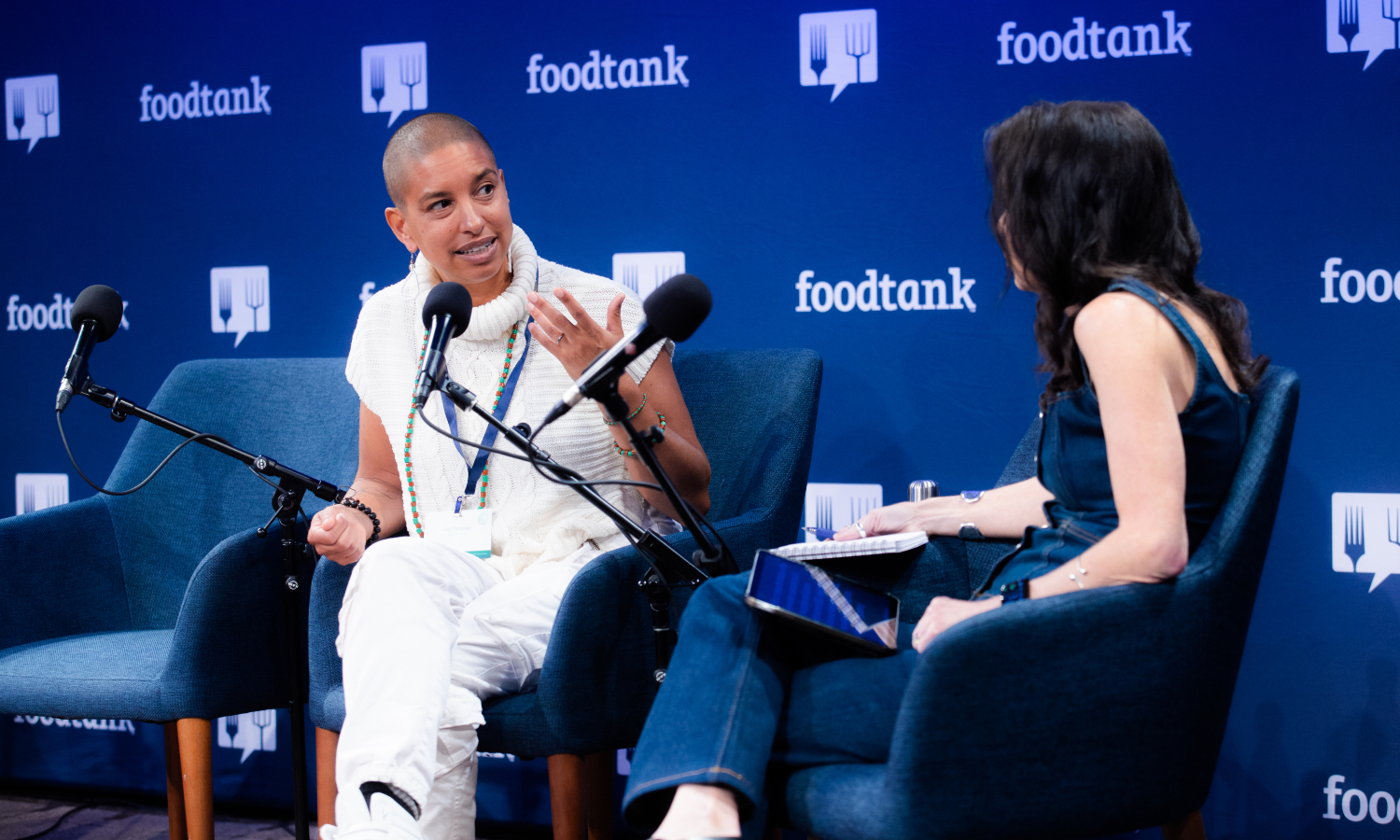
Photo by Ryan Rose for Food Tank.