At last month’s International Conference on Agrarian Reform and Rural Development (ICARRD+20) in Colombia, discussions of inclusion and sustainable development filled the room—but many of those most affected were absent. One grassroots leader from the Global South told me they had spent months preparing to attend, only to be blocked by visa costs and bureaucracy. While delegates met in climate-controlled halls to debate their future, the very people whose land is being grabbed were kept away from the table. This gap between the promises and the barriers facing peasants and Indigenous Peoples reflects a defining challenge at a time when land concentration is accelerating and industrial agriculture is expanding, making global cooperation on land reform more urgent than ever.
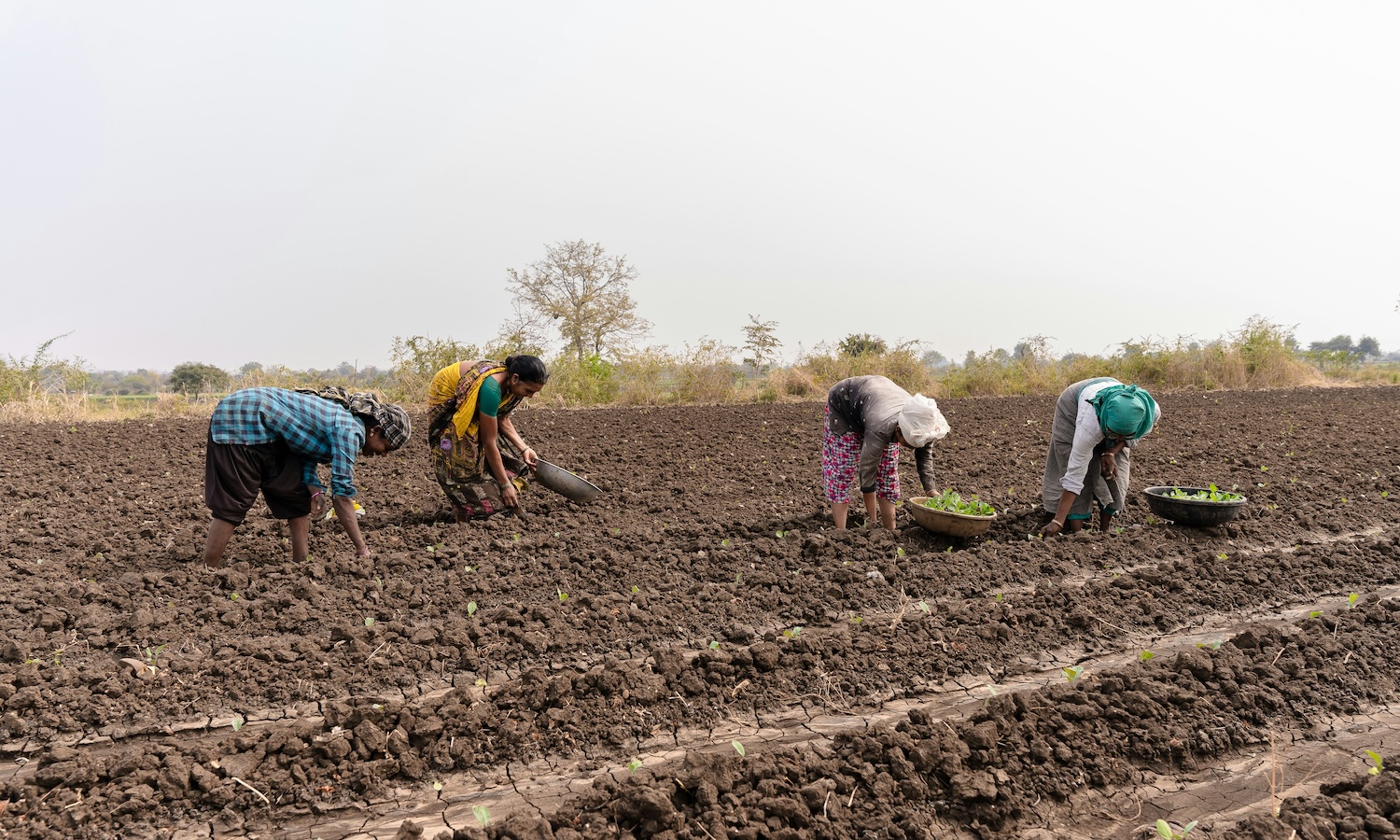
The conference signaled positive intent, but its commitments remained largely aspirational, lacking binding measures or clear implementation pathways. Notably, the declaration offers no guidance on implementing the U.N. Declaration on the Rights of Peasants (UNDROP), which protects the rights of peasants and rural workers, in land reform. Although peasants, small-scale farmers, fishers, and Indigenous Peoples produce around 70 percent of the world’s food, they continue to face widespread violations—from land grabbing and conflict to corporate concentration and discriminatory legal frameworks. In West Africa, smallholder farmers and pastoralists are increasingly pressured by large-scale agricultural investments that threaten traditional land use and rural livelihoods. Without a clear path to implementation, the ICARRD+20 declaration leaves these groups exposed to ongoing pressures.
Even the language of rights showed signs of dilution. The repeated merging of Indigenous Peoples with the vague category of local communities risks weakening protections enshrined in the U.N. Declaration on the Rights of Indigenous Peoples (UNDRIP) and UNDROP. In particular, this shift could undermine the principle of free, prior, and informed consent (FPIC), which guarantees the right to give or withhold consent to projects affecting their lands and resources. Diluting these protections weakens a critical safeguard against land grabbing and harmful development projects.
The gap between rhetoric and reality is particularly visible in development finance. Public and multilateral development banks continue to support industrial livestock production and large-scale agribusiness, driving deforestation, feed crop expansion, and the concentration of land and power. A recent report by the Stop Financing Factory Farming coalition found that the World Bank’s private sector arm, the International Finance Corporation, invested nearly US$2 billion in industrial meat, dairy, and feed between 2020 and 2025. This includes a US$47.3 million loan to a Chinese pig-rearing company for a four-story industrial “hog hotel,” despite concerns over animal welfare and environmental impact.
For many African countries, these investment patterns are not abstract policy debates but lived realities. Large-scale agribusiness expansion, including industrial livestock production, is increasingly competing with smallholder farmers and pastoralists for land and resources. Without stronger safeguards, development finance risks accelerating land concentration and undermining the rural communities it claims to support.
At the same time, the process itself revealed shortcomings in participation and inclusion. Costly visa procedures prevented some grassroots representatives, mostly from the Global South, from attending, language access was limited, and key documents were not shared early enough to allow meaningful consultation. Even when civil society was present, participation was limited, leaving those most affected by land inequality least able to shape outcomes.
The saving grace is that the conference is likely to be held again, potentially taking place every three years. This means that governments, multilateral organizations and other attendees will have another opportunity to fix the problems they failed to tackle.
One way forward is to strengthen the Voluntary Guidelines on the Responsible Governance of Tenure (VGGT), a global framework guiding how governments manage land, fisheries, and forest rights. The VGGT promotes equitable access and recognizes peasants, rural workers, and Indigenous Peoples as rights holders, including those with “legitimate” customary tenure. However, voluntary frameworks alone are insufficient: without political will, transparency, and accountability, they remain aspirational. As the communities they aim to protect face growing threats from land grabbing and displacement, ICARRD+20 must move beyond rhetoric by outlining concrete steps to implement VGGT and safeguard rights.
Additionally, development finance must also be brought into alignment with these commitments. Public and multilateral development banks should redirect financing away from industrial livestock and factory farming and toward agroecological and diversified food systems rooted in communities. A recent report on public development banks and agroecology found that shifting investment towards agroecological approaches strengthens rural livelihoods, improves climate resilience and advances more equitable food systems.
The real test of ICARRD+20 is not the Declaration at Cartagena, but what changes in the fields, forests, and communities where land rights are contested daily. If implemented with integrity, these measures could transform land governance: redirecting public finance away from industrial agriculture, protecting land from grabbing and speculative investment, strengthening agroecology and reinforcing communities’ power to shape their own food systems.
Articles like the one you just read are made possible through the generosity of Food Tank members. Can we please count on you to be part of our growing movement? Become a member today by clicking here.