FoodCorps and Teachers College, Columbia University recently announced a new microcredential designed to help K-5 teachers integrate food education into everyday classroom learning. The six-week program, Food Education in the Classroom (Food-E), combines nutrition science and experiential learning to help educators foster students’ knowledge, curiosity, and confidence around food.
Food-E is launching on the 80th anniversary of the National School Lunch Program, which feeds nearly 30 million students every school day and is an important source of fruits and vegetables for many children, Rachel Willis, President of FoodCorps, tells Food Tank.
But access alone is not enough, according to FoodCorps. The U.S. Centers for Disease Control and Prevention data shows that 60 percent of U.S. children fall short of fruit intake recommendations and 93 percent do not consume enough vegetables.
The launch comes eight months after the One Big Beautiful Bill Act cuts eliminated SNAP-Ed, a federal nutrition education program that served roughly 90 million Americans, including 35 million children. One consequence of those cuts, Willis says, was the loss of nutrition educators in schools and communities. Food-E is designed to help address that gap by preparing K-5 teachers to integrate food education throughout the school day.
The course integrates biology, ecology, environmental science, sociology, and history, allowing educators to connect food lessons to existing learning standards rather than treating food education as a separate subject. Willis says conversations with Pamela Koch, Mary Swartz Rose Associate Professor of Nutrition and Education at Teachers College, Columbia University, helped shape this approach.
Koch’s work with educators reveals a common challenge: many teachers recognize the value of food education but struggle to fit it into already packed curricula. Food-E addresses that challenge by helping educators identify opportunities within lessons they already teach. A geometry lesson, for example, might incorporate food through concepts such as measurement, shapes, or fractions.
The course also encourages teachers to make use of “micromoments”—brief periods before an assembly, during transitions, or at the end of the school day—to spark conversations and curiosity about food. Rather than adding another responsibility to educators’ workloads, Willis says the goal is to make food education a natural part of students’ daily learning experiences.
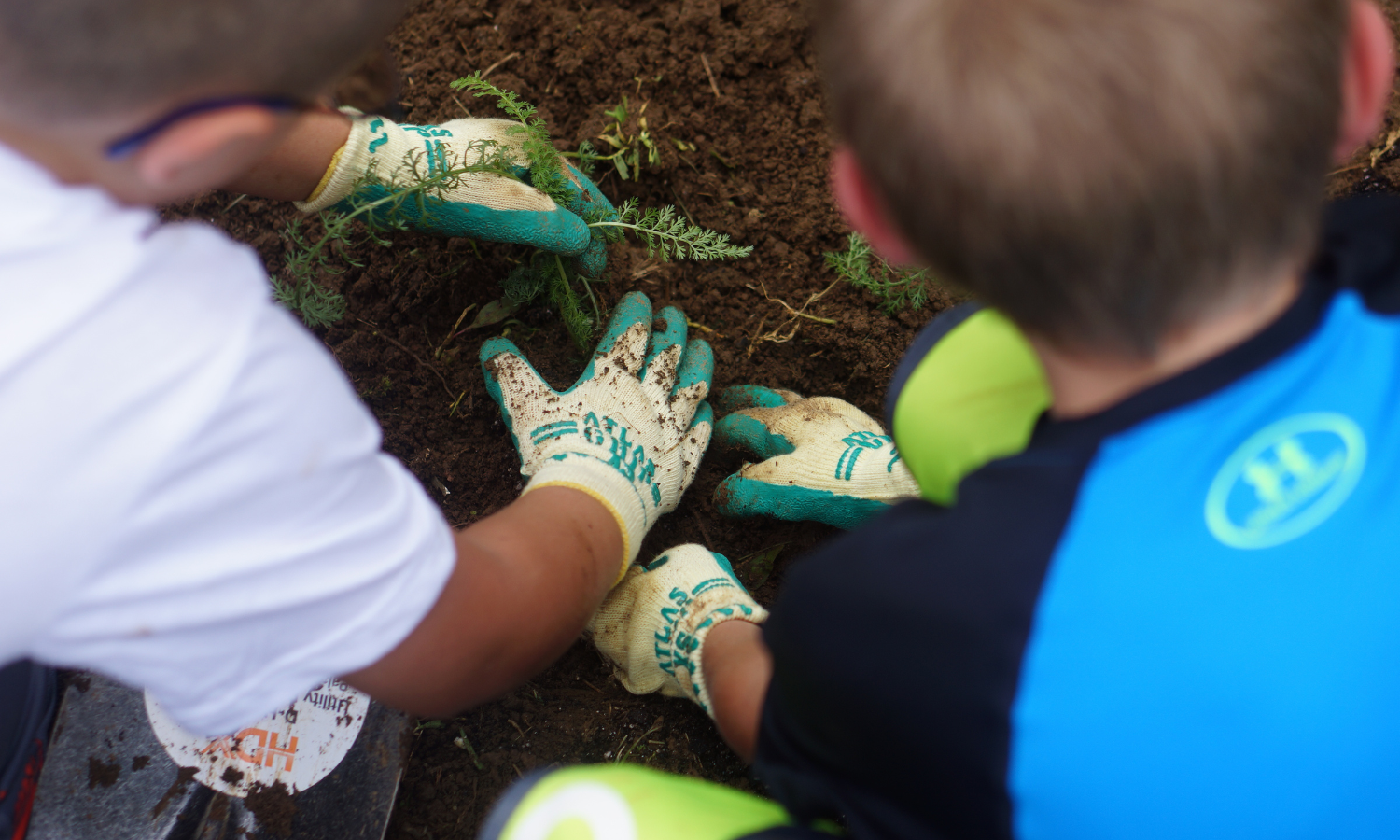
Food-E pairs nutrition science with experiential learning, helping educators help students engage with food through hands-on activities. According to FoodCorps, an average of 60 percent of students who participate in its food education programs report greater preference for fruits and vegetables. Students who participate in more hands-on activities, such as cooking and gardening, consume up to three times as many fruits and vegetables.
Willis says Food-E is designed to help more educators bring these experiences into the classroom through activities ranging from cooking and gardening to science experiments, taste tests and food-related storytelling, helping students build curiosity, confidence, and agency around food from an early age.
In addition to nutrition science and classroom activities, Food-E challenges participants to think critically about their own experiences with food. Early modules ask participants to reflect on their memories of school meals, the messages they received about food growing up, and the experiences that shaped their attitudes toward eating. The course also explores how those experiences can influence classroom conversations and shape students’ perceptions of food.
Willis says this work is important because educators have an opportunity to help children develop curiosity and confidence around food rather than judgment or anxiety. Reflecting on her own experience, Willis says her work in food education has led her to reconsider some of her own assumptions about food. Food-E, she explains, creates space for educators to do the same while ensuring that students have the opportunity to develop their own relationships with food.
Making Food-E broadly accessible was essential to FoodCorps’ vision for the program. Willis says the organization wanted to create a resource that could support nutrition educators, classroom teachers across disciplines, and individuals with little or no prior experience in food education. That approach extends to the program’s cost. FoodCorps set the enrollment fee at US$295 in an effort to reduce barriers to participation and make it easier for both schools and individual educators to enroll.
FoodCorps envisions a future in which all 50 million public school students have access to food education and nourishing meals at school. Willis says Food-E is a critical tool for scaling that impact. By equipping more educators with food education tools, Willis believes the program can help build support for policies and practices that expand children’s access to nourishing school food.
Articles like the one you just read are made possible through the generosity of Food Tank members. Can we please count on you to be part of our growing movement? Become a member today by clicking here.
Photo courtesy of Wikimedia