
“On the Ground with Dani Nierenberg” is an ongoing series documenting Food Tank President Danielle Nierenberg’s ground-truthing work. Read more by clicking here.
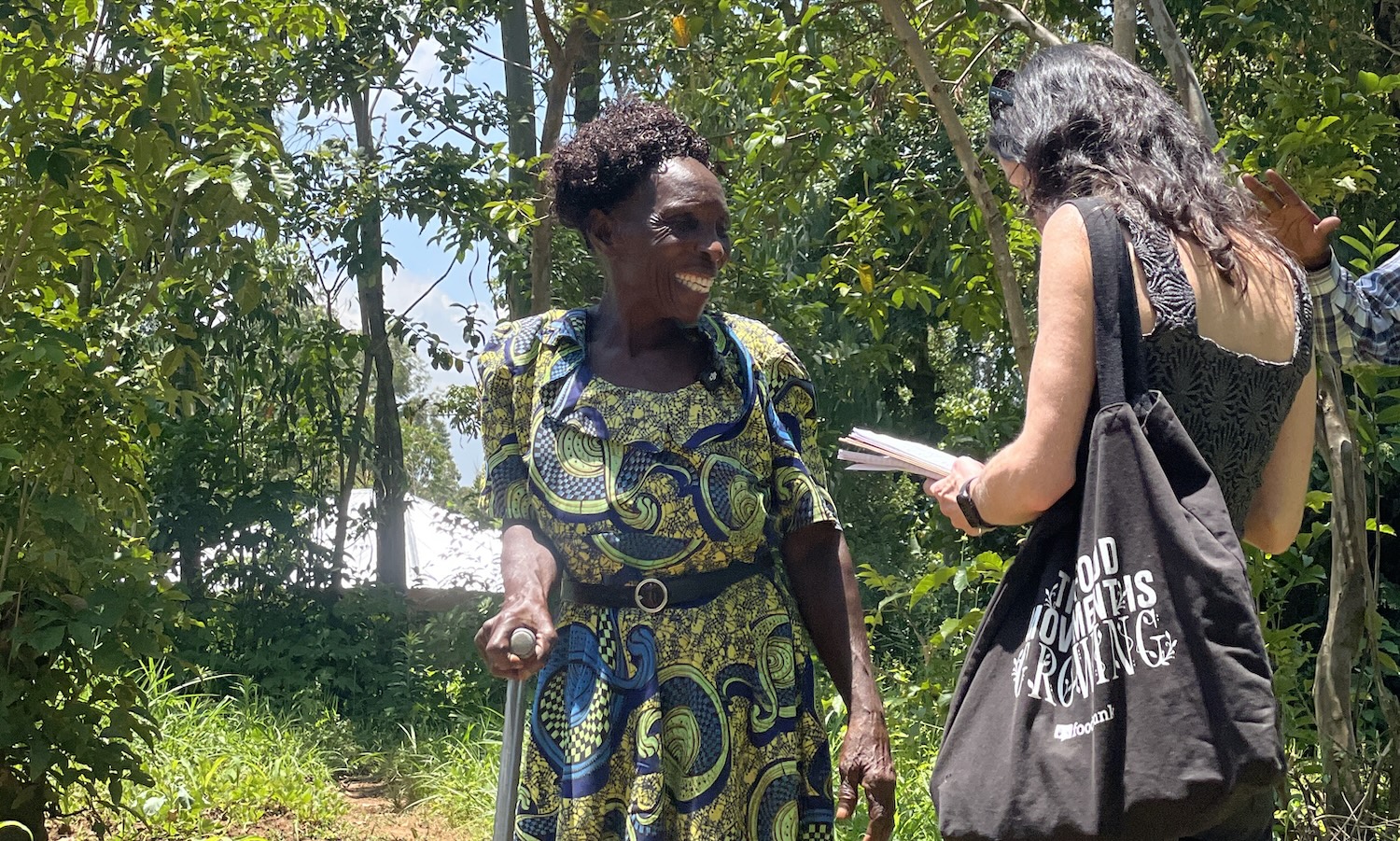
Mary Atemo greeted us with hugs and a warm smile on her farm in Kisumu West County, Kenya, roughly 120 kilometers from the Ugandan border.
She has been working with researchers from icipe for 16 years. They introduced her to push-pull farming, a simple but powerful intercropping strategy that increases crop diversity. Some plants push pests away from crops, while others pull them in, helping farmers reduce crop losses and rely less on pesticides and other agrichemicals.
Mary told us that in 2010, the Striga weed was decimating her maize crop. Striga, also called witchweed in parts of Kenya, is a parasitic plant and one of the biggest threats to maize and sorghum production in sub-Saharan Africa. According to icipe, it infests about 40 percent of the region’s arable land and causes an estimated US$7 to US$13 billion in crop losses each year. Around the Lake Victoria basin, where Mary farms, Striga can reduce maize yields by 30 to 100 percent.
And Striga wasn’t the only problem. Stem borers, insect larvae that tunnel through the stems of cereal crops, were also destroying her harvest.
When researchers from icipe first visited, Mary agreed to set aside a small experimental plot on farm. “I wanted to prove if the technology was effective or not,” she told us.
It didn’t take long.
“The stem borers ran away after a few days,” she said with a laugh.
As we sat in the shade outside her house, Mary told us she is differently abled and relies on a crutch to move around her farm. But she also made something else very clear.
She is fully capable.
Walking through the farm with her we listening as she pointed out the Napier grass that repels stem borers and the Desmodium that suppresses Striga while enriching the soil with nitrogen. As she spoke, it became obvious that what makes Mary successful isn’t physical strength—although she has plenty of that. It’s years of observation, experimentation, and an openness to trying something new.
Too often, conversations about agriculture focus on what farmers, especially women farmers, don’t have—land, financing, technology, healthy soil, extension services. Those challenges are real. But Mary reminded me to pay just as much attention to what farmers do have—knowledge, experience, and curiosity. And the ability to adapt.
Sixteen years after planting that first experimental plot, Mary has become much more than an adopter of push-pull farming. She has become one of its best ambassadors, sharing what she’s learned not only with her neighbors, but also with researchers, policymakers, and visitors from around the world who come to her farm. She is proof that science has the greatest impact when it reaches farmers’ fields.
Mary also reminded me that farmers with disabilities are too often overlooked. But they are growing food, supporting their families, and strengthening their communities every day. If we’re serious about building more resilient food systems, they have to be included in the research, financing, and training that shape agriculture’s future.
As we were getting ready to leave, Mary hugged me again. She hugged Haven, our filmmaker, too. Before we climbed into the van, she made me promise that I would come back.
Next time, she said, she’d make me ugali.
I’ve met farmers like Mary all over the world. They don’t want sympathy, and they certainly don’t want to be underestimated. They want access to good science, good seeds, good markets, and the opportunity to keep doing what they’ve always done which is feed their communities.
Mary reminded me that if we’re serious about building a better food system, we have to invest in all farmers. Otherwise, we’re overlooking some of agriculture’s greatest innovators.
As we drove away, I was already thinking about that promised bowl of ugali. I hope I get the chance to go back.
Articles like the one you just read are made possible through the generosity of Food Tank members. Can we please count on you to be part of our growing movement? Become a member today by clicking here.
Photo courtesy of Haven Worley