
As the conflict in the Middle East enters its fourth month, and fertilizer supply remains erratic and prices volatile, the Global Alliance for the Future of Food commissioned a series of interviews with farmers through journalist Jack Thompson to understand how some farmers have been better shielded from the food crisis by using bio fertilizers, crop rotations, and sharing knowledge.
Unlike his neighbors, Peter Mudzingwa, a Zimbabwean farmer from the southern province of Masvingo, who grows millet, sorghum, oats and cowpeas, has not been tracking the rising price of fertilizers in the last four months since the war in Iran started. The steady stream of local farmers asking him about his compost techniques, legume cover crops, and using livestock manure—all practices to replace expensive chemical fertilizer—is sign enough that many farmers in the region are considering replacements for expensive synthetic inputs.
“Fellow farmers are asking me, how do you make your compost, how do you get a good crop without chemical fertilizer?” says Mudzingwa. They tell him the price of one sack of 50 kg has increased by 30 percent compared to last season, equivalent to a fifth of a typical farmer’s monthly salary—an extremely heavy burden to bear.
“They are feeling the conflict in their pockets,” he says.
Meanwhile, farmers like himself who, over time, have transitioned away from chemical fertilizers and pesticides in favor of ecological, organic, and bioinputs are feeling mostly shielded from the rapid price hikes and supply uncertainties. However, he says, no farmer is protected from rising fuel prices.
Current food systems are heavily entwined with fossil fuels, and the conflict has exposed just how vulnerable the situation is.
The U.N. Food and Agriculture Organization Chief Economist, Máximo Torero, said in a press briefing in March: “Farmers are facing a dual cost shock: they have more expensive fertilizers alongside rising fuel costs affecting the entire agricultural value chain, including irrigation and transport.”
The war has resulted in disruption of shipping in the Strait of Hormuz—a key transport channel in the region—causing tumult in the global energy markets and thereby the global supply chains of fertilizer. Nearly 30 percent of global urea —a key component for synthetic fertilizer—is transported via the Strait.
Four months on, the consequences of the war are rippling across farms around the world. Prices of chemical fertilizer surged by over 50 percent since March of this year, according to the World Bank’s Fertilizer Price Index, and supplies are strained. Farmers around the world are worried how this fertilizer crisis, coming only four years after the Russian invasion in Ukraine caused a similar upheaval, will impact them.
“Farmers are already making decisions, planting less or not at all,” says Torero. Many farmers may prefer to reduce planting, switch to alternative crops that require less fertilizer, or choose to reduce fertilizer use. However, even a small yet sudden shift in fertilizer use, without resources, training, or time to bring in alternative approaches to boost soil fertility or plan crop diversification, could negatively impact yields. This is particularly true in countries where fertilizer usage is already low and where even incremental shifts can result in much lower yields without proper planning and the adoption of alternative approaches.
Torero predicts that these factors together will cause a global food crisis in the short to medium term. Farmers and eaters in countries that import food and have fewer resources to support farmers and consumers will especially suffer.
However, farmers like Mudzingwa, who have not been heavily reliant on chemical fertilizers, believe the war could spark a shift away from the total dependence on such inputs as farmers realize they have so little control over global supply chains and are better off seeking local alternatives in the long term.
“It’s an eye-opening experience for farmers to not rely on industrial agriculture and imported inputs that are heavily affected by geopolitical conflicts like the Iran war,” he says.
Elizabeth Mpofu, a smallholder farmer in the same region of Zimbabwe and general coordinator of La Via Campesina, said that using animal manure to make compost, crop residues and household waste to make organic fertilizer had “cushioned the shocks” of war in Iran and rising input and fuel prices.
“Agroecology has strengthened our capacity to withstand these external shocks and also improve biodiversity, soil fertility and household food security,” said Mpofu. While she has noticed a growing interest in agroecology since the outbreak of war and over the years, there’s a need for greater government investment in training and farmer-to-farmer learning to help farmers adopt agroecological practices like making organic fertilizers.
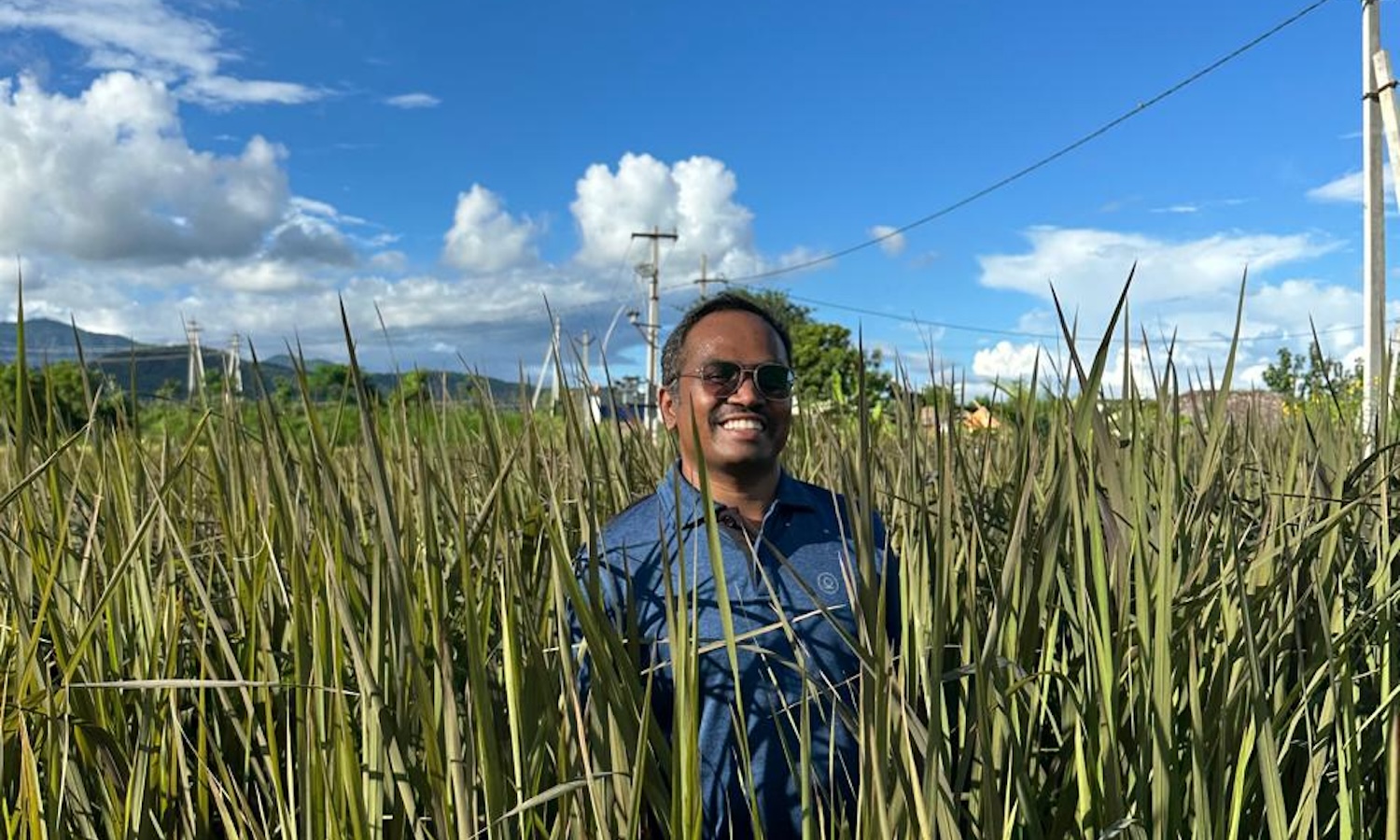
Meanwhile, across the world in Andhra Pradesh, India, farmers are preparing for the kharif or monsoon planting season. Rishi Cherukuri is busy sowing a green manure—a legume crop that naturally fixes nitrogen from the air. It’s one part of the farming system that helps him eliminate the need for chemical fertilizer in his rice paddy and improve soil health.
At the onset of the war in Iran, the Indian government rushed to source chemical fertilizer and natural gas to power domestic plants at vast expense to the public funds.
Recently, Prime Minister Narendra Modi urged farmers to adopt natural farming to help reduce fertilizer use by 50 percent. And, some states in the country, such as Bihar, have launched the Khet Bachao Abhiyan, a month-long campaign to promote efficient fertilizer use.
India imports 60 percent of its urea from the Middle East region, and its domestic fertilizer production relies on imported natural gas. Subsidies have kept prices low for farmers, but at an extreme cost for the government. Moving away from chemical fertilizers makes not just economic sense, it is a national security and food sovereignty issue.
“It all boils down to economics,” says Cherukuri. “It’s the tipping point that starts speaking to farmers.”
This most recent boost for alternatives to chemical fertilizer is a long time in the making, built on time-tested traditions and the success of the largest agroecological transition globally, the movement of nearly 2 million natural farmers in the Indian state of Andhra Pradesh. Cherukuri has been a strong proponent in moving away from chemicals in favour of natural farming, a system of agriculture that improves soil health with complex rotations of crops, and mixtures of animal dung and urine called ‘jivamrita’. The state-supported programme covering 64,000 square kilometres, has doubled farmers’ profits, maintained crop yields and improved biodiversity, becoming a global model for a transition to agroecological farming.
Cherukuri makes his own compost with animal manure, uses biofertilizers, and grows six varieties of rice in conjunction with different legumes—all practices that build soil fertility. In a few weeks, he’ll apply tree oil and fish guts to the rice paddy to stimulate microorganism activity in the soil—all improving fertility without synthetic fertilizer.
“Over the years, my yields are the same as anyone else,” says Cherukuri. “If you farm with nature, you don’t need [chemical] fertilizer.”
Half a world away, the impacts of the fertilizer crisis are also being felt in São Paulo, Brazil, where coffee plantations carpet the undulating hills. Here, intensive chemical fertilizer and monoculture have become the norm, says Leonardo de Lima Norenta, a small-scale farmer.
He says fertilizer prices have increased by 100 percent. Alongside this, frequent droughts, erratic rainfall, and extreme temperatures due to climate change are compounding the crisis in coffee production this year.
“Farming systems are not as resilient anymore,” Norenta says. He points to the root of the climate crisis and fertilizer crisis—a dependence on fossil fuels. His approach helps address both.
When Norenta took over his family coffee farm eight years ago, chemical use and monoculture production had depleted the soil. Now, avocado trees, bananas, and native species of trees provide shade to the coffee plants, offering shelter from the extreme temperatures. Fallen leaves decompose, adding layers of soil to the floor and retaining moisture longer during periods of drought while building fertility. To this, he adds concoctions of biofertilizers with fermented microorganisms collected from a nearby forest. But it takes time to build resilience and stabilize yields.
“You can see a huge difference in the soil over time, like from now, and then after eight years, and then two years,” Norenta says.
He says farmers want to reduce chemical fertilizer, but a lack of support to absorb the risks in trying alternatives can keep farmers locked in.
The success of the state-supported natural farming programme in India shows that governments must lead the way, helping to ease the burden of the transition on farmers. Governments must incentivize the use of biofertilizers and enable farmers to make the transition away from the dependence on fossil fuel derived fertilizers.
On Sebastiaan Huisman’s farm in Poland, it now costs less money to produce compost than to purchase chemical fertilizer.
He hasn’t used a drop of fertilizer for 18 years on his farm in Poland and produces 20,000 tonnes of organic compost every year for his crops and grasslands. He says the war in Iran means that his compost, including the labor and investment, is €2 (US$2.32) cheaper than chemical fertilizer for every kilo of nitrogen content, saving him €40,000 (USD 46500) in total this year.
The rewards of rich soil health go beyond the high prices of fertilizer.
“I have a fertile soil with more humus content, so in wet or extreme weather situations, I’m more resilient,” says Huisman. “It pays off.”
Other farmers are noticing.
“One farmer who is keen to transition away from fertilizers asked me to help him, and I’m advising him. He sees he can save loads on fertilizers.”
This shift to reducing chemical fertilizers for farming cannot happen overnight. A crisis can expose the problem, but farmers need support to make a transition. Today, nearly US$650 billion is spent on subsidizing industrialized agriculture, half of which accounts for harmful subsidies that lock in such dependencies. The Global Alliance for the Future of Food’s analysis from the collaborative work on Regenerative & Agroecological Food Systems Transitions (RAFT) shows that transition incentives should include financial incentives from banks and other financial institutions, subsidies for locally produced bioinputs, training and extension, technical assistance and farmer exchange programs, and scaling out public policy to support agricultural research.
These testimonials are proof that farmers who are better equipped to resource their inputs locally are less likely to be hit with the uncertainty of global shocks and expensive fertilizers. But to scale up this transition required political will to redirect subsidy models that underpin a fossil-fuel intensive food system. Some countries are taking important steps. According to the Agroecology Coalition more than 50 governments have developed national, regional or subnational agroecology strategies to support transitions away from fossil fuel and chemical inputs.
The war in Iran increasingly reveals the true costs of farming dependent on fossil fuels.
“Farmers are realizing the economic push to go beyond fossil fuel derived farm inputs,” says Cherukuri.
From Zimbabwe to India, Brazil to Poland, farmers are demonstrating that resilience is not only about adapting to the climate crisis—it is also about reducing dependence on fragile global supply chains and fossil fuel-based inputs. As fertilizer prices increase, regenerative, organic, and agroecological approaches offer a pathway toward greater food sovereignty for farmers, communities, and food systems alike.
Articles like the one you just read are made possible through the generosity of Food Tank members. Can we please count on you to be part of our growing movement? Become a member today by clicking here.
Photo courtesy of Rishi Cherukuri