
The U.S. Department of Agriculture (USDA) is considering a proposal to increase line speeds in pork and poultry processing plants. Its goal, they say, is to increase efficiency, lower grocery costs, and strengthen the supply chain. But policymakers, workers groups, and advocacy organizations are voicing concerns about worker and food safety, animal welfare, and negative economic consequences.
“As Secretary, my responsibility is to ensure that American families have access to affordable, safe, and abundant food,” says U.S. Secretary of Agriculture Brooke Rollins. By updating slaughterhouse regulations, the USDA aims to lower production and grocery costs, create a stronger food system, and remove barriers to efficiency.
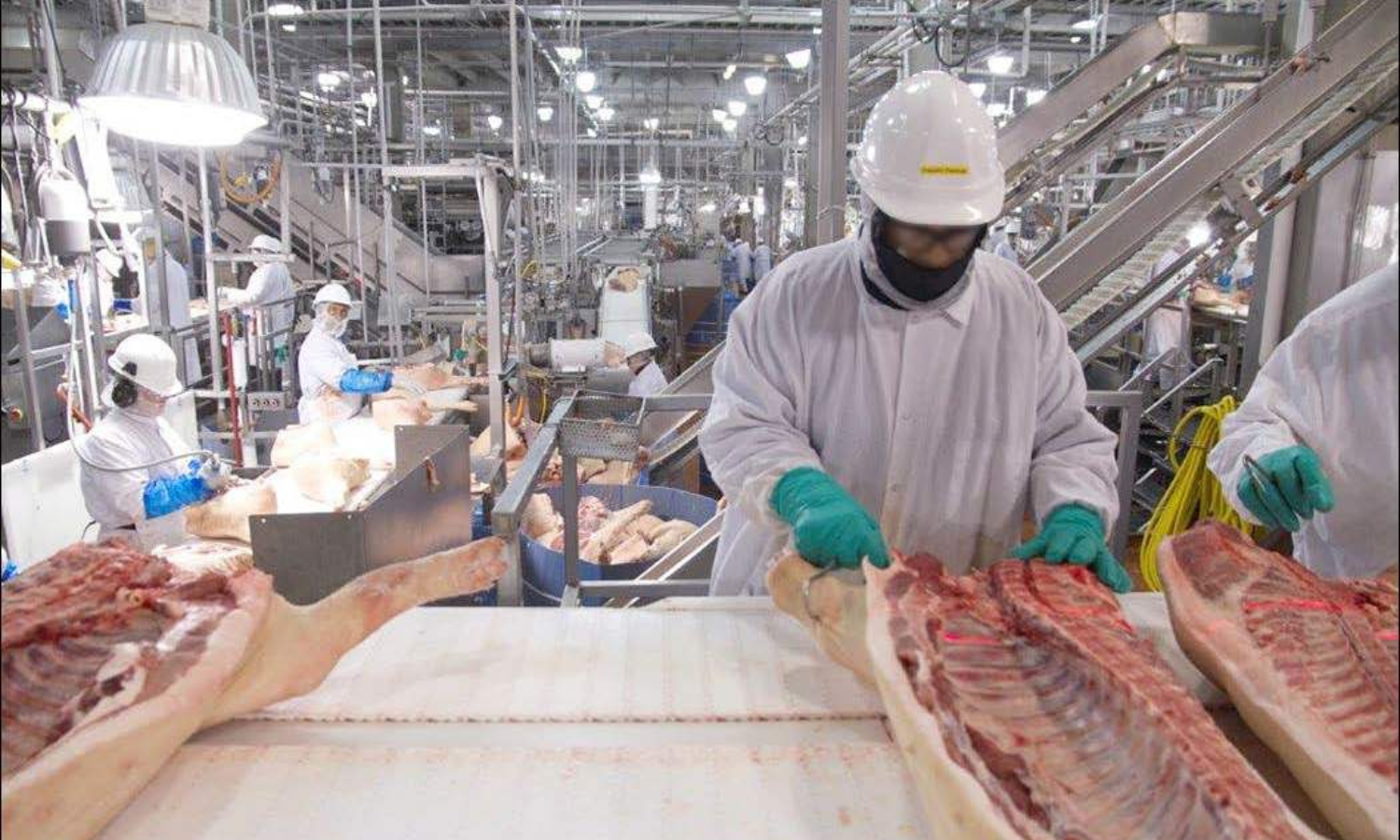
If adopted, the proposal will raise line processing speeds to a maximum of 175 chickens per minute (from 140) and 60 turkeys per minute (from 55), and remove the limit for pigs entirely. It also eliminates the requirement that New Swine Slaughter Inspection System (NSIS) plants submit an annual attestation that documents working condition monitoring. This effectively leaves all worker safety regulation and reporting to the Occupational Safety and Health Administration (OSHA).
“Lifting the cap on the rate of meat slaughter shows a disturbing lack of care by USDA for the safety of the men and women working in meatpacking plants,” U.S. Senator Cory Booker (D-NJ) tells Food Tank. He adds, “Increased slaughter line speeds are inhumane for the animals and will make workers collateral damage to the meatpackers’ relentless drive toward ever higher profits.”
An average of 27 workers a day sustain severe injuries, including the loss of a body part, or require an overnight hospital stay, according to an article by Debbie Berkowitz and Patrick Dixon. The USDA’s own study finds that piece rate—a metric of job-specific line speeds and staffing levels—can cause an increase in musculoskeletal disorder, which 81 percent of plant workers are at high risk for. Of the 40 percent of workers who experience moderate to severe work-related pain, almost half did not report it to their supervisor, according to the USDA report.
These injuries are a result of supervisors pressuring employees to work as fast as possible, according to Axel Fuentes, the Executive Director of the Rural Community Workers Alliance. He says that workers have no time to sharpen and sheath their knives, causing them to stab themselves or their coworkers. Workers do not get bathroom breaks, putting them, especially pregnant individuals, at risk for developing a urinary tract infection. While OSHA is meant to protect workers, it cannot regulate line speeds. The USDA, which oversees line speed regulation, will only do so to ensure food safety.
But Fuentes tells Food Tank that plant workers have seen USDA inspectors “just turn their eyes away” at food safety violations. Current line speeds are so fast that “meat gets piled, it can fall on the floor. [Workers] have even seen supervisors coming and picking up the meat from the floor and putting it back on the conveyor belt when it’s already contaminated,” says Fuentes. Because of the pressure to maintain line speeds, workers are unable to stop the conveyor belt to clean it.
Increasing line speeds can also negatively affect rural economies, Mark Lauritsen, International Vice President and Director of the Food Processing, Packing, and Manufacturing Division at the United Food and Commercial Workers Union (UFCW), tells Food Tank. He says that this proposal can lead to further industry consolidation, causing plant closures and eliminating jobs.
“When you take that kind of revenue out of the town, the tax base diminishes, the businesses diminish, the school gets diminished… and that’s going to really have a bad impact on rural America,” Lauritsen explains. He points to the Tyson plant closure in Lexington, Nebraska as an example and adds that greater efficiency means fewer working hours and smaller paychecks for plant workers.
Rules and regulations are in place that protect meat processing workers and ensure food safety, but these measures largely fail, especially under the current administration, Lauritsen says. With the increase in U.S. Immigration and Customs Enforcement (ICE) raids, undocumented workers are reluctant to report job-related injuries out of fear of deportation. These individuals make up an estimated 30 to 50 percent of the meatpacking workforce, according to a study in the Journal of Agricultural and Resource Economics.
In the Missouri plants where Fuentes organizes, workers are now less likely to complain when they are mistreated by a supervisor, including women who experience sexual harassment. Without the NSIS annual attestation requirement, he expects that workplace injuries are likely to be further under reported. Fuentes is also receiving more phone calls from workers experiencing mental distress since the administration change as stress levels rise.
“This government is not protecting workers at all,” says Fuentes. “The only way to tackle this is getting organized… and [using] the collective power to make sure that the company can treat the workers better and can avoid violating workers’ rights.”
Articles like the one you just read are made possible through the generosity of Food Tank members. Can we please count on you to be part of our growing movement? Become a member today by clicking here.
Photo courtesy of U.S. Government Accountability Office, Wikimedia Commons