
Despite uncertainty over tariffs and the overall economy, American shoppers are expected to spend more during the 2025 holiday shopping season, according to the latest forecast from the National Retail Federation, which estimates that shoppers will make an increase of 3.7 percent to 4.2 percent over the same two-month period a year ago.
However, as shoppers look to find products that fit their budget, lifestyle and needs, many are also looking for items that align with their values.
Now more than ever, we’re seeing shoppers turn to labels like organic, single-origin, ethically sourced and Fairtrade to trust that the items in their shopping carts are sourced with both people and planet in mind.
These informed choices show it’s not just about quality ingredients for consumers: it’s about transparency.
At 78 years old, spice farmer A.G. Nandasena attributes part of his good health to the “peaceful and supportive life” made possible by the benefits afforded to farmers through Fairtrade.
He grows household spices like cinnamon, cardamom, ginger, pepper and turmeric in his forest garden farmland in Sri Lanka, where the crops are interspersed among wild native plants to preserve biodiversity, prevent soil erosion and increase much needed shade for the wildlife that inhabits it.
For more than 20 years, Nandasena has exclusively implemented organic practices through Fairtrade certification, which not only benefits the native plants and animal species on his land, but it also offers him the opportunity to earn higher profits for his crops, which has helped Nandasena educate his children and access housing, furniture, and healthcare.
Farmers stories like Nandasena’s prove what’s possible when we center the needs of smallholder farmers through fairer farming practices.
And customers see this value: research conducted in 2025 by independent firm Globescan showed that 72 percent of American consumers who have seen the Fairtrade Mark are willing to pay more to ensure the farmers behind their favorite products are paid a fairer price.
Yet, for decades we’ve seen small-scale farmers behind the products that Americans know and love struggling to receive fair and sustainable prices for their goods and labor.
Fairtrade helps ensure farmers are paid fairly for their products by identifying a minimum price, which includes meeting high standards for labor practices and environmental and human safety. This price protects farmers when global market rates drop to help ensure that they’re able to maintain responsible practices.
In addition, Fairtrade Premiums are added to the price of the commodity. These funds go directly to a network of producers, who democratically decide how to use that money to support their community.
However, not every product has a fixed Fairtrade minimum price and premium yet; spices are a prime example. In some cases, the Fairtrade Premium varies not just by crop, but by country.
To address this, Frontier Co-op and Fairtrade America partnered on a pilot program to establish Fairtrade pricing for three key spices grown by our partners in Guatemala: organic cardamom, turmeric, and allspice. This is important because spice prices fluctuate often between extreme highs and lows, and unlike other commodities, pricing is not publicly available. Lack of transparent pricing puts farmers at a disadvantage. The initiative is designed to improve farmers’ stability and resilience in the face of socioeconomic and climate-related challenges outside of their control.
If successful, this program can be scaled to prove a more stable global market demand for their fairtrade products, expand the availability of Fairtrade spices in the United States for consumers, and change the way we understand Fairtrade premiums.
As global markets grow even more unpredictable due to geopolitical issues, shifting weather patterns, and increasing climate-related natural disasters, it’s clear that small-scale farmers are facing monumental challenges.
That’s why Fairtrade is such a vital linchpin in ensuring farmers are paid a fair price for their goods and sets a high standard that prohibits child labor, protects workers’ rights, and promotes sustainable farming practices that improve the environment.
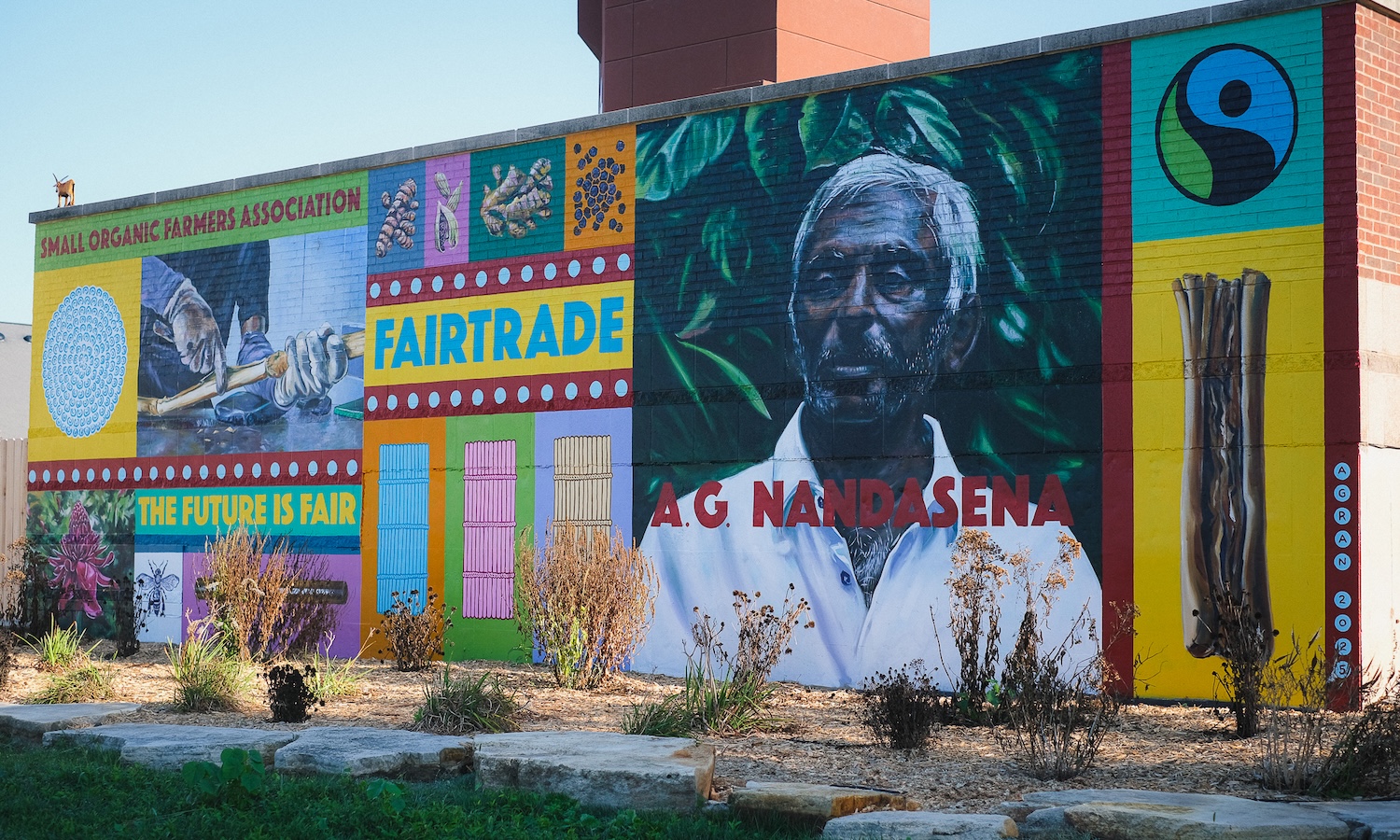
In October 2025, Fairtrade Month, Fairtrade America commissioned local murals across the country to depict Fairtrade farmers, including Nandasena, to share their stories and entice shoppers to learn more about products that are sustainably sourced and work to increase fairness and equity in our global food supply chain.
When shoppers understand what that label represents—fairer pay, safe working conditions, and community investment—it becomes much more tangible how their purchasing decisions directly impact farmer livelihoods. By choosing products with the Fairtrade Mark, we can ensure smallholder farmers earn a fairer price for their goods and help strengthen their communities.
As consumers, brands, and cooperatives standing with and supporting Fairtrade, we can move beyond a profit-over-people model to build a food system that works for everyone.
Articles like the one you just read are made possible through the generosity of Food Tank members. Can we please count on you to be part of our growing movement? Become a member today by clicking here.
Photo courtesy of Avery Shrader