
This article is part of Food Tank’s primer series, “Food Tank Explains.” Each installment unpacks the ideas, innovations, and challenges shaping today’s food and agriculture systems, offering clear insights into complex topics. To explore more articles in the series, click here.
El Niño is a naturally occurring climate pattern marked by unusually warm surface waters in the central and eastern Pacific Ocean. The resulting changes in ocean and atmospheric conditions reshape weather patterns, with far-reaching effects on agriculture, marine ecosystems, and food security.
El Niño is one phase of the three-part cycle driving Pacific temperatures and atmospheric conditions, referred to as the El Niño-Southern Oscillation (ENSO). El Niño is ENSO’s warm phase, La Niña is its cool phase, and ENSO-neutral occurs when conditions remain close to their long-term averages.
During ENSO-neutral, trade winds push warm surface waters westward toward Asia and Australia while cold, nutrient-rich waters rise to the surface along the Pacific coast of the Americas through a process known as upwelling.
“Every El Nino is not the same; each one is unique with its own imprint on our weather,” says Ken Graham, Director of the U.S. National Oceanic and Atmospheric Administration’s (NOAA) National Weather Service. Typically, during El Niño, westward winds across the Pacific weaken, allowing warm waters to flow east.
The resulting atmospheric and water temperature changes drive local weather in regions across the world. “The footprint of an El Niño travels far beyond its origins,” says U.N. World Meteorological Organization (WMO) Secretary-General Celeste Saulo.
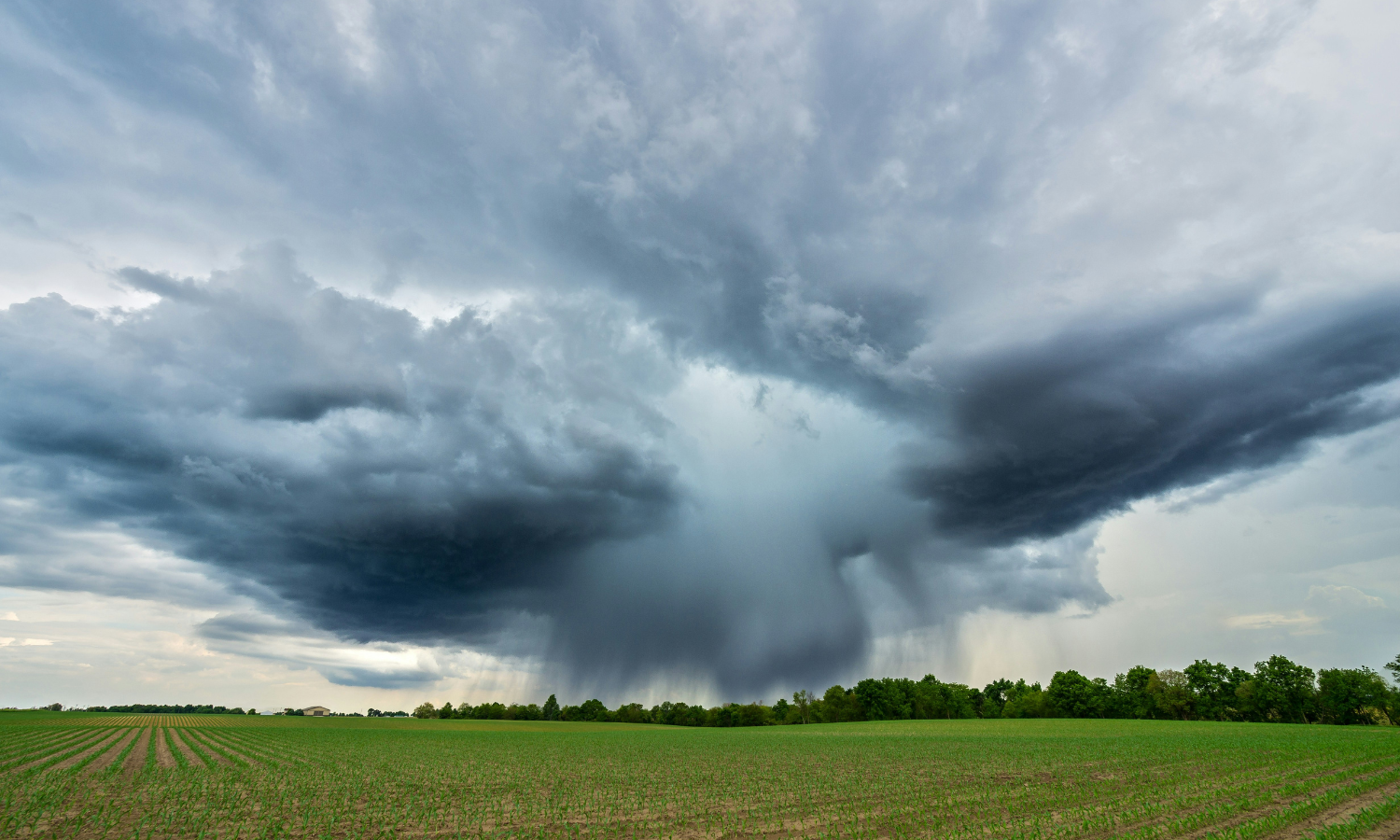
Evaporation increases over the warmer eastern waters, bringing unusually heavy precipitation to parts of western South America, the southern United States, the Horn of Africa, and Central Asia. The increased rainfall often triggers flooding, erosion, and landslides that damage infrastructure and farmland. And the eastern Pacific’s warmth suppresses upwelling along the Pacific coast of the Americas.
According to research published in the Journal of Oceanography and Marine Research, upwelling is essential to the productivity and health of marine ecosystems. The cool, nutritious water supports the growth of phytoplankton, which, directly or indirectly, provide food for nearly all other marine creatures.
Without this steady supply of nutrients, plankton populations decline, disrupting marine food webs. As fish populations shift or decline, fish catches fall, threatening the livelihoods of coastal communities that depend on fisheries.
As rainfall increases in parts of the eastern Pacific, many regions in the western Pacific experience the opposite effect. El Niño often brings drought to Australia, the Pacific islands, India, southern Africa, and parts of Southeast Asia, along with more frequent heat waves and wildfires.
Reduced rainfall limits irrigation, disrupts crop production and monsoons, and places additional pressure on food systems. Mohamed Adow, Director of Power Shift Africa, says that for millions of people, El Niño “means failed rains, dying crops, rising food prices, and families pushed to the edge yet again.”
Although the scientific record of El Niño begins in the sixteenth century, researchers theorize that El Niño contributed to the decline of civilizations including the Moche and Inca. Archaeological evidence also suggests that some Indigenous communities adapted to El Niño by harnessing its rainfall, digging ground aquafers that stored water for future farming use, while others built terrace farms to escape flooding.
Modern El Niño events have also had significant consequences. The 1877–78 event contributed to one of the deadliest famines in recorded history, claiming more than 50 million lives worldwide. The 1982–83 event brought drought, dust storms, and wildfires to Australia, Africa, and Indonesia and flooding to South America, causing nearly 2,000 deaths and over US$13 billion in damages.
The 2015–16 El Niño contributed to widespread crop failures across Southern Africa, leaving more than 60 million people in need of humanitarian food assistance. The 2023–24 event, ranked among the five strongest on record, contributed to record-high ocean temperatures, precipitation extremes in Africa, and severe drought in the Amazon and Central America in 2024.
Climate agencies agree the next El Niño is likely to develop this summer. WMO estimates an 80 percent chance that El Niño will develop this summer and more than a 90 percent chance that it will persist into late 2026.
The European Union’s Copernicus Climate Change Service likewise concludes that an El Niño this year is virtually certain, while NOAA warns there is a substantial chance it could rank among the strongest events in the historical record.
Officials in Australia, India, the Philippines, and Argentina, among elsewhere, have issued reports on the upcoming event’s likely impacts. The U.N. Food and Agriculture Organization (FAO) and World Food Programme have issued a joint alert mapping out agricultural risks.
Though El Niño occurs at irregular intervals, it often develops slowly enough to be forecast months in advance. That predictability allows governments and humanitarian organizations to take anticipatory action, protecting crops, livestock, water resources, and infrastructure before climate shocks occur, FAO says.
Ahead of the 2023–24 El Niño, FAO implemented anticipatory actions in 24 countries, reaching 1.7 million people with drought-tolerant seeds, irrigation improvements, and livestock support. According to the FAO, these interventions helped farmers avoid difficult financial decisions, such as selling productive assets or taking on debt, that can leave households more vulnerable in the future.
The World Resources Institute highlights early actions such as strengthening flood protections, repairing irrigation systems, and providing cash assistance before disasters strike to help communities protect water supplies, reduce economic losses and improve resilience to future climate shocks.
“Instead of scared, we can ask people to be prepared,” says Muhammad Azhar Ehsan, a Columbia University climate scientist and El Niño expert.
Articles like the one you just read are made possible through the generosity of Food Tank members. Can we please count on you to be part of our growing movement? Become a member today by clicking here.
Photo courtesy of NOAA