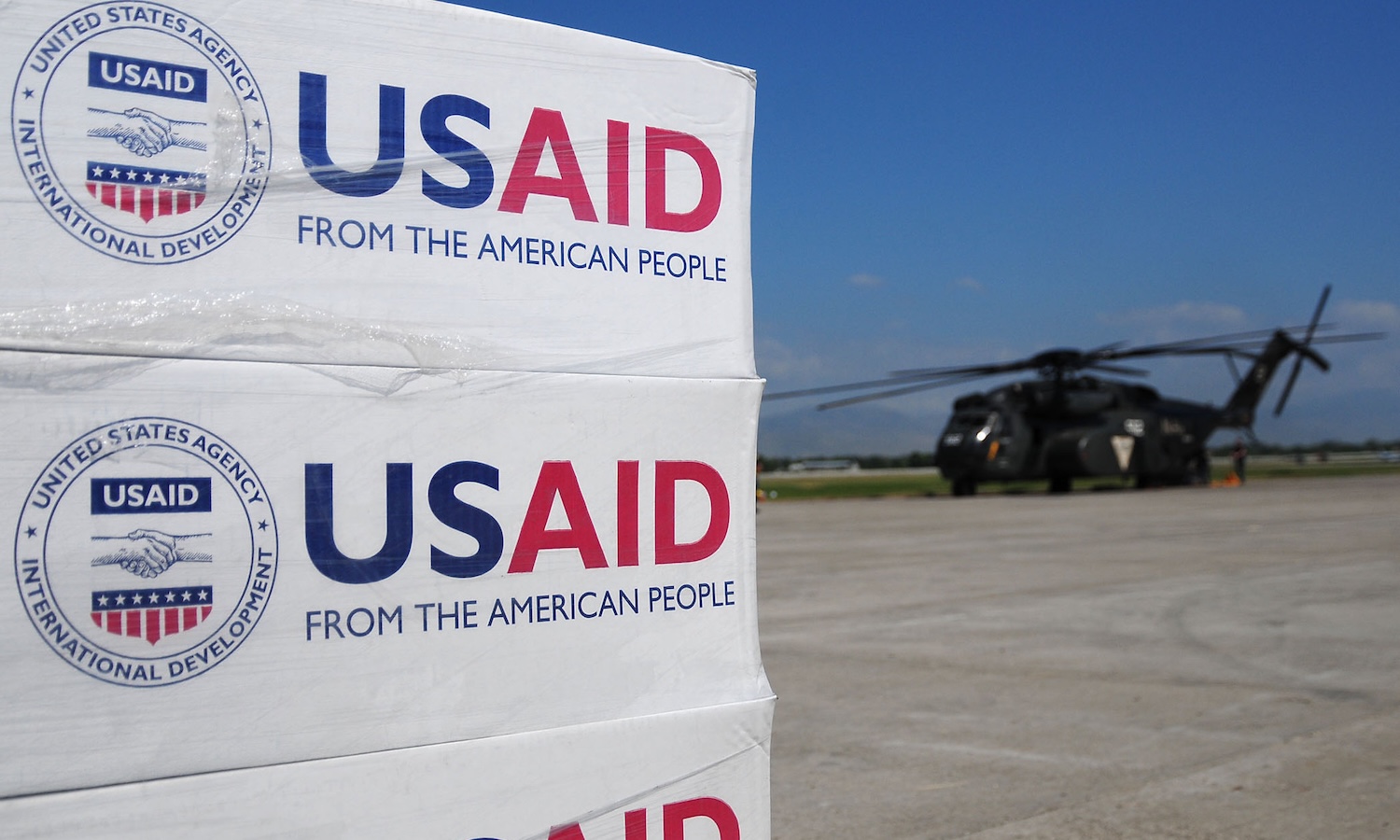
In the year since the closure of the U.S. Agency for International Development (USAID), hunger and malnutrition are on the rise, food systems researchers say.
When the dismantling of the agency began in 2025, programs were abruptly canceled, ending life-saving food aid for some of the world’s most vulnerable populations. Assistance meant to tackle the root causes of hunger—including initiatives that supported access to better seeds, fertilizer, and markets—also disappeared.
In the short and intermediate term, there’s “no question that food insecurity has risen,” Patrick Webb, a Professor of Food and Nutrition Economics at the Friedman School of Nutrition Science and Policy at Tufts University, tells Food Tank.
Webb, who previously served as USAID’s Chief Nutritionist, explains that these cuts have cumulative effects as the damage from lost harvests builds year over year. Meanwhile, the recent United States’ war in Iran sent fuel and fertilizer prices spiking “at the wrong time,” he says. “It’s a real perfect storm.”
There’s also a “parallel story” that has unfolded as relationships between the U.S. and local partners became “badly damaged,” Caitlin Grady, an Associate Professor and Director of Research and Policy at the Global Food Institute (GFI) at the George Washington University, tells Food Tank.
Research from GFI reveals that trust from on-the-ground partners has eroded after organizations were left stranded mid-project. These relationships may take years to restore, but Grady says this story is sometimes overshadowed by the headlines around the growing hunger and health crises.
Although Grady and Webb are confident that conditions in regions once supported by USAID are deteriorating, accurately measuring the consequences of aid cuts is becoming harder.
There is “a widespread worsening of access to knowledge and information,” Grady tells Food Tank. One person she and her team surveyed said that the disruptions are directly affecting their organization’s ability to plan their assistance on the ground as it becomes harder to determine where need is greatest.
“That, to me, also represents a hit to knowledge, a hit to science, and a hit to progress,” Webb states.
Listen to or watch the full conversation with Patrick Webb and Caitlin Grady to hear more about why the loss of institutional knowledge is so worrying, the repercussions of program cuts on the U.S., and finding glimmers of hope.
Articles like the one you just read are made possible through the generosity of Food Tank members. Can we please count on you to be part of our growing movement? Become a member today by clicking here.
Photo courtesy of Wikimedia Commons