Each week, Food Tank is rounding up a few news stories that inspire excitement, infuriation, or curiosity.
El Niño Begins
The U.S. National Oceanic and Atmospheric Administration announced that El Niño has officially begun.
El Niño, marked by a warming of the ocean surface, is a natural climate pattern that develops every two to seven years, but forecasters are increasingly predicting that this could be one of the strongest on record.
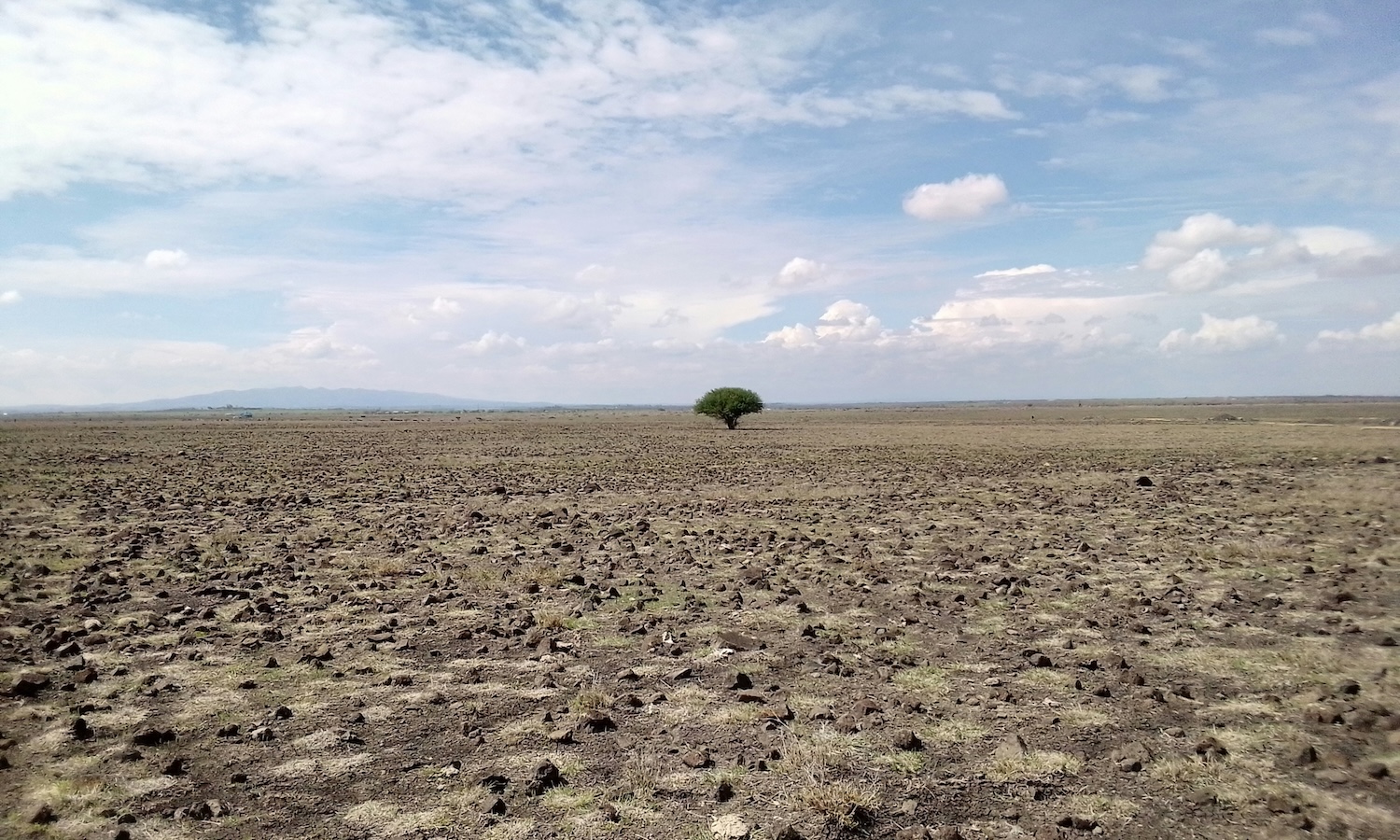
The U.N. Food and Agriculture Organization reports that there is a high probability of agricultural drought as a result. The Sahel, Southern Africa, South and Southeast Asia, Central America’s Dry Corridor, and the Caribbean are likely to feel the effects strongest. Mohamed Adow, Director Power Shift Africa, says that for millions of people, El Niño “means failed rains, dying crops, rising food prices, and families pushed to the edge yet again.”
On the other hand, some regions like western South America may experience flooding. Other regions like Northeast Africa may be bracing for a “weather whiplash” with dangerously heavy rains and intense drought.
The effects—together with the impact of the war in Iran—may create a hunger crisis for more than 100 million people globally.
Scientists Discover Gene to Help Rice Withstand Extreme Heat
Researchers from the International Rice Research Institute (IRRI) and Japan’s National Agriculture and Food Research Organization (NARO) recently discovered a gene that helps keep rice plants safe from extreme heat during its most sensitive flowering stage.
The gene, called EMF3, shifts rice flowering to the early morning when temperatures are lower, allowing the plant to avoid heat stress, which can reduce grain formation and lower yields in tropical and subtropical regions.
NARO explains that the discovery “allows rice to ‘escape the heat’ at its most critical stage…ensuring farmers can harvest even under extreme temperatures.” While this version of the gene appears to be rare, researchers say, it has the potential to work across many popular rice varieties. The trait may be “advantageous” for hybrid seed production and gives seed breeders an important tool.
Dr. Ishimaru of NARO says “We can spend hot days in air-conditioned rooms, but rice plants must survive field heat. With EMF3, they ‘wake up’ early to avoid heat stress, showing that sometimes, being an early riser is key, not just for birds but for crops too.”
Rice is an important staple food for more than half the world’s population, making it an exciting breakthrough for researchers.
Number of Dairy Farmers in Britain Hits Record Low
For the first time, the number of dairy farmers in Great Britain has dropped below 7,000.
The Agriculture and Horticulture Development Board (AHDB) estimates that 6,850 dairy producers remain, representing a 15 percent reduction in the last five years. Difficult market conditions, falling milk prices, rising production costs, and consolidation are all placing greater pressure on operations.
The Guardian recently reported that the United Kingdom is seeing a spike in factory-style dairy farming as farmers feel forced to “go big” and boost productivity. One producer, who asked to remain anonymous, said that they “feel like they’ve got to do it.”
The AHDB describes farmer sentiment as “largely negative” and although milk prices have stabilized “they will need to improve further to increase farmer confidence.”
It’s not just in Britain where this is happening. In the United States, the number of dairy farms has fallen by 95 percent since the 1970s, U.S. Department of Agriculture data show.
Smarter Land Use Can Unlock Biodiversity Gains
A new study published in Science finds that across 146 countries analyzed, there is incredible potential to conserve biodiversity, strengthen economic development, and support the health of the environment if land use and land management practices are improved. And it’s economically feasible.
The researchers wanted to challenge the idea that it’s too expensive to take climate action. Stephen Polasky, lead author on the study, explains, “One of the main reasons for doing this study was to show, in fact, that there are ways where we can be more efficient and address climate and biodiversity without bankrupting people.”
Polasky and his collaborators hope that the study will help organizations bring in more support and investment as they tackle issues of biodiversity loss and the climate crisis and show people that “making some of the changes is not so scary.”
Land reallocation, including reforestation in highly productive areas, and crop intensification in regions with low-yield agriculture, can bring about tangible gains.
Becky Chaplin-Kramer, Global Biodiversity Lead Scientist at WWF-US says the research proves that there does not have to be a trade-off between protecting nature and growing biodiversity.
Project Empowers 10,000 Latin American and African Farmers
The Inter-American Institute for Cooperation on Agriculture recently announced that in the two years since the launch of the Rural Advisory and Agroecology Project (AERAS), the initiative has empowered more than 10,000 farmers across these two regions.
The project provides training and technical support to help farmers raise livestock and produce crops including cocoa, coffee, vegetables, and tropical roots.
Farmers have learned how to reduce chemical inputs, improve soil health and biodiversity, diversify their incomes, and more.
To implement the initiative IICA is working with the Latin American Network of Rural Extension Services (RELASER), the Global Forum for Rural Advisory Services (GFRAS), the Young Professionals for Agricultural Development (YPARD) network, and Access Agriculture.
As they look ahead, extension officers, institutional partners, and public-private stakeholders recently met in Costa Rica to build a roadmap that will shape the future of the project. Next steps will include a network for collaboration between public and private institutions, and new commitments that will promote agroecological farming.
Oswaldo Páez Aponte, a consultant to the project, explains, “The most significant thing is to ensure that these agroecological practices do not remain on paper but gain traction in the organizations that are providing extension and consultancy services in rural areas.”
Articles like the one you just read are made possible through the generosity of Food Tank members. Can we please count on you to be part of our growing movement? Become a member today by clicking here.
Photo courtesy of Lazarus Okuku, Unsplash