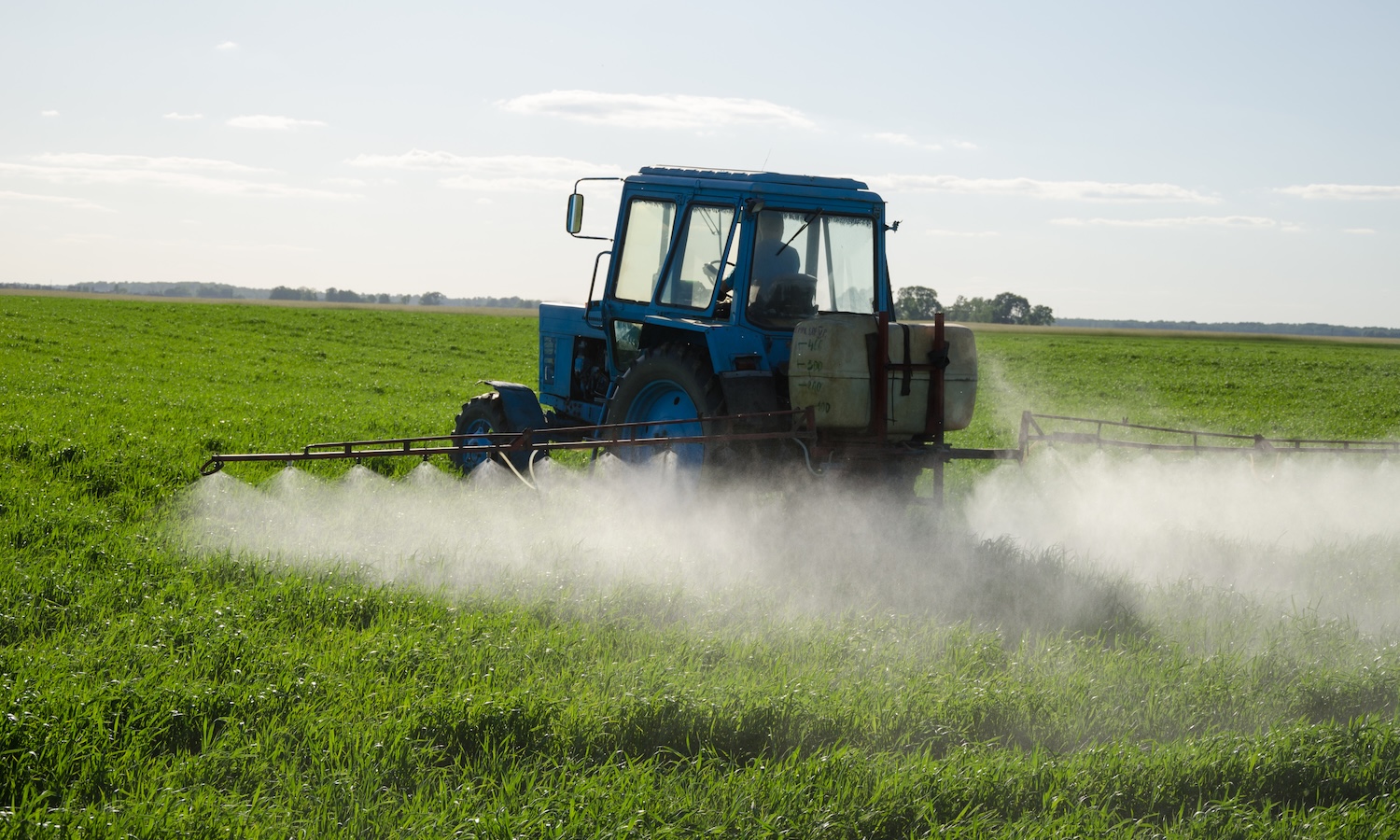
The U.S. Supreme Court recently ruled in favor of Bayer’s subsidiary Monsanto, stating that the company cannot be sued for failing to warn of weedkiller Roundup’s cancer risks. The 7-2 decision is expected to block thousands of lawsuits against the company.
The Federal Insecticide, Fungicide, and Rodenticide Act (FIFRA)—which gives the U.S. Environmental Protection Agency (EPA) authority over pesticide registration, sale, and use—sat at the heart of the Monsanto v. Durnell case. The court considered whether the federal law preempts state claims that the company failed to warn of Roundup’s risks.
The World Health Organization classifies glyphosate, the main ingredient in Roundup, as a probable human carcinogen. But the EPA states that it is safe when used as directed and does not require a cancer warning label.
Offering the majority opinion, Justice Brett Kavanaugh writes that, under FIFRA, this means states can’t impose labeling requirements that differ from the federal agency’s.
Justice Ketanji Brown Jackson wrote the dissent, stating, “FIFRA expressly limits States’ authority to regulate pesticide labels, but it does not eliminate that authority.” Jackson was joined by Justice Neil Gorsuch.
Missouri resident John Durnell filed the case after he developed non-Hodgkin’s lymphoma, which he ties to his years of applying Roundup in his community’s parks. In 2019, Durnell was awarded US$1.25 million by a jury when the court ruled that Bayer did not warn of the cancer risks associated with the product. Durnell’s case was appealed, however, and he never received the money.
“In accepting Monsanto’s argument and holding that Durnell’s failure-to-warn claim is preempted, the Court misunderstands FIFRA’s requirements, misinterprets the scope of FIFRA’s preemption, and ultimately leaves Durnell without a remedy for the significant harms he has suffered,” Jackson states.
Similar lawsuits pending against Monsanto likely will not move forward as a result of the Supreme Court’s decision, investigative journalist Carey Gillam reports. It will also make it more difficult for people to hold companies accountable when their products pose any kind of danger to the public.
“There are thousands of cases that are like mine that will not see court now,” says Durnell. “So that is the biggest disappointment for me.”
Environmental and agricultural advocacy groups expressed disappointment with the ruling, saying that it goes against scientific evidence of the herbicide’s risks. Food & Water Watch calls the decision “a disaster for public health” and states, “Once again, the Supreme Court has sided with big business over people and the environment.”
Articles like the one you just read are made possible through the generosity of Food Tank members. Can we please count on you to be part of our growing movement? Become a member today by clicking here.
Photo courtesy of Aqua Mechanical via Flickr