A version of this piece was featured in Food Tank’s newsletter, released weekly on Thursdays. To make sure it lands straight in your inbox and to be among the first to receive it, subscribe now by clicking here.
Greetings from Des Moines, Iowa. I’m here for the World Food Prize and Borlaug Dialogues, an annual gathering of people working to address hunger and improve food and agriculture systems.
And I have a confession—I love attending the World Food Prize.
I’ve been coming since the early 2010s. For a long time, part of what made it interesting was that there weren’t many people like me here—advocates for sustainable agriculture who wanted to talk about agroecology, biodiversity, how agriculture can be part of the solution to the climate crisis, and the power of farmers.
The Dialogues bring together scientists, academics, policymakers, and plenty of representatives of Big Ag. This year’s announced speakers include leaders from ADM, John Deere, and Corteva. I used to joke that I was one of the few people who could attend the World Food Prize one week and the Organic Trade Association’s annual meeting the next. And, to the Foundation’s credit, I’ve been invited to moderate side events and emcee a plenary session.
I also have some interesting memories.
One year, I was grabbing a drink at the hotel bar when two men invited me to join them. One was a scientist at a major agrochemical company and the other led a farmers and ranchers organization.
Why not sit and have a drink, I thought.
After some very quick pleasantries, they said I was using my Twitter account to criticize their organizations. For the record, I hadn’t. When I explained that, their response was, essentially, “Well, people like you do.” And I thought to myself, what do you mean, people like me?
I tried to explain that their assessment of me—and my work—was incorrect. The conversation went in circles, and I eventually hightailed it out of there.
By the way, I’m now friendly with both of them. I even made it onto one’s Christmas card list.
That experience stayed with me because it showed me how quickly we—all of us—can decide we already understand someone else based on preconceived notions. Sustainable agriculture advocate? We know what he thinks. Corporate scientist? We know what she believes. But we often don’t.
We need more good food and agriculture advocates at events like the Borlaug Dialogues. We need food is medicine leaders, climate activists, public health advocates, young farmer organizations, Indigenous food leaders, and farmworker advocates. Their experiences can really help shape the conversations that happen there. And to be fair, more and more of these folks are coming to the Borlaug Dialogues.
And all of us—Big Ag executives and agroecology advocates included—need to spend time in rooms where people disagree with us. We need to listen long enough to understand why we are on different ends of a very broad spectrum of what it will take to nourish both people and planet.
The issues we’re working on are complicated. If we want real food and agriculture transformation, we’re going to have to get uncomfortable.
Maybe not being accosted at the hotel bar uncomfortable. But uncomfortable enough to recognize that our comfort zones aren’t getting us very far.
Which brings me back to the Prize itself.
Often described as the Nobel Prize for food and agriculture, it grew out of Norman Borlaug’s vision for recognizing people who improve the world’s food supply. Borlaug, a plant pathologist widely known as the father of the Green Revolution, helped transform wheat production and later directed the wheat program at CIMMYT, the International Maize and Wheat Improvement Center.
I see how the Foundation is evolving. Under the leadership of former U.S. Secretary of Agriculture and Foundation CEO Tom Vilsack and President Mashal Husain, there are opportunities to broaden both the conversation and our understanding of who leads change. This year’s program includes actors Martin Sheen and Nick Offerman, as well as Nobel Peace Prize laureate and education advocate Malala Yousafzai.
People whose work I admire, including Cary Fowler, Lawrence Haddad, and Mariangela Hungria, are also recipients of the World Food Prize. Their leadership is one of the reasons I think the World Food Prize and Borlaug Dialogues are important and why I keep coming back.
But I want the conversation to keep evolving, too. We need to ask more difficult questions about what food and agricultural progress looks like, whose knowledge informs it, who benefits, who has power, and who doesn’t.
For me, a Green Evolution—a term I stole from Bram Govaerts, the current Director General of CIMMYT—would mean putting farmers’ livelihoods, healthy soils, biodiversity, and nutritious diets at the center of how we measure success. And that requires looking around the room.
How many smallholder farmers, farmworkers, and grassroots organizers have the resources to travel to Des Moines, stay in a hotel, and take several days away from their work? Being invited to speak and being able to participate are different things. Even a waived registration fee doesn’t make it easy for someone to leave their farm.
And the World Food Prize Foundation has had support from agribusiness including ADM, Cargill, Monsanto, Syngenta, and the John Deere Foundation over the years. I don’t necessarily think that is bad as long as that support doesn’t influence which conversations happen, who is in the room, and who gets to be heard.
The history of the Prize also has me scratching my head sometimes. In addition to the folks I mentioned, in 2013, it honored Robert Fraley, then Monsanto’s chief technology officer, and Mary-Dell Chilton of Syngenta, alongside Marc Van Montagu, a molecular biologist, for their contributions to modern plant biotechnology. Monsanto itself didn’t win the Prize. But scientists working at major agribusiness companies did.
That history makes it reasonable to ask what kinds of innovation receive the greatest recognition. A breakthrough in a laboratory can change lives. So can organizing farmers, protecting seed diversity, restoring degraded land, or helping women gain control over their incomes.
This year’s laureate, Dutch food safety scientist Huub Lelieveld, is doing important work. The Foundation is recognizing his efforts to prevent foodborne illness and build international cooperation around food safety. Safe food is fundamental to food security, and that contribution deserves respect.
But I hope the Prize will direct more attention and resources toward leaders whose work is too often overlooked, particularly in the Global South.
The funding and international aid context makes that urgent. According to preliminary OECD figures, official development assistance from its Development Assistance Committee members and associates fell by 23.1 percent in real terms in 2025—the largest annual decline on record. That is a broad aid figure, but it highlights the funding pressures facing work on food security, agricultural development, and global health.
A 2025 study published in The Lancet projected that continued cuts to funding for the U.S. Agency for International Development could lead to more than 14 million additional deaths by 2030, including 4.5 million children younger than five.
The hunger consequences are equally alarming. In October 2025, the World Food Program warned that funding cuts from the United States and other donors could push 13.7 million people receiving its assistance from crisis into emergency levels of hunger, one step below famine on the five-level food insecurity scale.
And this year, I think the Prize missed a particularly powerful opportunity.
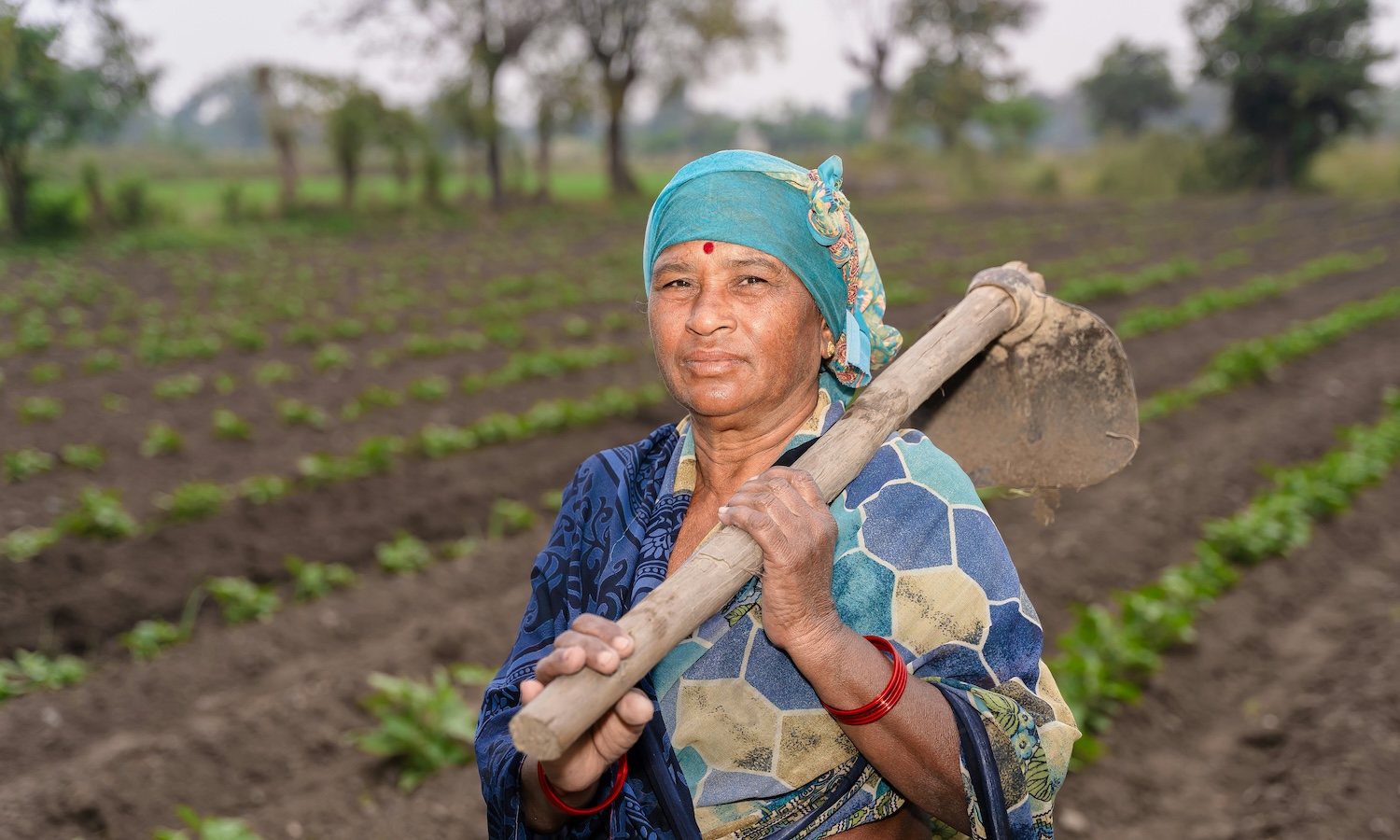
The United Nations designated 2026 the International Year of the Woman Farmer. It is an opportunity to recognize women’s contributions to food and agriculture systems and confront the barriers they face in accessing resources and opportunities.
The Dialogues are recognizing that moment with a panel called “What If Her Harvest Changes Everything?” The panel brings together April Hemmes of the United States, Jana Gäbert of Germany, Nelius Kariuki of Kenya, and Josselyn Veronica Vega Rojas of Ecuador. Their work spans farming, livestock and grassland management, vineyards, and agroecological producer organizing. I’m glad these women will be on the stage.
But the panel also raises a question for me. During the International Year of the Woman Farmer, why couldn’t one of these women—or another woman farmer with a demonstrated record of improving people’s lives—be the person we gather to honor with the World Food Prize?
I don’t know whether any of these panelists were nominated or considered. My question is about how widely we look for leadership, who we’re looking at, and what we recognize as valuable.
I think about Esther Penunia, secretary general of the Asian Farmers’ Association for Sustainable Rural Development, who advocates for family farmers and stronger farmer organizations across Asia. Or Elizabeth Nsimadala, a Ugandan farmer and president of the Eastern Africa Farmers Federation, whose work helps farmers organize and advocate for themselves. Or Mariam Sow in Senegal, whose work with ENDA Pronat has helped advance agroecology and farmers’ knowledge.
These are the kinds of leaders I want us to look toward when we talk about transforming food systems. And the International Year of the Woman Farmer gives us an especially good reason to examine whether that work receives the recognition it deserves.
What would it mean for the world’s most prominent food and agriculture prize to put that kind of leadership at the center of its celebration?
That’s a conversation I want to have in Des Moines.
I’ll keep coming back to the World Food Prize because I believe conversations across differences matter. I’ve seen relationships change. I’m proud that over the years I have changed my own mind. And yes, sometimes a frustrating conversation at a hotel bar eventually leads to a Christmas card.
But I also want us to ask more of the institutions that bring us together.
Who gets invited? Who can afford to come? Whose knowledge counts? Who gets recognized? Who has the power?
I’m looking forward to listening this week. And I look forward to asking and being asked some uncomfortable questions.
Articles like the one you just read are made possible through the generosity of Food Tank members. Can we please count on you to be part of our growing movement? Become a member today by clicking here.
Photo courtesy of Unsplash