
The re-election of President Luiz Inácio Lula da Silva brings a sigh of relief for Brazil’s democracy, forests, Indigenous peoples, and the millions of Brazilians who have struggled with hunger. Beyond Brazil, it also offers hope for people in countries where democracy is under threat. His victory offers an opportunity to build on major achievements in tackling hunger and deforestation, and promoting a more sustainable food system.
But despite defeating the far-right candidate Flávio Bolsonaro, powerful agribusiness interests remain firmly entrenched in Brazil’s political institutions, wielding enormous influence over agricultural and environmental policies.
Since returning to office in 2023, Lula has, again, made ending hunger a national priority. In just two years, Brazil lifted over 40 million people out of moderate or severe food insecurity, and was officially removed from the U.N. Hunger Map in 2025.
This was achieved not through technological fixes or further industrializing food production, but through political choices: expanding cash transfers to vulnerable families, raising the minimum wage, investing in school meals, purchasing food from family farmers, and supporting agroecological production.
As president of Brazil’s National Food and Nutrition Security Council (Consea), I have seen how coordinated government action and civil society participation can transform people’s access to food. By putting family farmers, Indigenous and traditional communities, and those most affected by hunger at the center of policymaking, Brazil has demonstrated that tackling hunger, inequality, and climate change can go hand in hand.
Brazil has also made significant gains in protecting its forests, Indigenous territories, and biodiversity. Between 2025 and 2026, Amazon deforestation fell by 41.8 percent, reaching its lowest level since monitoring began in 1988. In the Cerrado, deforestation declined by 23.8 percent, while progress continued on demarcating Indigenous lands.
Brazil has also established national agroecology and organic production policies, supporting family farmers through financing, technical assistance, and targeted programs for women and young farmers.
Yet these gains remain vulnerable. Brazil’s environmental legislation has been progressively weakened since 2016, particularly under former President Jair Bolsonaro. Efforts to strengthen environmental protections have continued to face resistance in Congress under Lula, with lawmakers overturning presidential vetoes, relaxing environmental licensing requirements, and weakening the role of environmental oversight.
This political influence has deep historical roots in Brazil’s colonial economy, built on extractive industries, export commodities, concentrated land ownership, and enslaved labor. This gave rise to a powerful rural oligarchy with enormous influence over government decisions—a concentration of power that persists today.
Brazil’s Agricultural Parliamentary Front (FPA), or ruralist caucus, is one of the largest and most powerful cross-party groupings in Congress—following October’s elections, it will continue to count majorities in both houses. It is supported by the powerful Instituto Pensar Agro (IPA) think tank, which helps shape its political strategies. Officially, its stated priorities include modernizing agriculture and protecting rural producers—but in practice, its agenda has been associated with deregulating pesticides, expanding agricultural activities into Indigenous lands and traditional territories, and weakening environmental regulations.
Faced with this political reality, Lula has pursued a policy of accommodation with big agribusiness interests since his first presidency—and this is set to continue.
On the one hand, ministers of agriculture and livestock have consistently been figures drawn from the sector or aligned with its interests. On the other, his governments have supported a separate Ministry of Agrarian Development and Family Farming, advancing agroecology, rural development, agrarian reform, financing schemes, and support for women farmers.
But the two parallel ministries operate with vastly unequal resources. Public funding overwhelmingly favors agribusiness, which also benefits from tax breaks, export incentives, and debt forgiveness.
Despite government support, family farming and agroecology remain constrained by the economic and political dominance of export-oriented big agribusiness.
Lula’s re-election will not diminish Brazil’s powerful sugar, biofuel, soybean, and beef industries. Their political influence means government support is likely to continue. Though their future evolution will depend heavily on global markets, including China’s efforts to increase soybean self-sufficiency.
The threat of agricultural expansion remains significant—including in MATOPIBA, a major agricultural frontier spanning Maranhão, Tocantins, Piauí, and Bahia, where expanding soybean and cattle production endangers ecosystems, Indigenous territories, and family farmers.
Brazil has shown that progress on hunger, inequality, and environmental protection is a matter of political choices. Lula’s re-election offers an opportunity to build on these achievements. But this will require challenging entrenched agribusiness power and investing more in family farming, agroecology, and access to nutritious food. Brazil’s greatest contribution to global food systems could be demonstrating that another model is not only possible but already delivering results.
Articles like the one you just read are made possible through the generosity of Food Tank members. Can we please count on you to be part of our growing movement? Become a member today by clicking here.
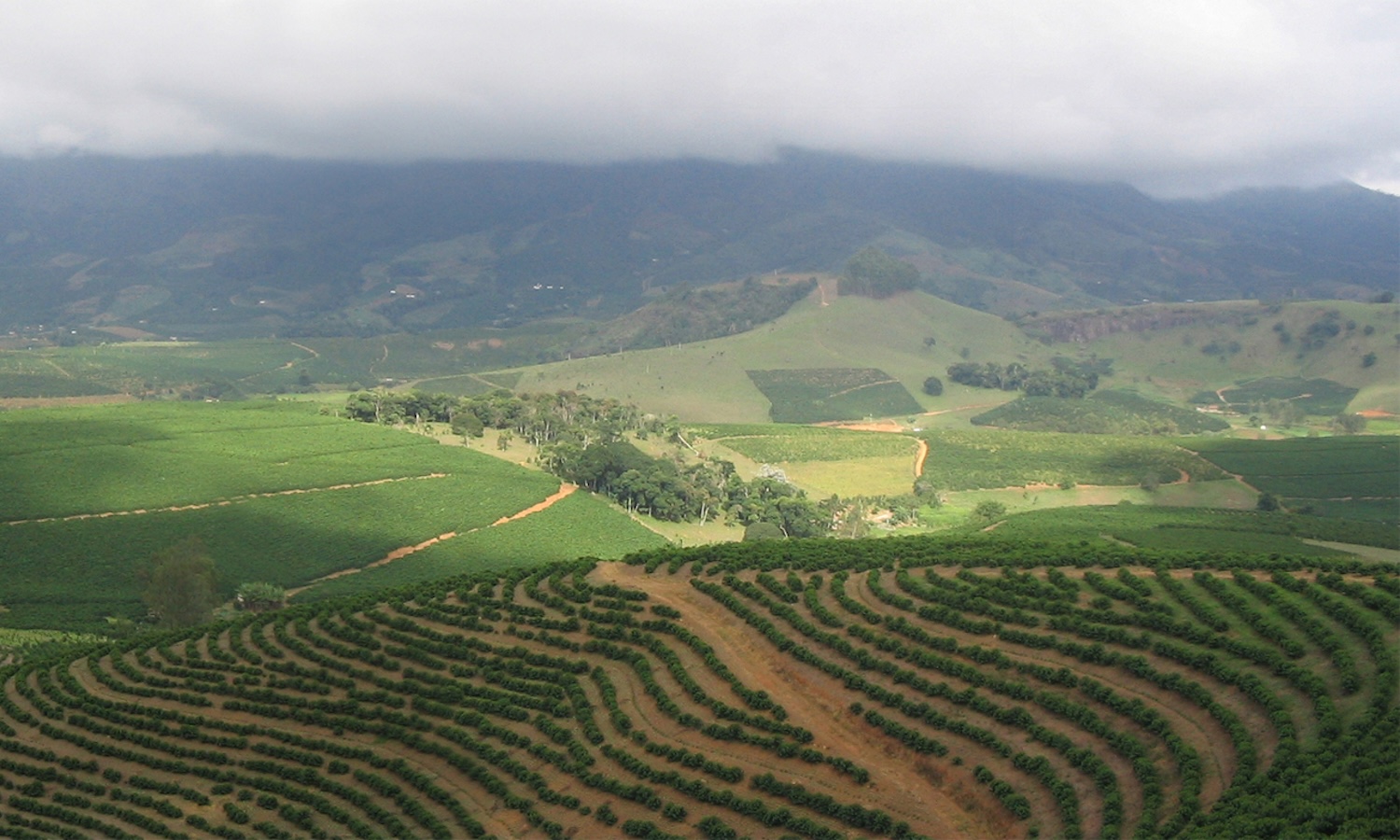
Photo courtesy of Fernando Rebêlo, Wikimedia Commons