After losing federal funding for the Soybean Innovation Lab at the University of Illinois Urbana-Champaign, its Director, Peter Goldsmith, is finding new ways to keep his research going.
In 2025, nearly all of the Feed the Future Innovation Labs, including Goldsmith’s, saw their funding terminated following the Trump-Vance administration’s cuts to the U.S. Agency for International Development. “It was overnight,” says Goldsmith, who also serves as a Professor in the university’s Department of Agricultural & Consumer Economics.
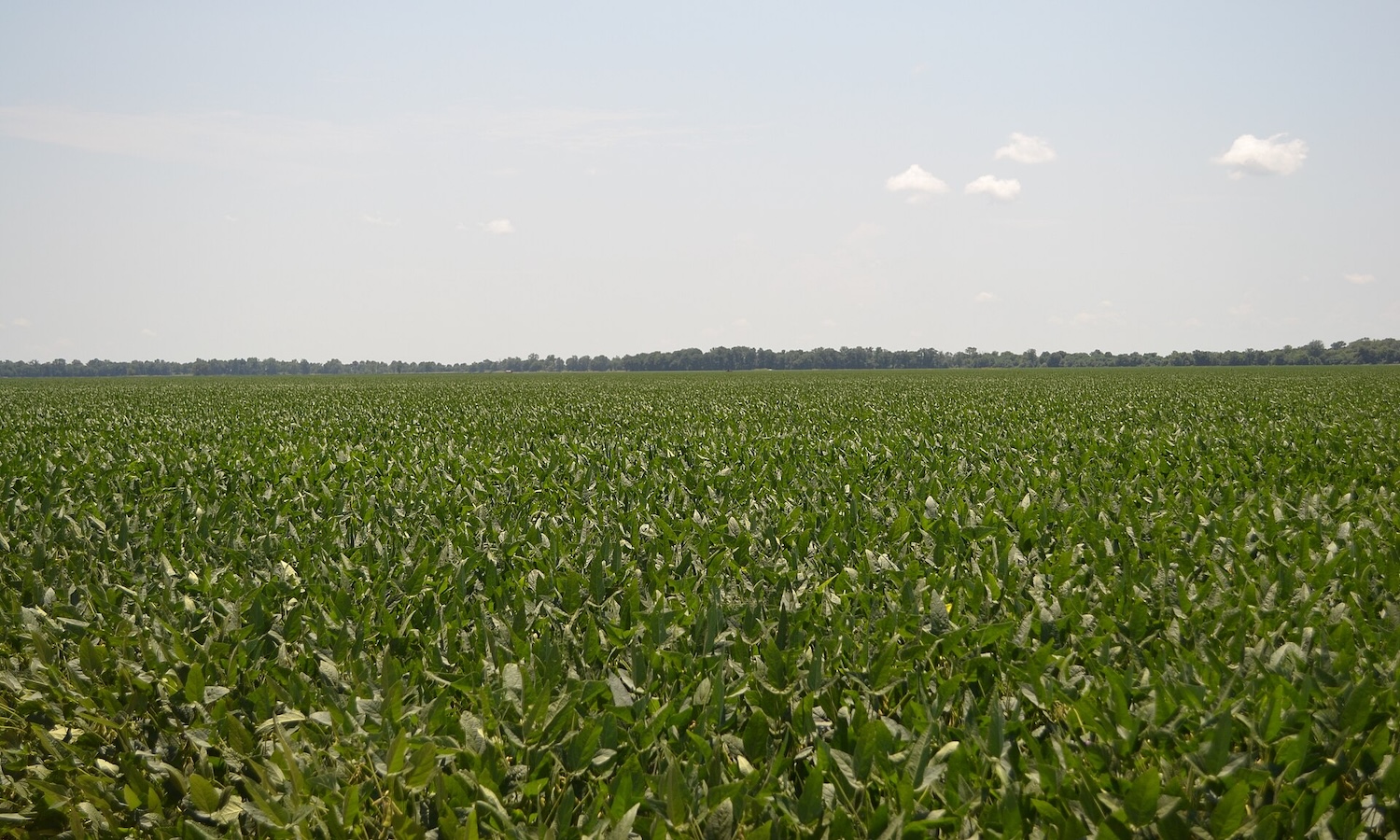
The Soybean Innovation Lab was focused on building “the foundation for soybean in sub-Saharan Africa,” Goldsmith tells Food Tank. Research addressed challenges from access to high-quality seed to developing the right technologies for farmers. The work helped improve producers’ harvests while offering soil-health benefits thanks to the crop’s deep root systems and ability to fix nitrogen.
When public funding disappeared, he knew this work couldn’t stop, and he sought a new path to sustain it. Goldsmith reports that they were able to raise roughly US$3 million for the lab, allowing them to operate until November 2027. Promising new leads for additional funding may allow them to extend this deadline even further.
Goldsmith and his colleagues are also exploring a for-profit model to support the development and sustainability of soybean markets. They hope their new company will be able to raise the capital that USAID planned to invest in the Innovation Lab. Its mission is to transform the seed system.
“Seed quality was a real struggle, and it is a struggle in the tropics,” Goldsmith tells Food Tank. “It’s a much more acute challenge to maintain a seed from harvest all the way to next year when you plant it…[it] was a real choke point.”
To address this problem, researchers are working to match farmers with seeds that are well-suited to their growing environments. “We make sure you have the right seed for the right company, the right location, delivered on time, and it’s of quality,” Goldsmith explains.
The team believes it has an opportunity to accomplish something that government-funded institutions have struggled to achieve. “Our argument is that only by us being successful will actual technology move and be in the hands of farmers and in their fields,” Goldsmith explains. “The public sector does great work, but they don’t have the resources to control the whole chain and deliver it to farmers. It just hasn’t worked.”
But he also acknowledges that these entrepreneurial pursuits are meant to be complementary, not a replacement for public research. “What predates [this work] is all the research that the Soybean Innovation Lab was engaged in to get to this point, and that…took focus.” It also created room for mistakes, a necessary ingredient for success, he adds.
Without support from institutions like USAID, “you don’t get that slow progress that built the American enterprise, the research enterprise,” Goldsmith says. “So we’ve got to somehow figure out where research and patient work play in our society.”
Listen to the full conversation with Peter Goldsmith on “Food Talk with Dani Nierenberg” to hear more about the obstacles to soybean development, the impact of funding losses on talent retention, and protecting the future of agricultural research.
Articles like the one you just read are made possible through the generosity of Food Tank members. Can we please count on you to be part of our growing movement? Become a member today by clicking here.
Photo courtesy of Wikimedia Commons