A version of this piece was featured in Food Tank’s newsletter, released weekly on Thursdays. To make sure it lands straight in your inbox and to be among the first to receive it, subscribe now by clicking here.
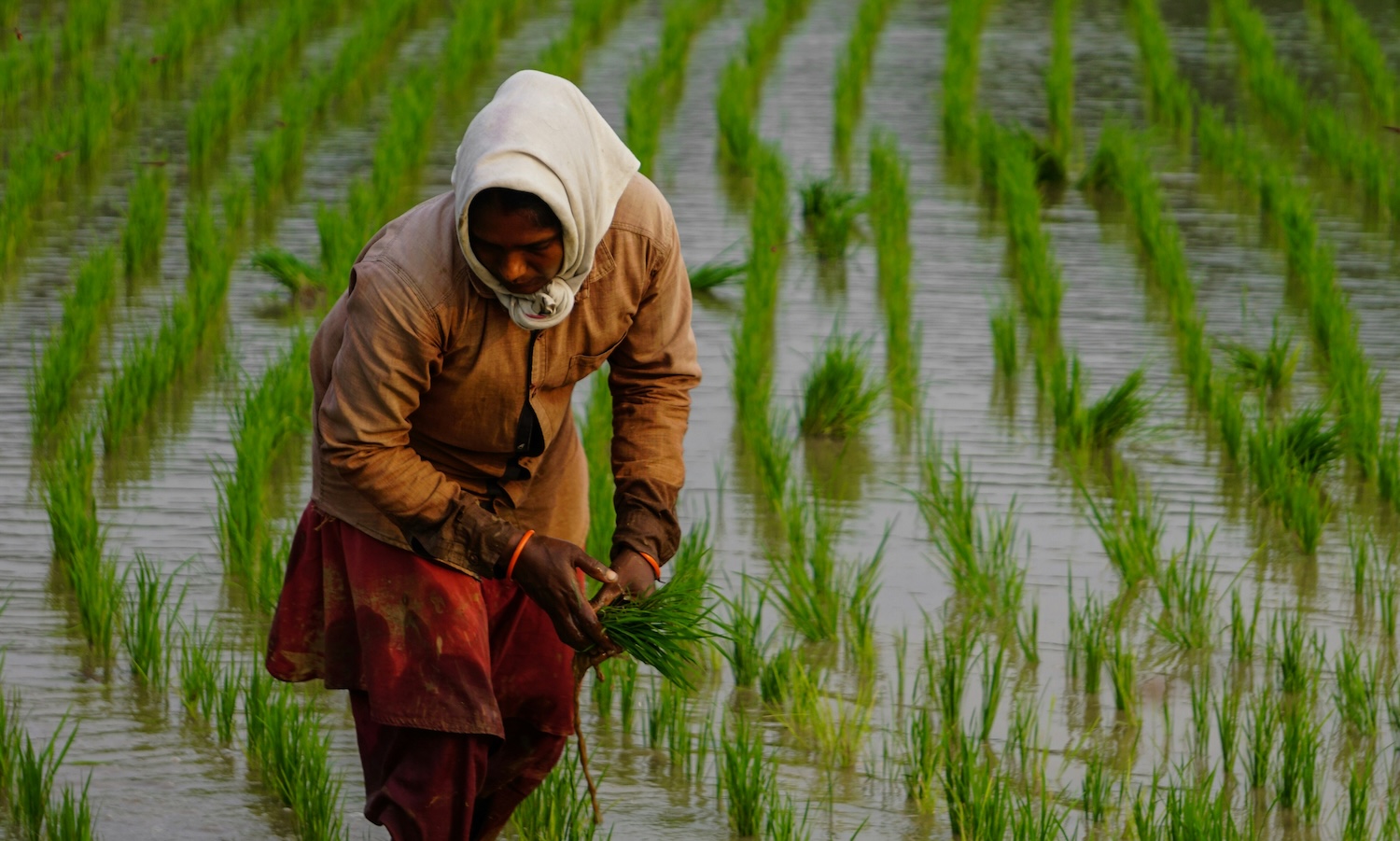
We’re about halfway through the International Year of the Woman Farmer, declared by the United Nations to recognize a truth that Food Tankers already know well: That global food systems are cultivated by, sustained by, and nourished by women.
Some of my favorite parts of recent Food Tank events have been the nights we turn our stage over to farmers to share authentic stories from the ground. This year alone, women farmers have joined us onstage in Park City, UT; Dublin, Ireland; Adelaide, Australia; and Austin, TX to tell personal tales of their lives in the food system.
Women in agricultural communities are farmers and also simultaneously caregivers, nutrition providers, innovators, pillars of their communities, and so much more. As the International Year of the Woman Farmer calls attention to, gender gaps in income and in accessing resources like land ownership and financial markets have been well-documented. But there’s another factor that cannot get lost during this special year: Women’s health.
“Women are central to food systems, and therefore women’s health is also central to food systems,” Nabeeha Kazi Hutchins, President and CEO of PAI, a policy advocacy organization, told me on the Food Talk podcast. “If a woman’s health and reproductive health are not prioritized and supported…how is she going to be effective in her job, and how is she therefore going to be effective in feeding and nourishing the world?”
And the impact of women in food is multi-generational.
“Every day on our farm, we get up, we work hard,” Carina Roseingrave, Co-Founder of Burren View Farm, told our Food Tank audience from the stage at SXSW. “What we have, we’ve built for our family that are here now. But what’s very important to our family is to pass it on to the next generation. We don’t want to lose the next generation that’s coming behind us. We want to pass on the knowledge that was passed on from my grandmother.”
If that seems like a heavy load to carry mentally just as much as physically—it is. As Reema Nanavaty, Head of the Self- Employed Women’s Association (SEWA), told me on Food Talk, major challenges like the climate crisis weigh particularly hard on women farmers’ mental health and tend to impact their economic opportunities at disproportionately high levels. Part of Reema’s work with SEWA involves vital efforts to reduce the tragic rates at which young women farmers are dying by suicide.
For me, as someone who’s devoted my career to researching gender in food and agriculture systems, I think any push toward uplifting the needs and rights of women and young girls—like International Year of the Woman Farmer—is a step in the right direction. I also hope that, alongside addressing economic inequities, we don’t ignore the need to protect women’s physical and mental well-being as part of our food system and sustainability solutions.
This takes both big-picture and small-scale efforts. As Rosinah Mbenya, Country Coordinator for PELUM Kenya, told me on an episode of Food Talk, we see a gap in on-the-ground efforts focused on youth- and women-centered landscape transformation. This needs to catch the attention of international development organizations and business and philanthropic leaders.
“There is a lot of work that needs to go into capacity-building,” she says. “But I’m looking forward to seeing more investments so that we can have increased financing and attention.”
At the same time, we cannot lose sight of the fact that food should be joyful and grounding and delicious—and that’s good for both physical and mental health, too!
I really loved what Lynsey Gammon, the Farm Director of Gracie’s Farm and the Lodge at Blue Sky, told us during a storytelling event at our All Things Food and Environment Summit during Sundance. It was her Italian grandmother, she said, who taught her “the art and love of growing food.”
“She could never really leave behind the love of growing food and the joy and love that it gave to her and the connection with the land and her history,” Lynsey told us. “Because, like so many women before her, farming was her ancestry. It ran through her veins.”
Here’s to the generations of empowered, hardworking, healthy women who feed us, from farms to our kitchen tables!
Articles like the one you just read are made possible through the generosity of Food Tank members. Can we please count on you to be part of our growing movement? Become a member today by clicking here.
Photo courtesy of Evan Rally, Unsplash