The Self-Employed Women’s Association (SEWA) is working to empower the women in India’s informal sector. Today, they organize roughly 3.8 million women workers across the country.
For more than 50 years, SEWA has fought for the self-reliance of women, advocating for fair wages, healthcare, insurance, housing and access to markets and training. Their network includes vendors and hawkers, producers, labor and service providers, and home-based workers.
“We come together as poor, as women, and as workers, no matter what caste, community, or religion they belong to,” Reema Nanavaty, Head of SEWA, tells Food Tank. “We come together to build our collective strength in our fight against poverty.”
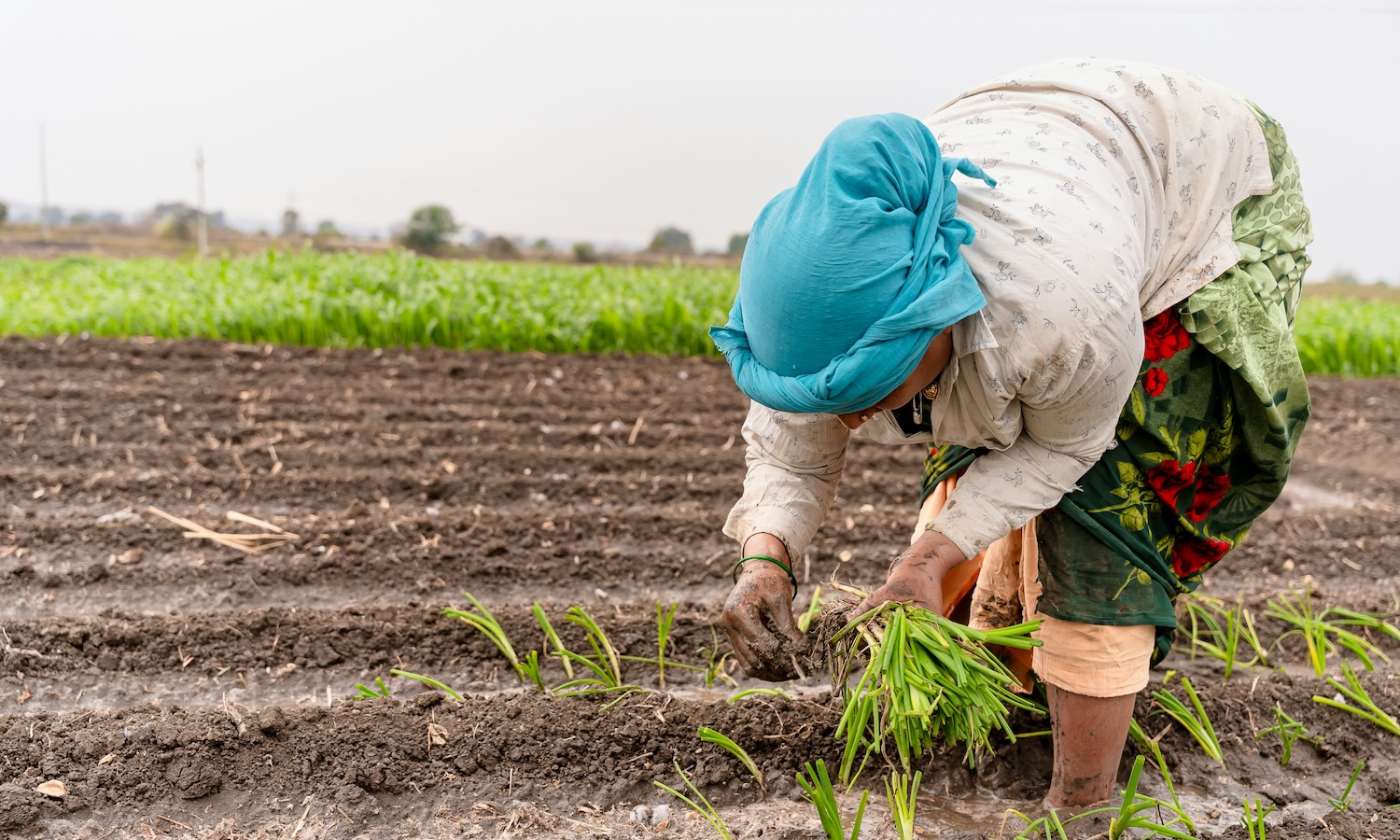
In a country that remains an agrarian economy, more than half of SEWA’s members are farmers or agricultural workers. And as the climate crisis places a greater strain on food production, men in rural areas are seeking opportunities in cities, leaving women responsible for farms. “There’s a feminization of agriculture happening,” Nanavaty says.
But SEWA reports that many women farmers are still constrained by gender discrimination, including the lack of land ownership and access to key resources. And the worsening heat and extreme weather events threaten to exacerbate the inequities further.
Unseasonal rains, floods, and cyclones are damaging crops and reducing working hours, leading to a reduction in income. “Everybody was thinking that the climate crisis would eventually come,” Nanavaty tells Food Tank, “but the reality is that climate stress happens twice or thrice in a month.”
Over time, household food security suffers, women are unable to pay their bills, and the risk of eviction mounts. This has forced many of SEWA’s members into the fields, even in life-threatening conditions. That’s why SEWA is making it a priority to build resilience to the climate crisis.
Parametric climate insurance offers one solution. When measurable indicators, such as temperature or rainfall, surpass a predetermined threshold, the women enrolled in the program receive a payout that keeps them both financially secure and safe. According to Nanavaty, 20,000 of SEWA’s members signed up for their program in 2022. Since then, awareness of the program and its impact has grown. By 2025, roughly a quarter of a million people were enrolled.
The Association also launched a climate school, where women can learn about the climate crisis and find new opportunities to support their livelihoods. The climate educators teach women about the climate crisis, the causes, and how they can mitigate its effects.
A second group Nanavaty calls “climate entrepreneurs” helps households move toward cleaner energy sources. They “generate the demand for adaptation” through solutions like solar-powered precision irrigation pumps and efficient electrical appliances. Women receive commission based on their level of involvement supporting the transition.
These solutions, SEWA believes, are essential. “We are not here to fight a government or a trader or a contractor,” Nanavaty tells Food Tank, “but how do we fight poverty and earn a life of dignity and self respect?”
Listen to the full conversation with Reema Nanavaty on “Food Talk with Dani Nierenberg” to hear about how SEWA is expanding on their parametric insurance program, the social and environmental benefits of clean cooking, and the Association’s vision for the next 50 years.
Articles like the one you just read are made possible through the generosity of Food Tank members. Can we please count on you to be part of our growing movement? Become a member today by clicking here.
Photo courtesy of Unsplash