The 4th Annual Youth Storytellers Field to Film Festival is inviting young people from smallholder, rural, and Indigenous farming families to document how their communities are transforming food systems through agroecology.
The festival runs until March 12 and is part of Groundswell International’s Youth Storyteller Program.
In honor of the United Nations’ International Year of the Woman Farmer, the 2026 festival places a special emphasis on the central role of women farmers in rural food systems. “Many of the female youth who participate in this program play many roles,” Groundswell International Program Director Rebecca Wolff tells Food Tank. “While they are youth, they are also parents, entrepreneurs, farmers, or students, responsible for the wellbeing of their families and land.”
The program and festival began in 2021, and originally included four partner organizations across Ecuador, Burkina Faso, Nepal, and Honduras. It has since expanded to engage nearly 500 youth participants and create over 50 nonfiction and fiction short films. The program now includes 11 partner groups across Mali, Ghana, Senegal, Mexico, Guatemala, and Haiti.
The U.N. Food and Agriculture Organization (FAO) reports that women farmers, especially young women, face more precarious working conditions, heavier workloads, and less equitable access to resources than their male counterparts.
Justine Natama, a filmmaker from Burkina Faso, will present “Women’s Access to Resources: A Lever for Agroecology and Sustainability,” the film she developed through the Youth Storyteller Program.
Melissa López, a youth Honduran filmmaker, explores similar intersections of gender and agriculture in her work. “At the local level, I would like people to value the work done by rural women,” she tells Food Tank.
Youth also face significant challenges in the rural agrifood sector. According to the FAO, nearly 85 percent of global youth live in low- and lower-middle-income countries where agrifood systems are essential to their livelihoods. And although 44 percent of working young people rely on agrifood systems for employment, compared to 38 percent of working adults, youth perspectives are rarely centered in stories about agriculture.
“Centering youth voices is also a matter of justice. The next generation is inheriting food systems that deplete landscapes, harm health, and deepen inequality,” Maylis MouBarak, Groundswell International’s Storytelling and Communications Manager, tells Food Tank. “Including rural youth in these conversations is essential. They bring firsthand experience of what works on the ground and can help identify and scale solutions that are relevant not only to their own communities, but to broader efforts to build food systems that work for people and the planet.”
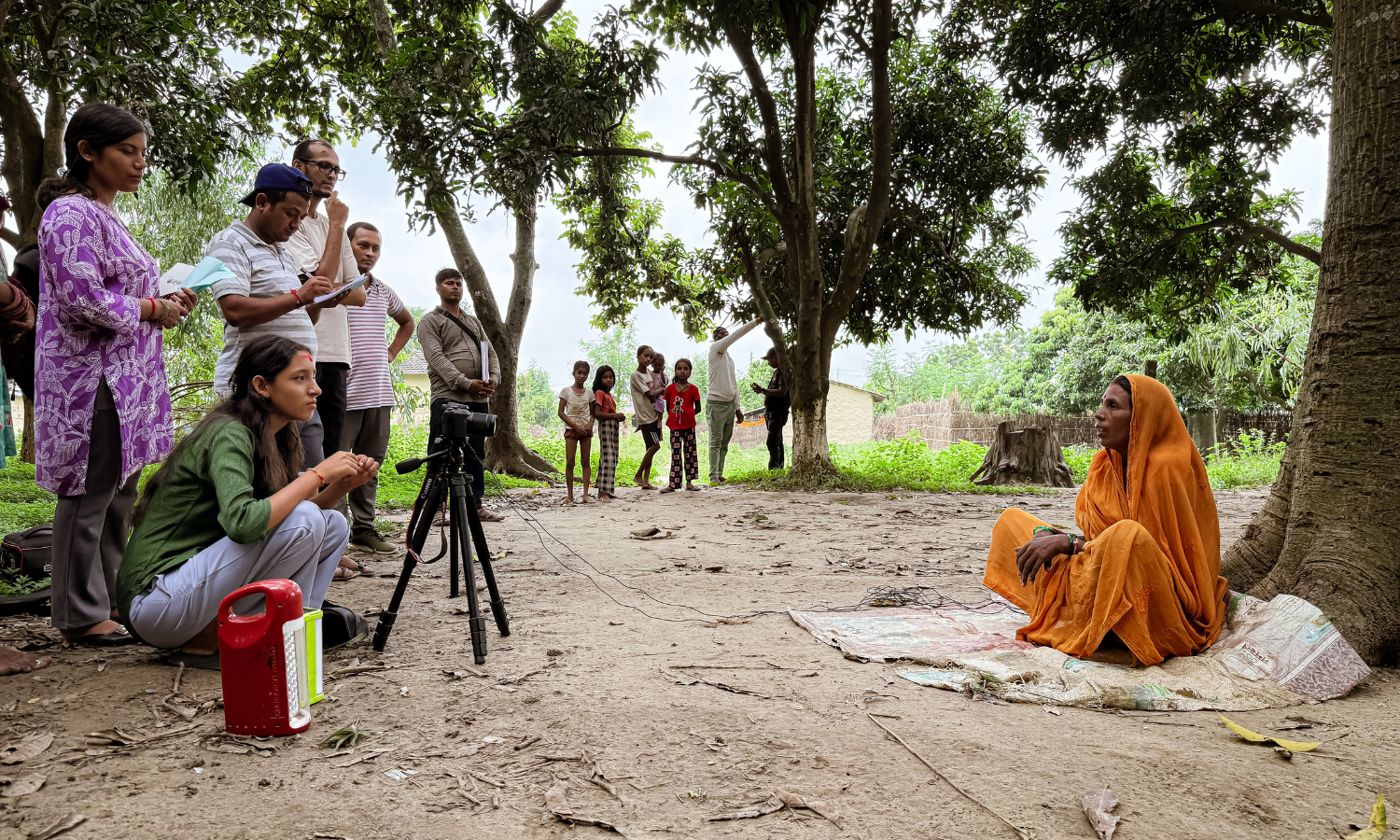
The Youth Storyteller Program equips participants to effectively share these stories. Youth filmmakers receive equipment, ongoing support, and long-term training from local consultants and professional storytellers, covering interviewing, filming, editing, and narrative development. Creative control remains entirely in their hands. The filmmakers are also able to deepen their knowledge and understanding of their agency in food and agriculture systems.
“Initially I used to think agriculture meant farming in large areas, huge production and not suitable for marginal farmers,” Saroj Upadhyaya, a storyteller and filmmaker from Nepal, tells Food Tank. “But when I visited farmers during the YST [Youth Storyteller] video shooting, I saw people practicing agriculture on their own, raising three to four goats in small spaces nearby their house, maintaining kitchen gardens, and getting healthy nutritious foods year-round.”
Youth Storyteller Program participant and Nepali filmmaker Bimala Shrestha shares similar insights. Through the filmmaking process, she discovered the human health benefits of botanical pesticides and natural farming practices.
For others showing their work in this year’s Field to Film Festival, the process is an affirmation of their existence in farming and storytelling. “As a young girl, I used to think that photojournalism and fieldwork were jobs for men,” says Justine Natama. “Today, I am proud to prove the opposite.”
The Field to Film Festival’s short films are available to livestream and watch here.
Articles like the one you just read are made possible through the generosity of Food Tank members. Can we please count on you to be part of our growing movement? Become a member today by clicking here.
Photo courtesy of Groundswell International