A version of this piece was featured in Food Tank’s newsletter, typically released weekly on Thursdays. To make sure it lands straight in your inbox and to be among the first to receive it, subscribe now by clicking here.
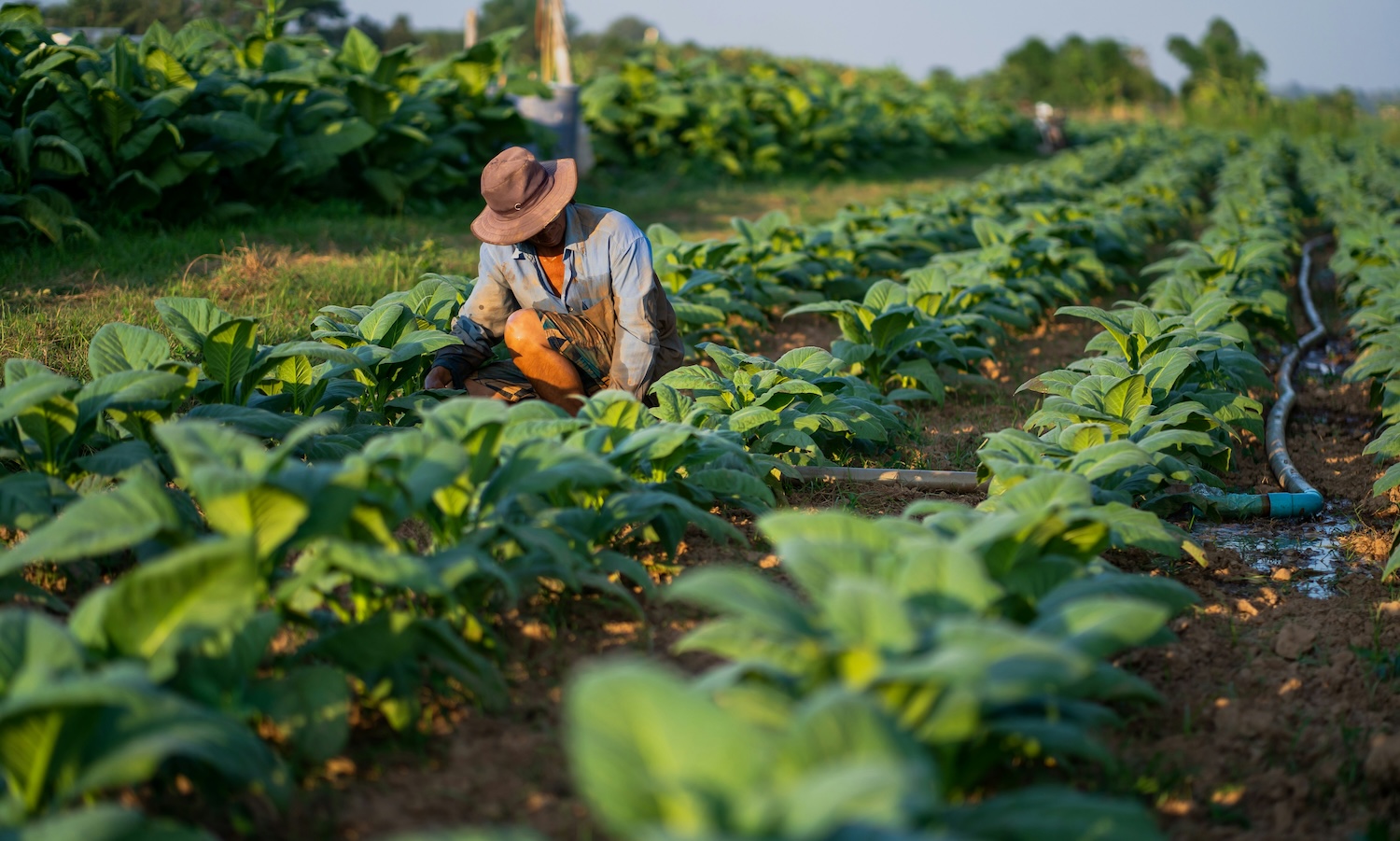
When we talk about food and agriculture systems, there’s a fundamental truth that I think we have to remember to re-ground ourselves in: These systems are made up of people.
Whether we’re looking at farms or school cafeterias or global supply chains, food stories are stories of people, of our cultures and communities and our values and visions for the future. I genuinely believe that, by working to understand food systems, we can better understand people. And vice versa: By building meaningful connections with people, we can build better food systems.
And this also speaks to the reasons I love sharing our seasonal reading lists with you. When discussions about large-scale systems and social movements—about food as a tool for power and resilience and change—can feel a bit theoretical or academic, the books on our spring reading list ground us with stories of people.
In “Africulture,” 11th-generation farmer Michael Carter, Jr., braids together the stories of his own family history and 5th-generation family farm with the story of the decline in Black-owned farmland over the past century and the activists working to reverse that trend.
And in “Free-Range Religion,” scholar Adrienne Krone examines the intersections of alternative food movements and religious life through people-focused ethnographic research. Or, take “The Secret History of French Cooking,” by Luke Barr: The great-nephew of food writer M.F.K. Fisher introduces us to the men and women who transformed French cuisine in the 1960s and 1970s.
A few weeks ago, anthropologist Ashanté M. Reese, the author of the forthcoming book “Gather: Black Food, Nourishment, and the Art of Togetherness,” joined us for a fantastic conversation at Food Tank’s SXSW Summit to discuss precisely this topic.
“If we’re thinking about what is wrong, we’re pre-oriented toward thinking about solutions—but first, we actually need to know what’s happening with people, both good and bad,” she says. “I think that shifts everything about how we orient ourselves toward other people.”
Here are 20 of the books we’re reading this spring that put people at the heart of food systems:
A Feather and a Fork: 125 Intertribal Dishes from an Indigenous Food Warrior by Crystal Wahpepah with Amy Paige Condon
A School Lunch Revolution: A Cookbook by Alice Waters
Africulture: How the Principles, Practices, Plants, and People of African Descent Have Shaped American Agriculture by Michael Carter, Jr.
Against Heritage: The Reinvention of Traditional Foods by Lily Kelting (forthcoming May 2026)
Between Feast and Famine: Food, Health, and the History of Ghana’s Long Twentieth Century by John Nott
Crayfish, Crawfish, Crawdad: The Biology and Conservation of North America’s Favorite Crustaceans by Zackary A. Graham
Feed the People! Why Industrial Food Is Good and How to Make It Even Better by Jan Dutkiewicz and Gabriel N. Rosenberg
Free-Range Religion: Alternative Food Movements and Religious Life in the United States by Adrienne Krone
Gather: Black Food, Nourishment, and the Art of Togetherness by Ashanté M. Reese (forthcoming April 2026)
Ghosts of the Farm: Two Women’s Journeys Through Time, Land and Community by Nicola Chester
Living Roots: The Promise of Perennial Foods edited by Liz Carlisle, and Aubrey Streit Krug
Nurturing Food Justice: Expansive and Intersectional Visions by Alison Hope Alkon and Julian Agyeman
On Eating: The Making and Unmaking of My Appetites by Alicia Kennedy (forthcoming April 2026)
Restoring the Soil (Second Edition) by Roland Bunch
Salt, Sweat & Steam: The Fiery Education of an Accidental Chef by Brigid Washington (forthcoming April 2026)
School Food Programs in Canada: Models for Success edited by Amberley T. Ruetz and Rachel Engler-Stringer
The Jackfruit Chronicles: Memories and Recipes from a British-Bangladeshi Kitchen by Shahnaz Ahsan
The Secret History of French Cooking: The Outlaw Chefs Who Made Food Modern by Luke Barr
The Sovereign Poison: Glyphosate, Poisoncraft, and Regulatory Politics by Tom Widger
Unrefined: How Capitalism Reinvented Sugar by David Singerman
Check out the full list, with descriptions and links for each book, by CLICKING HERE. And if you missed our winter reading list a couple months ago, you can add those books to your to-read list here.
Articles like the one you just read are made possible through the generosity of Food Tank members. Can we please count on you to be part of our growing movement? Become a member today by clicking here.
Photo courtesy of Siwawut Phoophinyo, Unsplash