This article is part of Food Tank’s primer series, “Food Tank Explains.” Each installment unpacks the ideas, innovations, and challenges shaping today’s food and agriculture systems, offering clear insights into complex topics. To explore more articles in the series, click here.
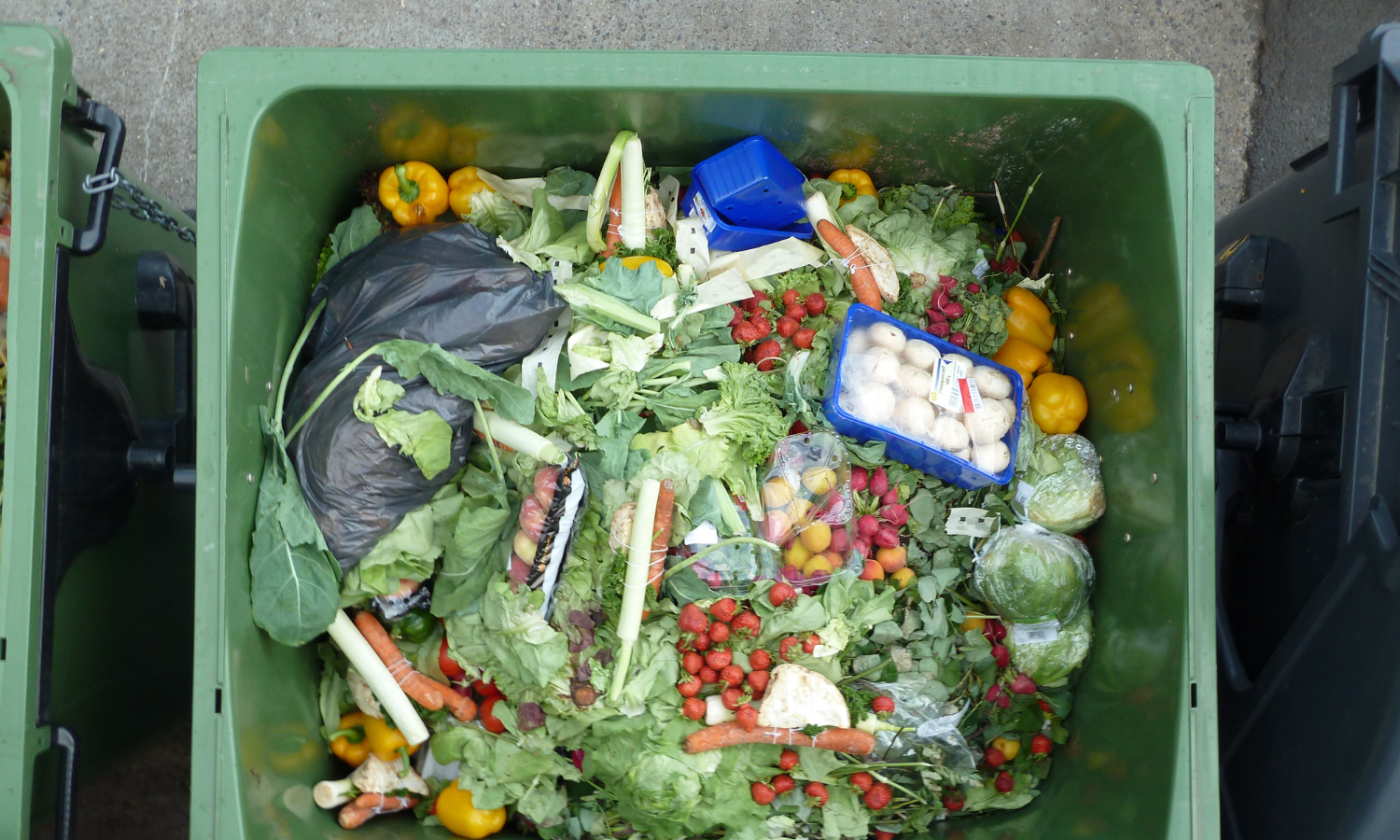
One-third of food produced for human consumption is lost or wasted, according to the World Food Programme (WFP). Food loss occurs when food is damaged or spoiled before it reaches retailers or eaters; food waste refers to edible food that retailers or consumers discard.
Food loss and waste (FLW) undermines food security, generates substantial greenhouse gas (GHG) emissions, deplete land, water, and other natural resources, and impose significant costs on the global economy.
But certain researchers, governments, food waste nonprofits, and international organizations agree that much of FLW is interconnected and preventable, making FLW reduction a key strategy for addressing environmental, economic, and food security challenges simultaneously.
Food loss typically occurs before food reaches the retail stage—during harvesting, processing, and transportation. Limited access to storage facilities, refrigeration, and infrastructure can increase rates of food loss. Sometimes food loss is also a symptom of deeper political challenges tied to global trade says Moses Kansanga, Associate Professor of Geography and International Affairs at George Washington University.
Food waste occurs after food reaches retailers and consumers. It typically refers to food that is suitable for consumption but discarded, because of overproduction, cosmetic standards, over-purchasing, improper storage, or confusion over expiration labels.
According to the U.N. Food and Agriculture Organization (FAO), 13 percent of food produced globally is lost between harvest and retail. The United Nations Environment Programme (UNEP) estimates that an additional 19 percent of food is wasted at the retail, food service, and household levels.
High income countries generally waste more food per capita. The U.S. Food and Drug Administration estimates that 30 to 40 percent of the nation’s food supply is wasted. ReFED estimates that U.S. retailers generated 4.6 million tons of surplus food in one year, nearly one-third of which went to landfills or incinerators despite donation and recycling efforts.
And tragically, food loss and waste persist alongside global hunger. In 2022, 783 million people experienced hunger while more than 1 billion tons of food was wasted.
WWF estimates that the food lost and wasted each year could feed the world’s undernourished population nearly four times over. “Food waste is a global tragedy,” says Inger Andersen, Executive Director of UNEP. “Millions will go hungry today as food is wasted across the world.”
Luiz Beling, CEO of Apeel, emphasizes that FLW is a major contributor to global GHG emissions. Producing of food that is never eaten causes 8 to 10 percent of annual GHG emissions, nearly five times the emissions produced by the global airline sector. It uses one-third of the world’s arable land and one-quarter of agricultural water, placing unnecessary pressure on soils, forests, grasslands, and biodiversity.
Discarded food continues to affect the climate after it is thrown away. According to the U.S. Environmental Protection Agency, food contributes to nearly 60 percent of landfill methane emissions.
And, the United Nations Framework Convention on Climate Change estimates that food loss and waste cost the global economy approximately US$1 trillion annually.
Organizations and experts increasingly see FLW reduction as a powerful solution to multiple interconnected problems. Project Drawdown has described FLW reduction as a massive lever for change. According to the organization, reducing FLW can improve food security and conserve natural resources while reducing emissions and lowering costs.
Hongpeng Lei, Chief of the Mitigation Branch in the Climate Change Division at UNEP, explains, “Reducing food waste is a fast, cost-effective way to cut GHG emissions while boosting food security, saving households and businesses money, and easing pressure on land and water.” Dana Gunders, President of ReFED, describes reducing food waste as “like a Swiss Army knife.”
Because food loss and food waste occur at different stages of the food supply chain, they require different solutions. Reducing food loss often depends on investments in harvesting, storage, refrigeration, transportation, and food processing. WFP has helped reduce post-harvest grain losses by supporting the use of hermetic storage bags, moisture meters, and improved drying systems.
Reducing food waste often focuses on improving inventory management, expanding food donation programs, strengthening demand forecasting, helping consumers interpret food date labels, and encouraging meal planning, proper food storage, and the use of leftovers.
While improvements in infrastructure and technology are welcome, technical solutions alone cannot eliminate food loss, Kansanga says. He argues that reducing post-harvest losses also requires addressing the political and structural conditions that shape agricultural markets, including inequitable trade relationships that can undermine local producers.
Efforts to reduce food loss and waste are gaining momentum around the world. The United Nations established a global target to reduce FLW through Sustainable Development Goal 12.3, while UNEP and FAO now publish standardized indices that allow countries to measure food waste and food loss over time. In the United States, ReFED estimates that total surplus food fell by 2.2 percent between 2023 and 2024, driven in part by a 950,000-ton reduction in residential food waste.
Articles like the one you just read are made possible through the generosity of Food Tank members. Can we please count on you to be part of our growing movement? Become a member today by clicking here.
Photo courtesy of Wikimedia