Ryan Brodersen has always wanted to be a farmer. Unfortunately, his parents made the difficult decision to quit farming in the early 1990s, ending a legacy of at least four generations of farming in Nebraska. Ryan’s future was uncertain, he says, as high land prices and upfront costs have made it difficult for young people to get started independently.
“They chose to quit, and I hated them for it, honestly,” says Ryan, who was 14 years old at the time. “I just wanted to farm. That was never a question.”
The family moved to South Dakota, where he later met his wife, Angie. Ryan went five years without planting a crop until he was “in the right place at the right time,” he says. His grandmother had been renting out some farmland, and it was available for new tenants. With the help of a beginning farmer loan from the U.S. Department of Agriculture Farm Service Agency, the Brodersens were farming again.
But those early years weren’t easy. Ryan worked multiple jobs to keep the farm afloat: Driving a truck, working in a factory, and working on a pig breeding farm at various times, all while earning a college degree. Their long-term dream was taking care of and earning a living on their own land, full-time.
The Brodersens found stability by partnering with a specialty pork company. Niman Ranch, a network of more than 600 independent U.S. farmers, offers a guaranteed market for pigs raised to high standards of sustainable and humane farming practices. Once the Brodersens started raising pigs in partnership with Niman Ranch, “the barns have never been empty ever since,” Ryan says. By 2018, their farm quadrupled in size, and they had purchased land of their own.
“We used to raise a few hogs as a side hustle with growing crops, and now we just grow crops to feed hogs,” says Ryan, explaining that once they found a stable market, they made a conscious decision to shift their farm’s focus to hogs.
Today, the Brodersens don’t need to purchase artificial fertilizer for any of the farms they own; instead, they cycle their hog manure and composted bedding onto the fields. Spreading manure is labor-intensive, and labor is the most limited resource on a farm, says Ryan, but he sees the long-term benefit for the land: “I would say that the fertility in our soil is extremely high.”
There have been tough times since, including when a grain elevator near their Randolph, Nebraska, farm went out of business, Ryan says. But “the hogs carried us through.”
Ryan also simply enjoys the work, he says. He raises hogs outdoors, as opposed to the highly controlled environment of confinement barns, where the vast majority of U.S. hogs are raised. This requires more decision-making in the day-to-day operations of the farm, but Ryan likes the problem-solving that is required. He is constantly finding new ways to be efficient and sustainable.
“I see the pigs thrive in this environment. They do well. They’re healthy,” says Ryan. Hogs also have a fast turnaround compared to other livestock like cattle, so he has more opportunities to improve throughout each year: “Can I make this one better than the last one?”
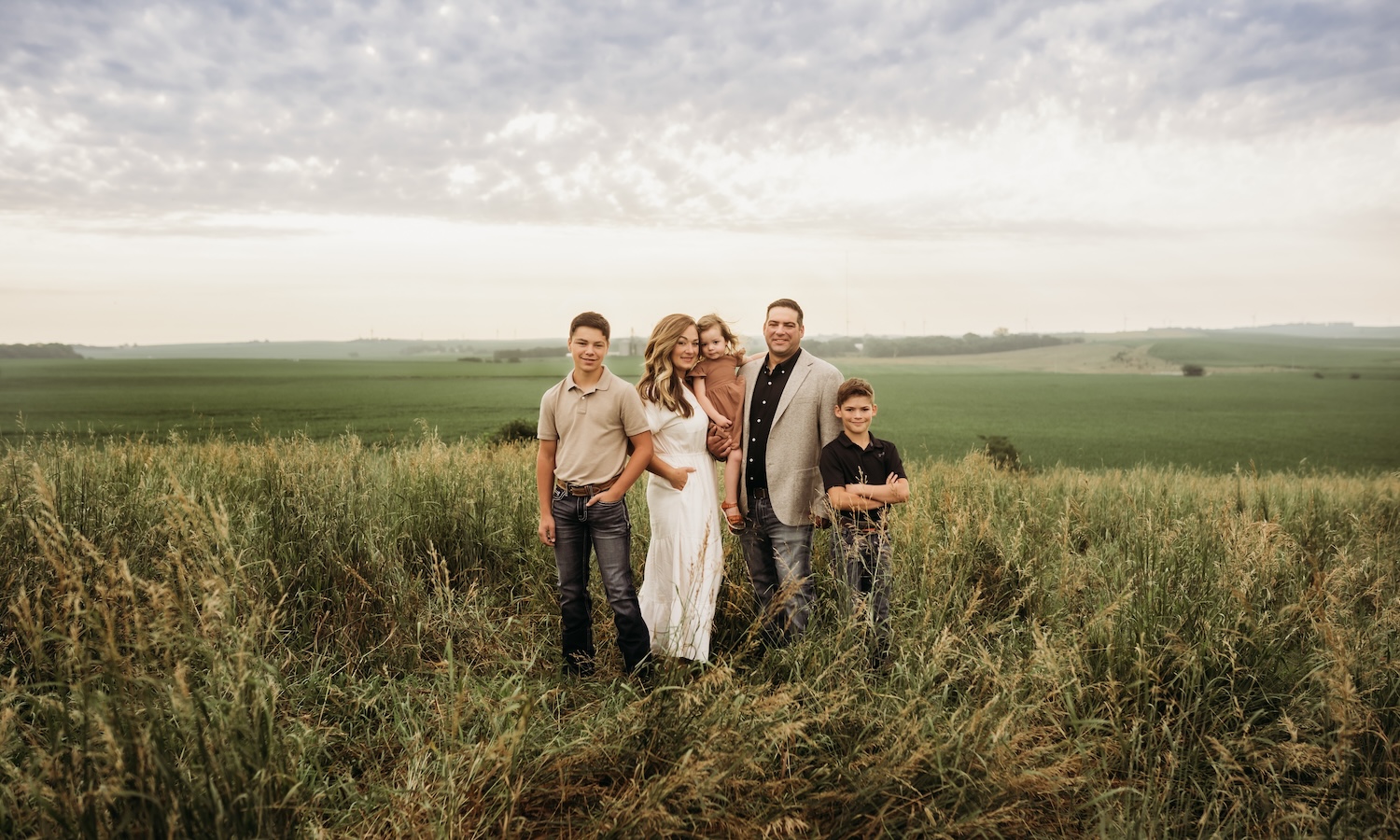
With companies like Niman Ranch and consumer interest in sustainably and humanely produced food, the Brodersens are hopeful that their farm can not only survive but also be passed on to the next generation. If any of their three children want to return to the farm one day, they won’t have to buy more land. They can build a more diversified, integrated, and sustainable farm on their existing acreage. And they say their diversified farm is a great place to raise their family.
“It allows our kids to bring their own individuality to the farm,” says Angie. “We don’t want them to fill our shoes. We want them to find where their strengths are and improve our operations. And now they have the platform to do that.”
Articles like the one you just read are made possible through the generosity of Food Tank members. Can we please count on you to be part of our growing movement? Become a member today by clicking here.
Photo courtesy of the Brodersens