
Diet shapes nearly every aspect of human well-being. It influences the risk of chronic diseases such as heart disease, diabetes, and certain cancers as well as how we learn, think, feel, age, and function.
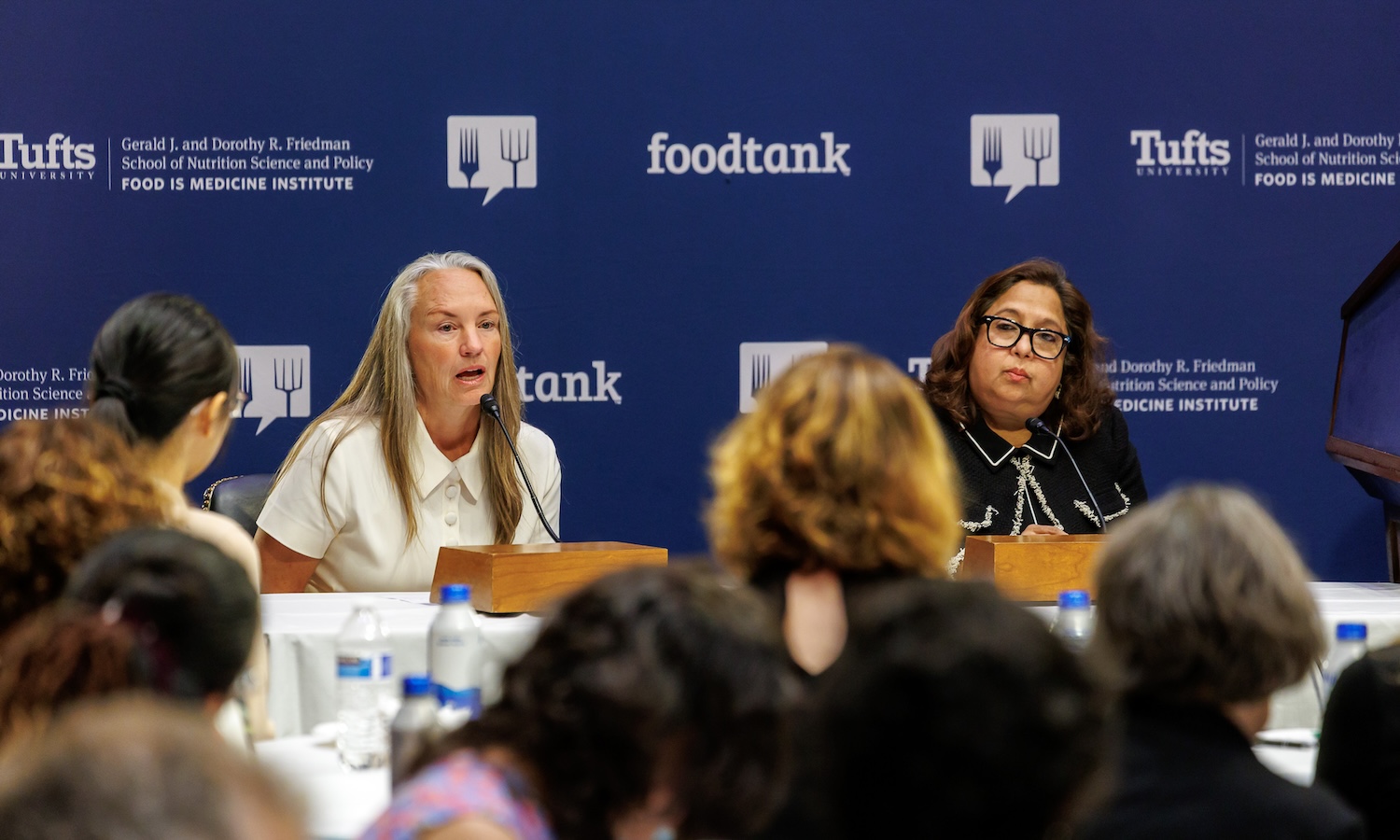
That critical connection between food and health was the theme of Food Tank’s Capitol Hill Luncheon on July 29, held in partnership with the Food is Medicine Institute at Tufts University, “The Power and Peril of Food: The Latest Science on Your Mood, Memory, Metabolism, and Longevity.” The discussions explored how diets rich in fruits, vegetables, and minimally processed foods may benefit mood and mental health, and how nutrition can influence memory, metabolism, and cognitive decline.
According to the National Institute for Health Care Management (NIHCM) Foundation, about 6 in 10 Americans live with at least one chronic disease, creating significant health and economic burdens. In 2022, 90 percent of the US$4.5 trillion spent on health care in the United States was for individuals with chronic physical and mental health conditions. And American families feel the impact.
“For an average family of four, we spend US$50,000 a year on healthcare,” says Dariush Mozaffarian, Director of the Food is Medicine Institute. “Imagine if we spent just US$10,000 less per family, what that family could do or what the government could do with the US$10,000 a year, let alone US$20,000 less.”
Eric Verdin, MD, of the Buck Institute for Research on Aging, described nutrition as a key influence on multiple systems in the body, serving as a signal to switch metabolic and repair pathways on or off.
“Many of us think about nutrition as a form of energy. Nutrition is actually a lot more than this…The choices that you make when you’re eating influence your metabolism and your brain,” says Verdin, who also connected diet to chronic inflammation and brain health. “What happens when you have a poor diet is you enter a state of chronic inflammation…This affects your brain.”
Ultra-processed foods were a major focus of discussion at the event, with speakers pointing to their prevalence in the American diet and potential connections to chronic disease and other health outcomes. Speakers agreed that more research is needed to understand what makes ultra-processed foods impact health and how the food system might pivot toward more nutritious options.
“Ultra-processed food represents 50 percent of nutrition for most Americans,” says Verdin. “These foods are not engineered for nutrition; they’re engineered for palatability and to make you eat more.”
Nutrition’s influence extends beyond physical health, too. Ashley Gearhardt, PhD, Professor of Psychology at the University of Michigan, says “some of the strongest evidence between ultra-processed food diets and disease is actually for mental health conditions…We are seeing a strong body of evidence that the food you’re eating is going to influence how your mind is working.”
Jan Ellison Baszucki, President of the Baszucki Group, shared a personal story highlighting the potential for metabolic approaches to address mental health conditions: Her son used a ketogenic diet to help treat bipolar disorder. She questioned whether the country is investing enough in research on the relationship between metabolism and mental health.
“Can we afford, as a society, to not investigate nutritional, metabolic approaches to our most serious mental illnesses?” says Baszucki.
Speakers also challenged the traditional approach to healthcare, arguing that prevention and nutrition should play a greater role. “We have a medical system now that we call healthcare. It is not healthcare, it is sickcare,” says Verdin.
The discussion comes as policymakers and the public are paying greater attention to the role of food in health. At a time when Americans disagree on many issues, speakers agreed that improving nutrition and reducing diet-related disease offers common ground.
“I’ve been thinking about active advocacy in this area for about 10 years, and I’ve never seen such bipartisan support,” says Mozaffarian.
Calley Means, Senior Advisor at the U.S. Department of Health and Human Services, agreed that “wherever we are on the political aisle, we can all hopefully agree that there is a unique political moment right now where we are talking about these things more in this country.”
Speakers called for better data and research to understand how nutrition affects individuals differently, including using emerging technologies.
“The age of AI is here, and we should be implementing it to collect more accurate data to offer personalized solutions for some individuals, but also offer better research,” says Uma Naidoo, MD, Director of Nutritional & Lifestyle Psychiatry at Massachusetts General Hospital.
Ultimately, the event underscored the importance of turning scientific findings into policies and practices that can improve health at scale.
“There’s a handful of policies that we could enact to both improve the science and improve the food right now for Americans,” says Mozaffarian. He emphasizes that while much more investment is needed in science and solutions, “there really is an opportunity here, and we really can fix this.”
Watch the full event below:
Articles like the one you just read are made possible through the generosity of Food Tank members. Can we please count on you to be part of our growing movement? Become a member today by clicking here.
Photo courtesy of A.E.Landes Photography for Food Tank