As the oil blockade cripples Cuba’s farms and food supply, the island is becoming a stark preview of what happens when fossil-fuel dependent agriculture collides with geopolitical and climate instability, and a powerful illustration of why an agroecological transition is becoming increasingly necessary.
In recent months, scenes from Cuba have become increasingly stark as access to energy, food, and water has become a daily struggle for most. The immediate trigger is fuel scarcity resulting from the de facto oil blockade imposed by the Trump administration since January 2026. But conditions on the island have been deteriorating for years, exacerbated by the decades-long blockade by the United States coupled with domestic structural challenges. Cuba, like most countries, depends heavily on imported oil to power its electricity grid, transport goods, and sustain its food system.
For ordinary Cubans, the consequences are dire. The state rationing system, once a pillar of food security, now covers only a small fraction of household needs. Market alternatives exist, but inflation has pushed them beyond the reach of many households. The average monthly wage is roughly US$20; a carton of eggs can cost half that. Food insecurity and malnutrition are no longer isolated concerns. They are becoming widespread.
Domestic food production has fallen for years. Staples such as rice, maize, and beans remain well below national demand. Farmers face acute shortages of diesel, fertilizer, animal feed, and spare parts. The consequences ripple across the food chain: land goes unploughed, irrigation systems sit idle, harvests are delayed, transport networks seize up, and food spoils before reaching consumers.
Today’s crisis is not a temporary disruption. It is part of a structural polycrisis in which energy scarcity, economic contraction, climate instability, and demographic decline reinforce one another. Cuba’s food system is not simply experiencing a bad moment. It is confronting the limits of fossil-fuel-dependent agriculture in an era of permanent instability.
Many proposed solutions—import more food, revive export-oriented industrial agriculture, restore fuel flows—remain trapped within the same agricultural paradigm that exposes it to crisis. They offer relief, but not resilience.
But Cuba’s story is not only one of crisis. It is also one of adaptation and resilience—and of a path not fully taken.
When the Soviet Union collapsed in the early 1990s, Cuba abruptly lost access to fuel, fertilizers, and imported food. In response, the country embarked on an ambitious agroecological transformation.
Land was redistributed to cooperatives and family farmers who now manage more than 70 percent of agricultural land. Urban gardens spread through cities. Farmer-to-farmer networks trained more than 200,000 farming families in agroecological methods.
For a time, Cuba became a global symbol of what post-fossil-fuel agriculture might look like.
However, the transition remained incomplete.
As economic conditions improved intermittently, policymakers often shifted back toward conventional industrial agriculture. Agroecology was never fully institutionalized as the foundation of the food system. Instead, it was treated as an emergency substitute: embraced in crisis, sidelined in recovery.
That cyclical approach left Cuba with an unfinished transformation—and a food system still deeply vulnerable to external shocks.
Today, the constraints facing all types of farmers are immense. Beyond fuel shortages, they lack tools, seeds, equipment, refrigeration, processing facilities, and reliable transportation. Credit is scarce. Decades of outmigration have weakened the social fabric of rural areas. Bureaucratic hurdles remain high, and a centralized economy, coupled with state monopolies, leads to inefficiencies and stifles innovation. An estimated 40 percent of food produced in Cuba is lost before reaching consumers due to failures in harvesting, storage, transport, and processing.
And yet the productive potential remains considerable.
Critics often dismiss agroecology as idealistic or insufficiently productive. Yet the evidence increasingly points the other way. Global governance institutions now recognize agroecology as a comprehensive solution that goes beyond organic farming to redesign food systems around biodiversity, local knowledge, human health, and democratic governance, aiming to build resilience, equity, and local control rather than simply growing food differently.
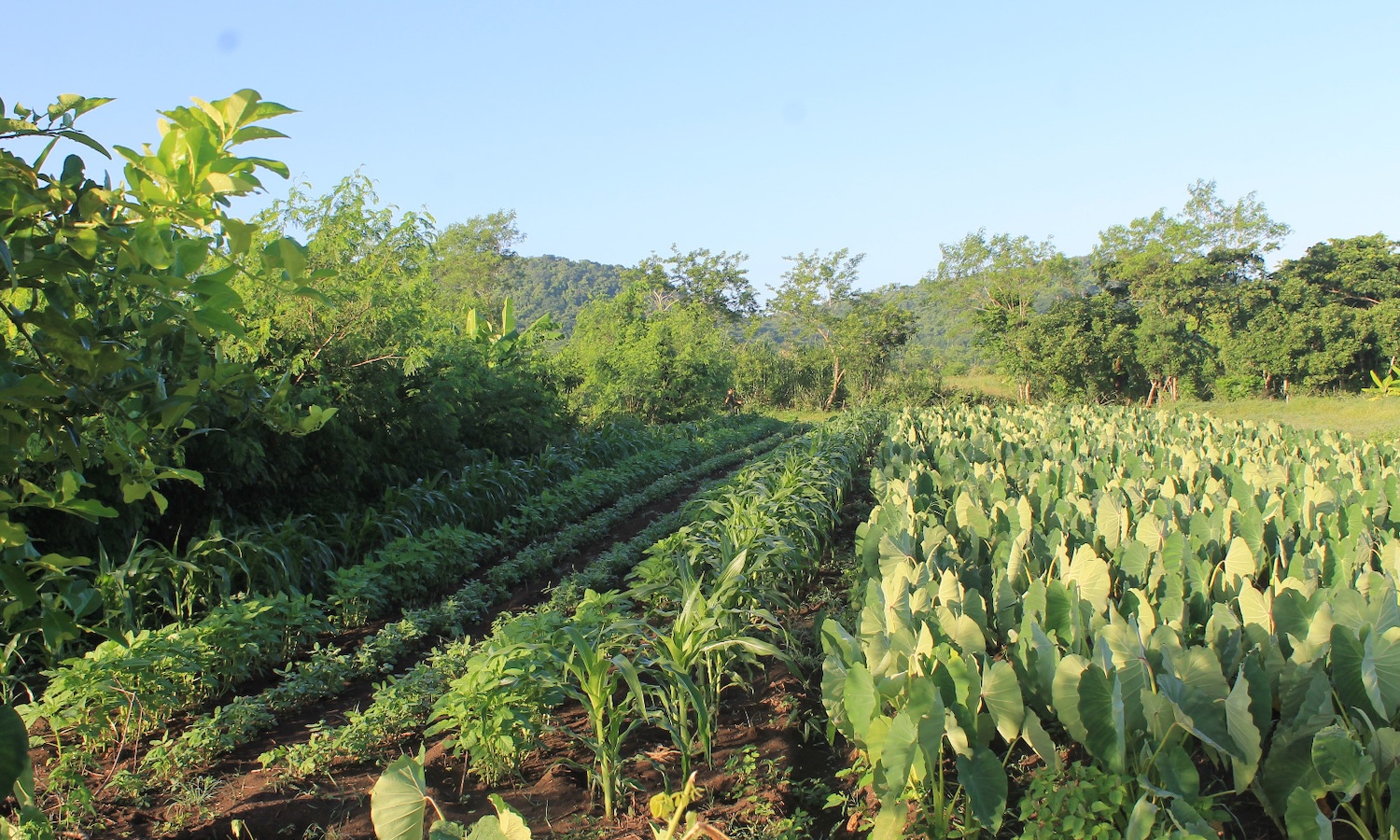
Diversified agroecological farms in Cuba can produce around 7 tons of nutritious food per hectare annually—enough to meet the caloric and protein needs of roughly eight people. Scaling such systems across 200,000 family farms—covering just over two million hectares of the more than six million hectares of arable land—could enable Cuba to meet its national food requirements, with potential surpluses for tourism and export.
Recent reforms suggest renewed support for local agroecological food systems. Cuba’s 2022 Food Sovereignty Law and 2025 Agroecology Decree provide a framework for decentralizing food governance and supporting municipal food planning. But implementation remains uneven. After decades of centralized administration, many local governments lack the capacity and institutional culture needed to manage participatory, territorial food systems.
In June 2026, the government approved a package of 176 economic measures that open much of the economy to private actors. In July, it followed with a new Agricultural and Forestry Land Law that allows land rights to be inherited and transferred and opens idle state land to private businesses and foreign investors. Other new regulations give cooperatives the right to import inputs, export directly, set their own prices, form second-tier cooperatives, and partner with foreign investors. Decree-Law 161/2026 ends mandatory state intermediaries, lets supply and demand set prices, and creates an Agricultural Bank to finance the sector.
For cooperatives and family farmers, these changes could bring autonomy, fairer prices, access to credit, and secure land tenure. Second-tier cooperatives could pool resources for shared infrastructure, credit, and markets. But none of these measures explicitly prioritize agroecology. Without safeguards, they could concentrate land and capital in the hands of larger commercial players and pull production toward export and tourism markets instead of local food needs.
If agroecology is to move beyond rhetoric, it will require sustained investment in seed systems, irrigation systems, decentralized biofertilizer production, small- and medium-scale storage and processing facilities, transportation infrastructure, and renewable energy (solar, biodigesters, and wind turbines).
It will also require supporting the social infrastructure of transformation—farmer training, cooperative management, peer-learning networks, participatory governance, and local enterprises. And a rebalancing of roles across public institutions, new non-state actors, and civil society—each of which has a part to play in rebuilding a more resilient food system.
Funding that transition will require more than state spending or donor aid. Cuba must diversify its financing ecosystem – drawing on diaspora investment, impact capital, justice-oriented funds, climate finance, and local development banking alongside public and multilateral funds. But attracting that investment will require clearer rules, less bureaucracy, and more predictable economic governance. And of course, an end to the debilitating web of unilateral coercive measures imposed by the US for more than 60 years.
Done well, such investment could create rural jobs, reduce food waste, strengthen local economies, lower import dependence, and improve climate resilience—all while keeping wealth circulating within communities rather than flowing outward.
The lesson is clear. In a world of tightening constraints, resilience will not come from securing more oil and fossil-fuel fertilizers and pesticides. It will come from needing less of it.
For Cuba, that means embracing a transition already underway within its own agricultural traditions: toward agroecology, toward local production, and ultimately toward food sovereignty grounded in the strength of local ecosystems and communities.
Articles like the one you just read are made possible through the generosity of Food Tank members. Can we please count on you to be part of our growing movement? Become a member today by clicking here.
Photo courtesy of Leidy Casimiro