Chefs are more than culinary innovators. They connect farmers and consumers, shape food culture, and use their purchasing power to influence how food is grown, produced, and served.
“Chefs are in a very unique position on planet Earth to be changemakers,” says Andrew Zimmern, Emmy- and James Beard Award-winning chef, television host, author, and food advocate. They operate at the intersection of immigration, gender and pay gaps, hunger and food insecurity, food waste, and a range of other global issues.
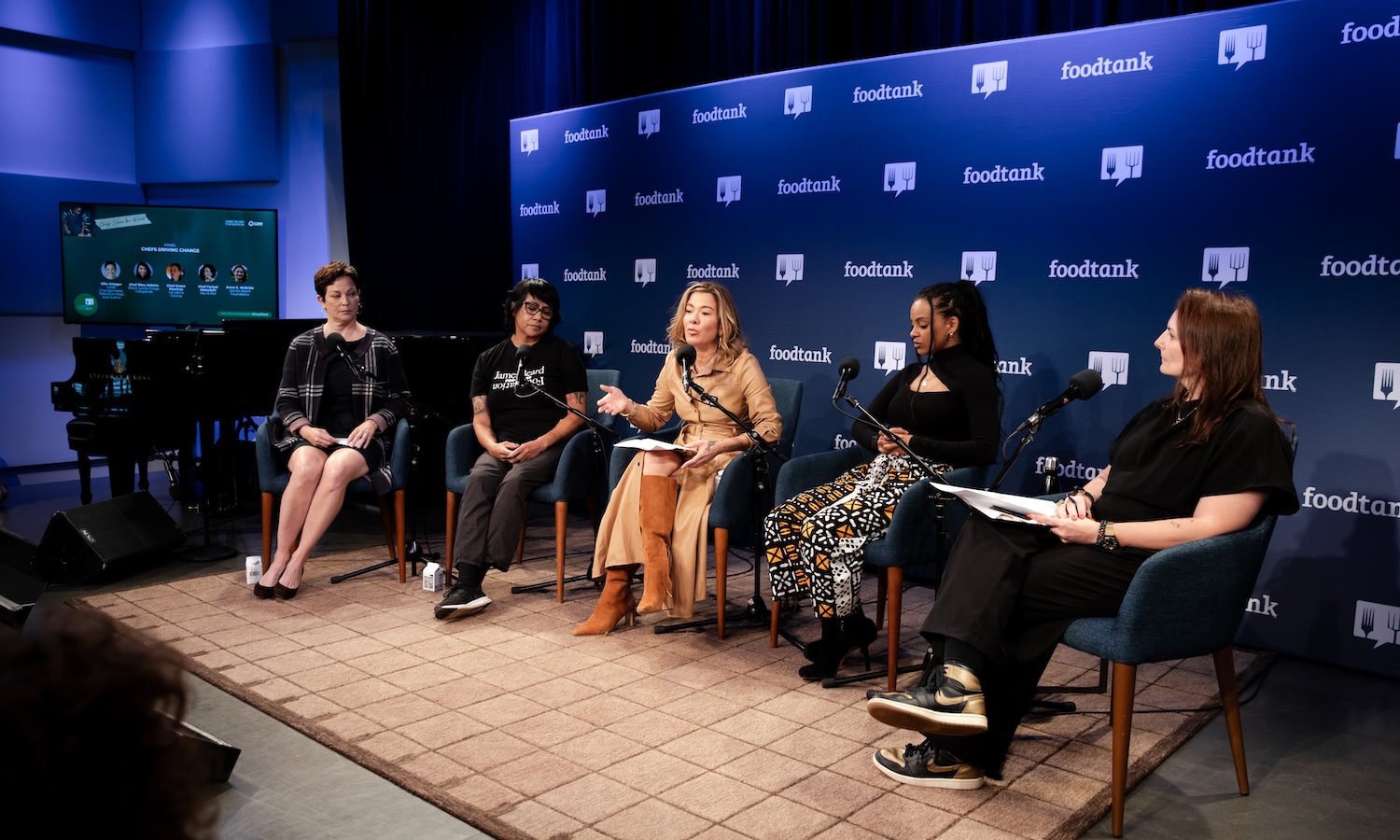
At “Chefs Save the World,” held in partnership with the James Beard Foundation and CARE at Climate Week NYC 2026, culinary leaders, farmers, and advocates came together to explore how chefs can use their platforms to build a more equitable, resilient, and sustainable food future. Watch the full event replay here.
Throughout the morning, speakers emphasized the importance of diversity throughout the food system—not only in crops and ingredients but among humans.
“If we demand more diversity in our food system, that is what is going to build resilience,” says Chef Bleu Adams, Executive Chef at Black Lamb Group and Director of IndigeHub. And diversity in kitchens builds human resilience, too, she adds.
“Better food begins with embracing diversity. Whether that’s diversity in our fields, diversity in our ingredients, diversity in the people preparing our food, or diversity in the people we welcome around our tables,” says Food Tank President Danielle Nierenberg.
Right now, chefs are “operating in the most difficult environment they’ve ever operated in,” says Erica Helms, Chief Growth Officer at the James Beard Foundation.
Meanwhile, food producers and workers face systemic challenges worldwide: “In many parts of the world, the people who are food insecure are the people who are growing the food,” says Emily Janoch, Associate Vice President for Evidence and Learning at CARE. “This is not a charity problem but a systems problem.”
That imbalance also affects the restaurant industry, which navigates pricing food to appropriately compensate farmers and food workers while caring for their own employees.
“How do we balance the really tricky economics of being able to actually charge the cost of food to be able to pay farmers fairly and pay our employees and offer benefits to allow them to stay in this industry?” asks Liz Murray, Chief Operating Officer at The Marlow Collective.
Panelists also spoke to the importance of respecting local knowledge and ensuring communities have the resources to lead their own solutions. Foreign aid, especially in times of disaster, is critically important—but it must allow the skills and knowledge of local communities to lead the way.
“We prefer you give us what we need and trust we will utilize it in the way that best fits our community,” says Chef Adams. And Chef Fariyal Abdullahi, Executive Chef and Partner at Hav & Mar, agrees: “When you have the right partnership, it’s never to override what’s happening on the ground. They have the knowledge; they just need resources.”
Chef Sean Sherman brought the conversation back to the importance of diversity in food systems, calling for greater recognition of Indigenous foodways and the knowledge embedded in regional ingredients.
Through NĀTIFS, the North American Traditional Indigenous Food Systems, Sherman works to revitalize Indigenous food systems and promote greater access to culturally rooted foods. His Ring Diet, or Regional Indigenous Nutritional Guide, offers a framework for understanding the nutritional value of foods connected to local ecosystems.
“We’ve been living under this eurocentrism of our food here in North America…Even in a city like New York, we can find food from all over the world, just not right here where we’re standing. There are no Native American restaurants in this city,” says Sherman.
“We have a lot of evolving to do as humans and as a global community. Food is that connection.”
Sherman says greater curiosity about different plants and ingredients around the world can help drive change. “There are so many more plants and proteins out there that we haven’t touched.” He adds, “Be curious. That’s the biggest part of how change happens.”
Explore the entire Food Tank event schedule during Climate Week NYC 2026, and live-stream every Summit on FoodTank.com and Food Tank’s YouTube channel.
Articles like the one you just read are made possible through the generosity of Food Tank members. Can we please count on you to be part of our growing movement? Become a member today by clicking here.
Photo by Ryan Rose for Food Tank.