This article is part of Food Tank’s primer series, “Food Tank Explains.” Each installment unpacks the ideas, innovations, and challenges shaping today’s food and agriculture systems, offering clear insights into complex topics. To explore more articles in the series, click here.
Water security refers to sustainable access to safe, affordable, and reliable water to support human well-being, livelihoods, economic development, and healthy ecosystems. It encompasses not only available water, but also water quality, accessibility, affordability, and reliability.
Although water covers approximately 71 percent of Earth’s surface, only about 3 percent is freshwater, and less than 1 percent is readily accessible for human use. Agriculture accounts for approximately 70 percent of global freshwater withdrawals, followed by industry at 15 percent and domestic and municipal uses at 13 percent.
In a January 2026 report, the United Nations University Institute for Water, Environment and Health (UNU-INWEH) warned that the term “water crisis” no longer adequately describes the state of global freshwater resources. The researchers conclude that the world has entered an era of “global water bankruptcy,” in which prolonged overuse has depleted and damaged freshwater systems beyond realistic prospects of full recovery.
“The term “water crisis” implies a temporary shock and deviation from the baseline,” Kaveh Madani, Director of the UNU-INWEH and author of the report, tells Food Tank. “But we are dealing with a new normal—a post-crisis state of failure.”
The report estimates that approximately 2.2 billion people lack access to safely managed drinking water. According to the World Resources Institute (WRI), around 4 billion people experience severe water stress for at least one month each year.
Global freshwater withdrawals have more than doubled since 1960, as populations, economies, and agricultural production have expanded. And by 2050 the world is projected to demand 20 to 25 percent more water. WRI projects that the number of people experiencing severe water scarcity could rise by 40 percent by the end of the century.
According to the UNU-INWEH, water withdrawals in many river basins and aquifers have exceeded natural replenishment rates for decades. This prolonged overuse has depleted groundwater reserves and damaged rivers, lakes, wetlands, and other freshwater systems, sometimes beyond realistic prospects of full recovery.
Meanwhile, the Intergovernmental Panel on Climate Change (IPCC) reports that rising temperatures and changing precipitation patterns are affecting water availability worldwide. Higher temperatures increase evaporation, while shifting rainfall patterns contribute to more severe droughts and flooding in many regions.
Agriculture is particularly vulnerable to water shortages, which can reduce crop yields, disrupt livestock production, and threaten the livelihoods of farmers and agricultural workers. These disruptions can also reduce food availability and contribute to higher prices, particularly in regions where agriculture supports a large share of employment.
According to the U.N. Food and Agriculture Organization (FAO), water insecurity disproportionately affects low-income communities and smallholder farmers, who often lack the resources to secure alternative water supplies or adapt to prolonged shortages.
Inadequate access to safe water and sanitation also threatens public health. According to the World Health Organization, contaminated water and poor sanitation are linked to transmission of diseases such as cholera, diarrheal diseases, dysentery, hepatitis A, typhoid and polio.
And water shortages can prevent households from meeting basic needs and force changes in daily activities, including food preparation and dietary choices. Tools like the Water Insecurity Experiences (WISE) Scales measure how water insecurity affects daily life, evaluating whether households have had to change what they eat, go to sleep thirsty, or forgo basic activities because of inadequate water access.
FAO calls for more efficient agricultural water use, alongside policies that balance the needs of farmers, communities, industries, and ecosystems. Measures such as improved irrigation, rainwater harvesting, and soil moisture conservation can help farmers maintain production while reducing pressure on water supplies.
But the UNU-INWEH warns that efficiency improvements alone are insufficient where water use exceeds sustainable limits. Its 2026 report calls for stronger governance, enforceable limits on withdrawals, and protection of freshwater ecosystems, supported by cooperation within and across national borders.
In a Food Tank op-ed, Lee Recht, Founder of Table of Choices, Hosni Ghedira, Chair of MENA2050’s Water Security Committee, and Hakima El Haite, Chair of MENA2050’s Climate Action Committee, emphasize the need for regional cooperation, noting that water resources, food systems, and energy infrastructure are interconnected across national borders. They highlight emerging solutions in the Middle East and North Africa, including renewable-powered desalination and farming practices that improve water retention, and call for greater investment to expand their use.
“Water is not a resource like any other. It is the crux of human security, global food systems, biodiversity, public health, and peace,” Madani tells Food Tank.
Articles like the one you just read are made possible through the generosity of Food Tank members. Can we please count on you to be part of our growing movement? Become a member today by clicking here.
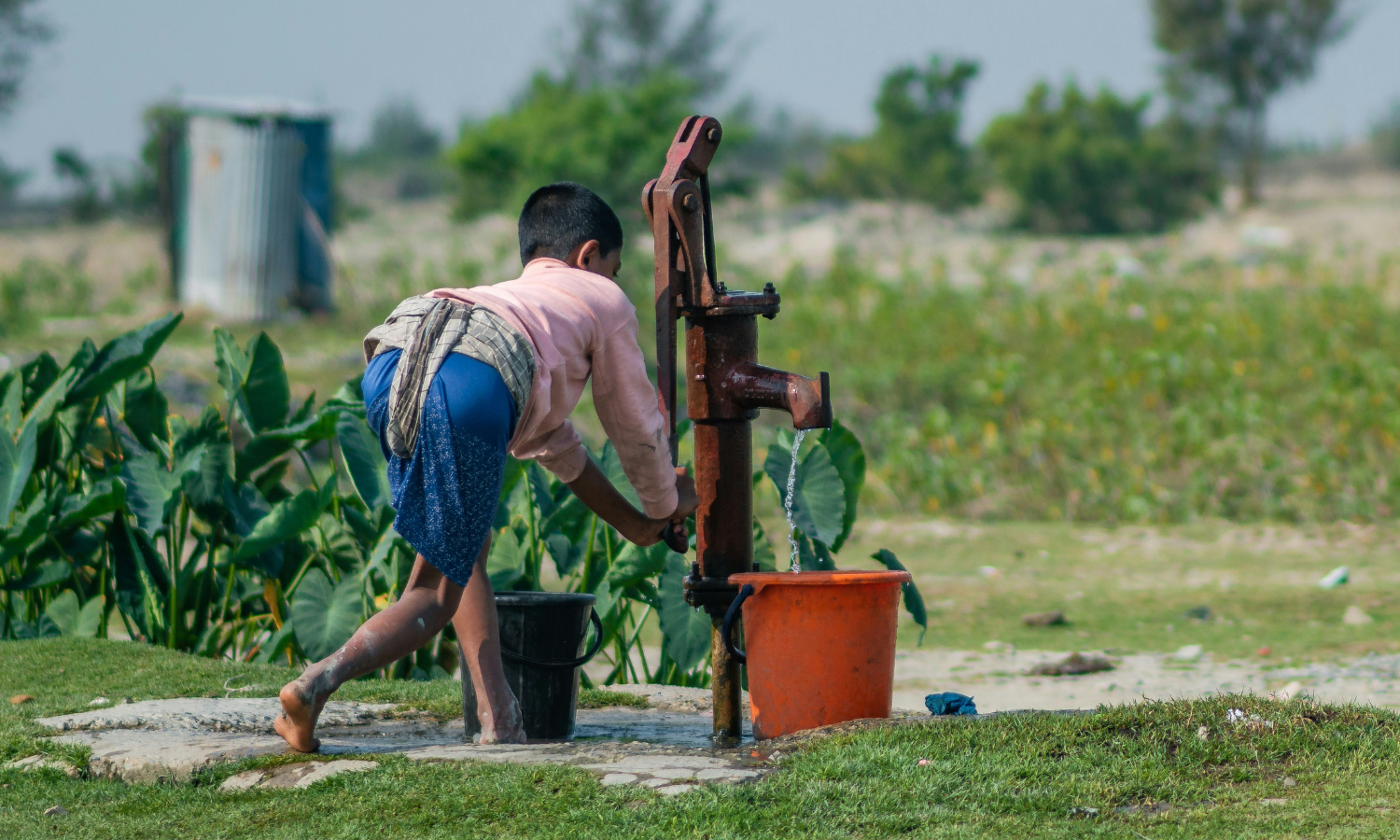
Photo courtesy of Nishaan Ahmed, Unsplash