
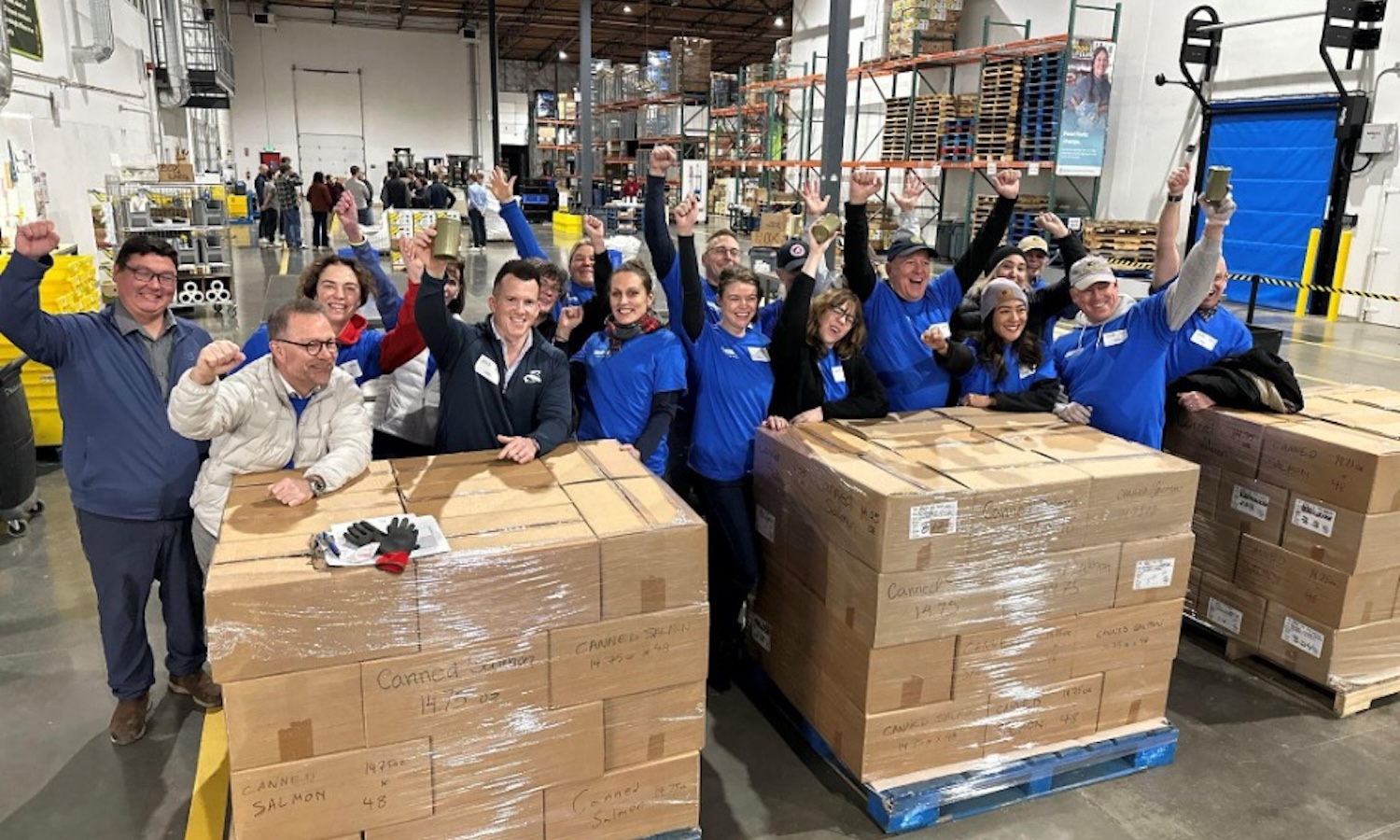
SeaShare is working to transform donations from the fishing industry into meaningful nourishment for food banks across the United States. They are the only nonprofit dedicated solely to putting fresh seafood on the tables of families in need.
Through a nationwide network of fishers, processors, and distribution partners, donated seafood is helping to close the protein gap at food banks across the country. Donations span salmon and halibut to Alaska pollock, Pacific white shrimp, rockfish, catfish, and tilapia.
In all stages of life, from pregnancy to childhood to adulthood, there is strong evidence for health benefits of consuming seafood, reports the World Health Organization. Fish and other seafood can be excellent sources of protein, vitamins, and micronutrients. Seafood consumption during pregnancy is linked to improved birth outcomes, and adults who eat seafood regularly face lower risks of cardiovascular and neurological diseases.
A study in the Journal of Human Nutrition and Dietetics finds that the nutritional quality of donated food parcels in food banks is inconsistent. Food available at points of access like food banks often falls short of national dietary recommendations across developed countries, including the U.S.
“Protein can be expensive, and seafood is one of the more expensive forms of protein,” SeaShare’s Executive Director Hannah Lindoff tells Food Tank. “In general, protein makes up only about 2 percent of donations to food banks and is in huge demand.”
Since its founding 31 years ago, SeaShare has delivered more than 270 million seafood servings to food banks and feeding centers across the country. The organization grew out of the pollock industry in Alaska, where fishers chose to donate bycatch—which refers to fish that cannot be legally sold—rather than let it go to waste.
Relationship building and tax incentives have since encouraged regular donations of first-run, marketable seafood from the fishing and processing industry. Today, bycatch makes up just 8 percent of SeaShare’s total donations.
The nonprofit also works to ensure culturally relevant foods reach the right communities. Lindoff points to northern Washington as an example. “We have some surimi flake coming in so we reached out to an agency that serves a Korean community services center,” she says, “so we know that this product is going to people who know how to work with it and have a real love for the item.”
Seafood is obviously is highly perishable, requiring either canning or refrigerated transportation. SeaShare acts as a connector between fishers, processors, and food banks, ensuring donations move efficiently from source to consumer. In the contiguous U.S., SeaShare operates along established shipping routes, leveraging its partner Feeding America’s network of food banks to find distribution near the site of donation.
Nicole Candon, Director of Brand & Social Impact at Oddisea SuperFrozen, understands that distribution complexity. Oddisea SuperFrozen is a U.S. importer and distributor of seafood and a SeaShare partner. In 2025, they donated approximately 38,000 seafood servings through the partnership. Some of the seafood the company imports, though safe for consumption and high quality, cannot be sold commercially, leaving the organization in need of a responsible distribution channel.
SeaShare identifies appropriate food bank partners for the business and arranges direct pickups from Oddisea’s warehouse. “From there, the product moves through the food bank’s distribution network and is delivered to local communities,” Candon tells Food Tank. “Because seafood is so rare, our product was usually fully distributed within days of pickup.”
In Alaska, one of SeaShare’s key service areas, those distribution logistics become considerably more challenging. At times, SeaShare donates to highly isolated communities accessible only by boat.
“If we have a 30-pound box of salmon heading to an elder feeding program on an island with 65 residents, that donation is moving well outside of normal shipping lanes,” says Lindoff. “We rely on good partners at the Alaska seafood plants and within the air or barge freight companies who take the time to do the right thing and make sure our elders get this fish.”
Lindoff tells Food Tank she has been moved to tears as she speaks with food bank managers who report being “overcome” by the impact of SeaShare’s donations. She says she’s happy to be part of the solution.
Articles like the one you just read are made possible through the generosity of Food Tank members. Can we please count on you to be part of our growing movement? Become a member today by clicking here.
Photo courtesy of SeaShare