Brent and Michelle Arp say that farming is in their blood. Brent’s 85-year-old father still farms on the more than 120-year-old farm where both he and Brent grew up. Michelle was raised around dairy cattle and once named the Iowa State Dairy Princess. Today, the couple farms about 600 acres of grain in Eastern Iowa and raises hogs and cattle.
But even for a generations-old farming family with established roots in Iowa, it has been difficult for the Arps to acquire land of their own.
“It’s about impossible out here anymore. The price has just gotten outrageous for good farm ground around us,” says Brent.
Increasing interest from investors for development, corporate land buyers, limited supply, and population growth are driving up the cost of land in the Midwest. In the Arps’ area, Brent says outside investors have bought several farms as security for their retirement plans. And those that have inherited land— those without mortgages—tend to accumulate more acres. This drives land prices up and out of reach for first-time buyers like the Arps.
The Arps rented farmland for about 20 years before they were given the opportunity to buy it. The owners offered the sale because their children did not want to return to the farm. The Arps are still in the process of buying—and they both still hold off-farm jobs to make ends meet—but say that the opportunity was too rare to pass up.
“When we were thinking about buying it, we were going back and forth like, this is crazy. We’re never going to be able to do it,” says Brent. “But we took a chance.”
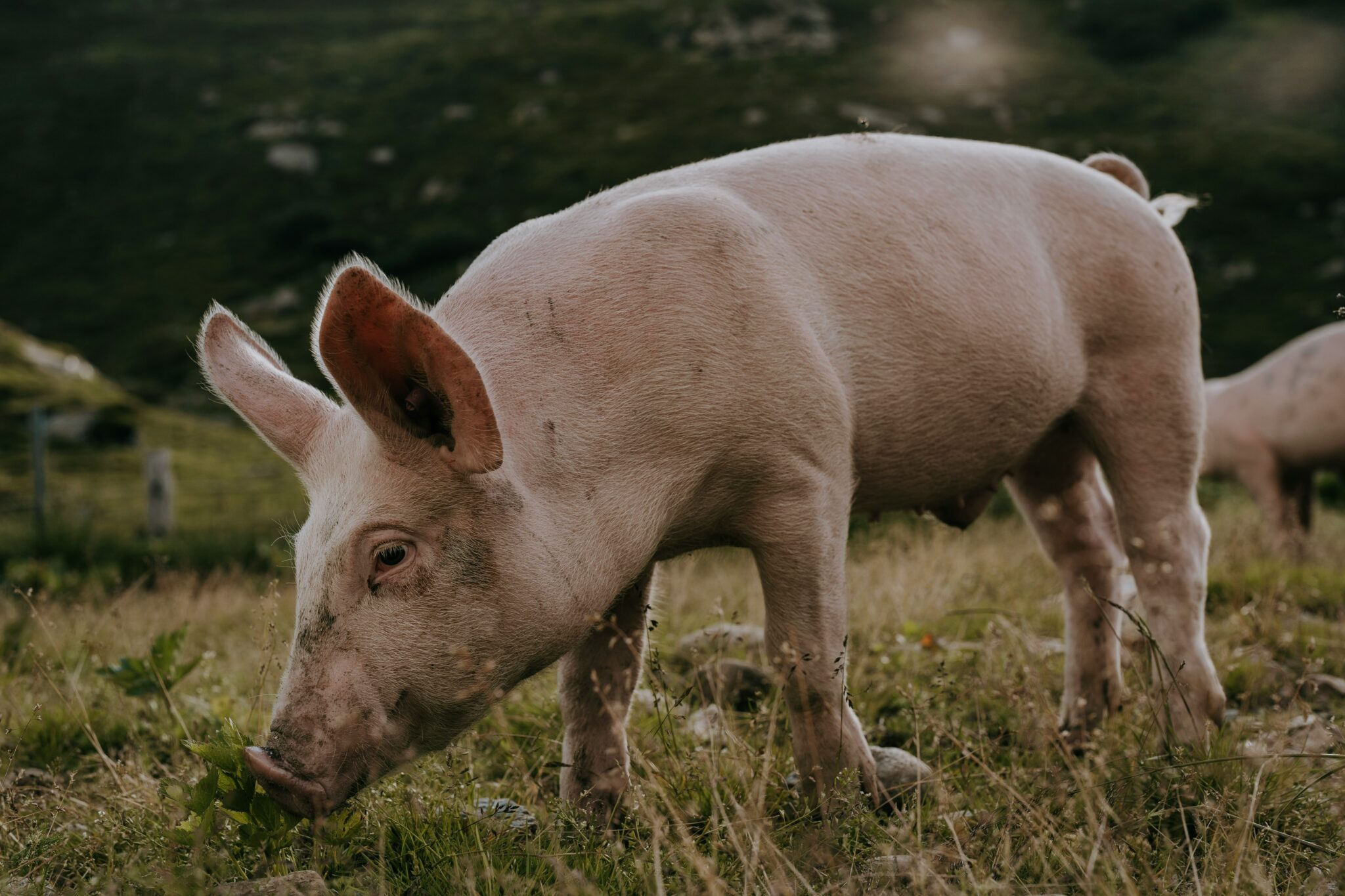
And it has worked out for Brent and Michelle. In 2022, they started raising pigs for Niman Ranch, a specialty meat company offering a guaranteed price for their pork in exchange for high humane and sustainable farming standards. This gave the Arps financial stability to remain a small farm while investing in their future.
“You’re not going to make a killing raising hogs. But there’s a little bit of money there,” says Brent. “Adding another line to the farm that actually has cash flows was a big relief.”
Brent explains that growing corn and soybeans—the two crops that comprise the vast majority of planted farmland in Iowa—is highly variable in terms of profit. One year can make a relatively high profit, while the second year might only break even, and the third and fourth years may be negative.
For example, the Arps are making half of what they made two years ago on corn. And their beans have lost US$5 per bushel. “On our farm, we raise anywhere from 15,000 to 20,000 bushels of beans. You take US$5 a bushel off of that, that’s US$100,000 [lost],” Brent explains.
Farmers do not choose their prices. Grain dealers tell farmers how much they will pay for corn or soy—a price that is set based on Chicago Board of Trade prices and global markets—and they can take or leave it. “A lot of people who have never been around farming don’t really understand that that’s how the commodity market works in farming,” says Michelle.
“It also seems like whenever our grain prices go up, our input [prices] go up too,” Brent adds. “And those input costs don’t come back down very fast even when the prices we sell for do. So we’ve got to make that up somewhere. A lot of times it’s either debt or you take it out of your savings.”
Brent and Michelle worry about the next generation’s ability to access land to keep farming. Their son has his heart set on farming, but he has to work off the farm to make a living. This is typical in Iowa, where about 60 percent of farmers have some form of off-farm employment, according to Iowa State University.
“The next generation is looking towards their future and thinking, how am I even going to get started?” says Michelle.
Brent says that older farmers can help support the next generation by renting their land to younger farmers after retiring, or selling it to a farming family within the community. The Arps are lucky that their landlord offered them the opportunity to purchase, Brent explains, because they could have gotten “top dollar” from an outside investor. But they wanted the land to stay with a local farming family.
“They want to see the small family farm maintained…and they know that we’re going to put things back into the land, we’re going to try and renew it every year,” says Michelle. “Whereas some of these big guys, you don’t know for sure what they’re going to do. Are they just going to run it for five years, take everything they can, and then be done?”
Still, Brent and Michelle see hope for the future of the food system. Independent markets that support small family farms, such as Niman Ranch, and increasing consumer interest in humanely and sustainably raised meat are giving opportunities to younger farmers like their son.
“The younger people really care about how their food is raised. They don’t just look at the price. They want to know that the animal is well cared for. And that’s impressive to me that they care that much,” says Brent. “I think that’s only going to grow.”
Articles like the one you just read are made possible through the generosity of Food Tank members. Can we please count on you to be part of our growing movement? Become a member today by clicking here.
Photo courtesy of Mathias Grischott, Unsplash