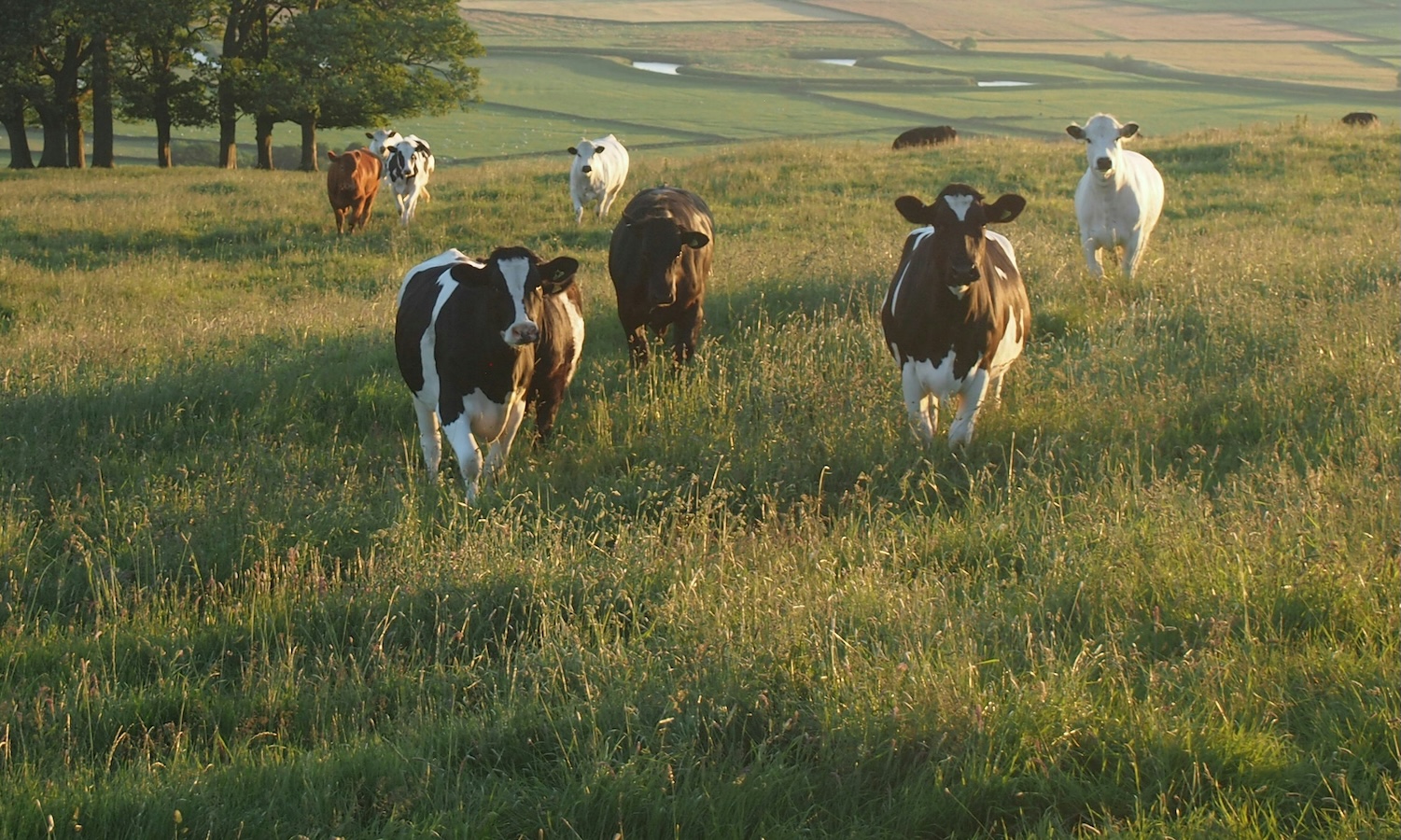
The California Air Resources Board (CARB) is considering regulations for dairy and livestock operations to reduce the impact of animal agriculture on the environment.
The Board is weighing emissions data, mitigation strategies, and regulations as they consider a variety of regulatory approaches to reduce emissions of the potent greenhouse gas.
Under a 2024 resolution, CARB’s Executive Officer was asked to develop a plan for livestock methane regulations, Joe DeAnda, Director of Communications at CARB, tells Food Tank. Following rule development in 2025, the resolution outlines potential regulation consideration by the CARB Board by 2028, and, if adopted, implementation in 2030.
In 2016, SB 1383 set statewide targets in California to reduce short-lived climate pollutants. For dairy and livestock sectors, legislation set a goal of reducing methane emissions 40 percent below 2013 levels by 2030.
The law directed CARB to approve and implement a strategy to meet targets and work with stakeholders to identify and address barriers to emissions reduction goals. During a recent public comment period, CARB sought feedback on the technological and economic feasibility of the dairy and livestock sector, says DeAnda.
Dairy and livestock operations are California’s largest source of methane emissions, originating from manure and enteric fermentation, CARB reports.
Since SB 1383 was enacted, the state has targeted manure-related emissions through incentive-based programs. These initiatives include grants for anaerobic digesters and alternative manure management practices, which reduce methane by changing how manure is stored, handled, or treated.
Voluntary incentive programs allow farmers to reduce emissions without taking on the full cost of new infrastructure, says Michael Boccadoro, Executive Director of Dairy Cares. “We’re more than two-thirds of the way to achieving the dairy share of livestock methane emission reductions,” he tells Food Tank.
Boccadoro believes state and federal funding are central to that progress. He says some alternative manure management projects can be fully covered by grants, while many digesters are financed, owned, or operated by outside developers. In those cases, farmers may provide manure as feedstock without paying to build the project themselves and can receive a small revenue stream.
“The beauty of the incentive program is it hasn’t impacted farmers financially, except in some cases in a positive way,” Boccadoro tells Food Tank. He says the projects can also offer additional benefits, including improved manure handling and water quality.
While mandatory reporting is important to Boccadoro, he believes the requirements should stop short of direct emissions mandates. He argues that demanding every dairy farm to achieve a specific reduction target is “catastrophically unhelpful” because it can undermine the credit and financing systems that have supported methane reduction. “If you lose the incentives, these projects don’t go forward because there’s nobody to pay for them,” he says.
Frank Mitloehner, Air Quality Specialist at UC Davis, also supports California’s incentive-based approach. “When the law was passed there weren’t many options to reduce methane emissions. It was ahead of the technology, but by pushing incentives it allowed for solutions to blossom and result in real methane reductions,” he tells Food Tank.
Mitloehner has been impressed by the speed of transition in the dairy industry. “It’s astonishing how quickly an entire industry sprung up and the sector moved to be in line with state laws,” he says. But now “we’ve tackled the low-hanging fruit and need further technologies to find solutions in other sectors.”
Articles like the one you just read are made possible through the generosity of Food Tank members. Can we please count on you to be part of our growing movement? Become a member today by clicking here.
Photo courtesy of Haley Owens, Unsplash