This article is part of Food Tank’s primer series, “Food Tank Explains.” Each installment unpacks the ideas, innovations, and challenges shaping today’s food and agriculture systems, offering clear insights into complex topics. To explore more articles in the series, click here.
Agroecology is an approach to agriculture that applies ecological and social principles to the design and management of food systems, from production through consumption. A transdisciplinary concept grounded in the recognition that food, health, natural resources, and economic security are interconnected challenges, agroecology manifests as a science, a set of practices, and a social movement.
As a science, agroecology applies ecological concepts and principles to the design and management of sustainable food systems. This dimension draws on ecology to understand how relationships among plants, animals, soils, and people shape agricultural outcomes across landscapes.
As a set of practices, agroecology seeks to improve agricultural systems by working with natural processes rather than replacing them with external inputs. Agroecological practices emphasize beneficial biological interactions and synergies within agroecosystems, reduce reliance on synthetic and toxic inputs, and make use of ecological processes in farm management.
As a social movement, agroecology aims to transform agriculture by building locally relevant food systems that strengthen the economic viability of rural areas. This dimension emphasizes short supply chains, fair and safe food production, and support for smallholder farmers, rural communities, food sovereignty, cultural identity, and Indigenous rights related to seeds and breeds.
Agroecology emphasizes locally rooted approaches rather than standardized technical solutions, relying on bottom-up, territorial processes that respond to local environmental, social, and economic conditions. These approaches depend on the co-creation of knowledge, combining scientific research with traditional, practical, and local knowledge held by producers and communities.
The U.N. Food and Agriculture Organization (FAO) identifies horizontal exchanges, like farmer-to-farmer, producer-to-consumer, and intergenerational learning, as core mechanisms for developing and adapting agroecological practices.
The social component and collective action beyond farm-level production are essential to agroecology, particularly in the face of a changing climate, Million Belay, General Coordinator of the Alliance for Food Sovereignty in Africa, tells Food Tank. “Cohesiveness is very critical when you’re attacked by a climate crisis,” he says. “You can mobilize together. You can help each other.”
Farms that transitioned to agroecological practices saw an average 11 percent increase in crop yields, and a 49 percent increase in farmer income due to lower input costs, according to a study conducted by the Global Alliance for the Future of Food.
Agroecological practices boosted biodiversity, strengthened social cohesion in communities, and reduced health risks, with farmers reporting 33 percent fewer sick days, says Anna Lappé, Executive Director of the Global Alliance.
Agroecology has expanded conceptually over time from a practice on individual fields and farms to an approach that encompasses entire food systems. The Agroecology Fund traces the approach’s roots to Indigenous Peoples’ food systems and documents its presence in scientific literature since the mid-twentieth century. The concept has since been embraced by governments, international agencies, and U.N. institutions.
FAO developed the Ten Elements of Agroecology framework, outlining essential components and desired enabling conditions that help guide planning, decision-making, and assessment when transitioning to agroecology. The Ten Elements include diversity, co-creation and sharing of knowledge, responsible governance, and circular and solidarity economies.
Alongside this framework, the High-Level Panel of Experts on Food Security and Nutrition, a science-policy interface of the U.N. Committee on World Food Security commissioned by FAO, published the Thirteen Principles of Agroecology. While FAO’s Ten Elements guide countries operationalizing agroecology through a holistic, multi-stakeholder approach, the Thirteen Principles are designed to provide more specific, actionable tools for farmers implementing changes on the ground and developing relevant policies. The Thirteen Principles address areas including recycling, input reduction, soil and animal health, social values and diets, and land and natural resource governance.
FAO connects agroecology with a broader global shift toward holistic and systems-based approaches that aim to address climate change, biodiversity loss, and poverty while respecting human rights. The organization links agroecology to progress across multiple Sustainable Development Goals, including those related to hunger, poverty, climate action, biodiversity, gender equality, youth engagement, and human rights.
Articles like the one you just read are made possible through the generosity of Food Tank members. Can we please count on you to be part of our growing movement? Become a member today by clicking here.
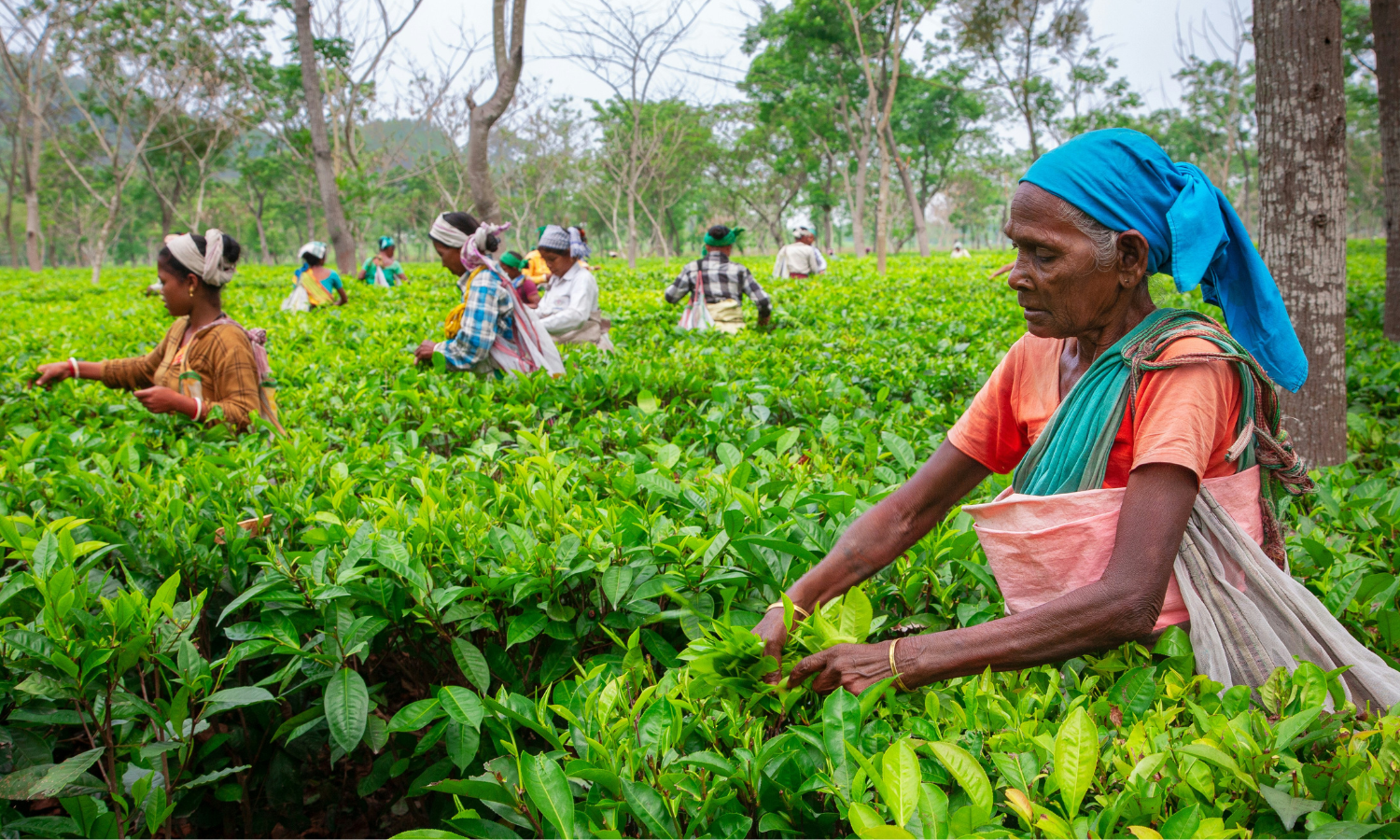
Photo courtesy of Rohit Dey, Unsplash