Each week, Food Tank is rounding up a few news stories that inspire excitement, infuriation, or curiosity.
HHS Announces Policy Reforms Targeting Food Safety and Nutrition
This week, the U.S. Department of Health and Human Services (HHS) announced two policy reforms targeting food safety and nutrition.
The agency, alongside the U.S. Department of Agriculture, submitted the first proposed definition of ultra-processed foods. They say that the absence of a definition has limited research consistency across the federal government.
The other proposal would require manufacturers to notify the U.S. Food and Drug Administration (FDA) when concluding that the use of a substance added to human or animal food is Generally Recognized as Safe (GRAS).
For the last two decades, the U.S. Food and Drug Administration has allowed food and beverage industries to self-certify that a new food chemical is safe, or legally GRAS, without federal oversight. Whether companies inform the FDA of the new ingredient is voluntary. This loophole has allowed an unknown number of GRAS determinations every year.
Some food and nutrition advocates aren’t impressed by the actions of HHS. Author and nutritionist Marion Nestle responded to the announcement, asking, “You have to be kidding. That’s all?” She says, “food advocates for years have called for making GRAS notifications mandatory. So this move is obvious, and long-awaited.” Nestle also points out that even if the new requirement is an improvement, companies are still responsible for the science “and will still be hiring its own experts to say the additive is safe.”
Senate Farm Bill Fails to Advance
The Senate Agriculture Committee failed to advance a Farm Bill last week.
The Committee’s Chair, Senator John Boozman (R-Ark) says they will reconvene for another vote in September. But he says it will be a “miracle” if the legislative package is signed into law before the midterm elections in November.
Zippy Duvall, President of the American Farm Bureau Federation, expressed frustration with the outcome, stating that the country needs a “strong, bipartisan bill” at a time when food producers and rural communities “are facing multiyear losses.”
Some advocates were relieved to see the Farm Bill fail in its current state. Milton Jones, President of the United Food and Commercial Workers International Union said it “cowers to powerful agricultural interests and leaves working families out to dry.” And Food & Water Watch’s Food Policy Director Rebecca Wolf calls the legislation “deeply flawed.”
Now, Wolf says, “Congress should use this opportunity to create a new Farm Bill that builds a resilient food system – not double-down on the same corporate model that created these problems in the first place.”
Microorganisms Offer Hope to Boost Sustainable Farming in Mexico
Researchers have identified microorganisms that show promise for improving crop productivity, restoring soils, and reducing dependence on artificial fertilizers and pesticides in Mexico.
The findings come from a project led by the National Autonomous University of Mexico (UNAM), in partnership with Michoacan’s Agrosano program from the Minister of Agriculture and Rural Development, the National Institute of Forestry, Agricultural and Livestock Research, and the Universidad Michoacana.
Scientists discovered native microorganisms in soils found in Michoacan and Oaxaca, as well as in marine environments, which can promote plant growth, improve nutrient availability, and offer protection against pests and diseases.
The research is focused primarily on small producers, who will be able to reproduce and apply biological inputs in their own fields. Participating farmers are already reporting gains in productivity even as they reduce the use of agricultural inputs and lower their production costs.
COP31 Focuses on South-South Collaboration
Ahead of the U.N. Climate Change Conference (COP31), Turkiye is pitching a new initiative to strengthen south-south cooperation.
If established, the South-South and Triangular Cooperation Climate Initiative will focus on helping countries with practical solutions, expertise, technologies, and financing while supporting climate resilience and the implementation of their nationally determined contributions.
“COP31 presents a timely opportunity to demonstrate how South–South and triangular cooperation can drive climate implementation,” Dima Al-Khatib, Director of the United Nations Office for South-South Cooperation, said during a recent policy dialogue in Ankara.
The initiative is still a proposal, and decisions need to be made around funding and governance, but the Turkish Cooperation and Coordination Agency (TIKA) see it as an extension of work that’s already underway in Turkiye under the country’s Zero Waste Initiative.
TİKA’s President Abdullah Eren says a practical roadmap can “transform ideas into concrete partnerships” and “deliver tangible outcomes for COP31.”
Extension Model Brings Solutions for Nigerian Farmers
Smallholder farmers in the northern and northeastern parts of Nigeria are increasingly exposed to climate shocks and violent conflict. To help, the Sasakawa Africa Association (SAA) is bringing them a solution that combines demonstration plots, community guides, post-harvest storage, and market connections to empower farmers and improve yields while building climate resilience.
New research shows that in a single year, SAA’s Value Chain-Based Extension (VCBE) model reached 455,200 producers across Nigeria. Their demonstration plots introduce farmers to new agriculture techniques that build climate resilience and result in bigger harvests.
Targeted training, focused on developing community guides, helps to spread knowledge even further. These guides teach farmers about climate-smart practices that protect their land from degradation. SAA is also showing households how to use local crops to prepare healthy meals and introducing storage bags and containers that keep grains safe from pests and weather.
CGIAR researchers say that these aren’t short term fixes. Instead SAA is “creating a lasting ripple effect that lifts entire communities.”
Articles like the one you just read are made possible through the generosity of Food Tank members. Can we please count on you to be part of our growing movement? Become a member today by clicking here.
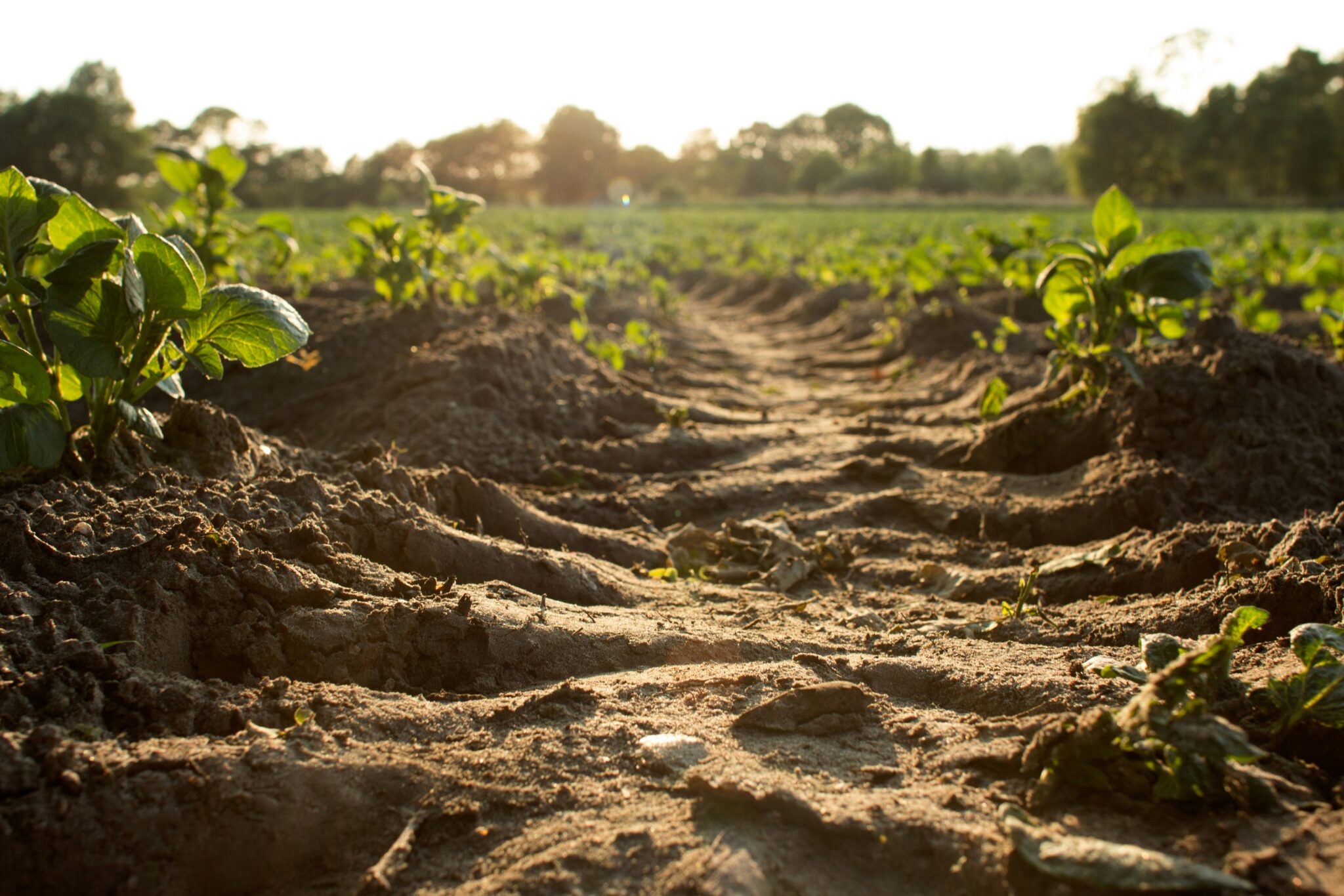
Photo courtesy of Dylan de Jonge, Unsplash