
This article is part of Food Tank’s primer series, “Food Tank Explains.” Each installment unpacks the ideas, innovations, and challenges shaping today’s food and agriculture systems, offering clear insights into complex topics. To explore more articles in the series, click here.
Antimicrobials are medicines used to treat infectious diseases caused by microorganisms like bacteria, fungi, viruses and parasites. Antimicrobial resistance (AMR) occurs when disease-causing microorganisms develop resistance to the medicines designed to treat them. As a result, infections become difficult or impossible to treat, increasing the risk of disease spread, severe illness, and death.
Public health agencies and researchers worldwide agree that AMR poses an urgent threat to global health. The World Health Organization (WHO) ranks AMR among the top 10 global public health threats, while the U.N. Food and Agriculture Organization (FAO), the U.S. Center for Disease Control and Prevention (CDC), and researchers writing in The Lancet, Healthcare, Science, and JAC-Antimicrobial Resistance have each warned of its consequences for global health.
An estimated 5 million deaths were associated with drug-resistant infections in 2019, including 1.27 million deaths directly attributable to AMR, according to a Lancet study. The CDC estimates that more than 2.8 million antimicrobial-resistant infections occur in the U.S. each year, resulting in more than 35,000 deaths.
AMR also poses a significant threat to global economic stability, according to the Center for Global Development. AMR drives health-care costs largely through longer hospital stays and increased need for intensive care. It can require additional diagnostic testing and reliance on second-line antibiotics. AMR was associated with almost US$700 billion in hospital costs globally in 2019, according to research published in BMJ Global Health.
Researchers warn that the burden of AMR could increase substantially in the coming decades. By 2050, drug-resistant infections could claim 10 million lives each year, while imposing trillions of dollars in economic costs.
AMR can develop through a range of interconnected factors. It can develop naturally as microorganisms adapt to their environments. But according to FAO and research published in JAC-Antimicrobial Resistance and Healthcare, the primary driver of AMR is antimicrobial use. When exposed to these medicines, susceptible microorganisms may be killed while resistant ones survive and multiply.
Evidence has linked the development and spread of resistance with the misuse and overuse of antimicrobials in human health, animal health, and food production. Meanwhile, global human antibiotic consumption increased by 65 percent between 2000 and 2015. And a Science study found that the proportion of animals carrying resistant bacteria in low- and middle-income countries nearly tripled between 2000 and 2018.
Antimicrobials have played an essential role in agriculture for decades, helping treat diseases in livestock, crops, and aquaculture. But the scale and manner of their use have raised concerns about agriculture’s contribution to AMR.
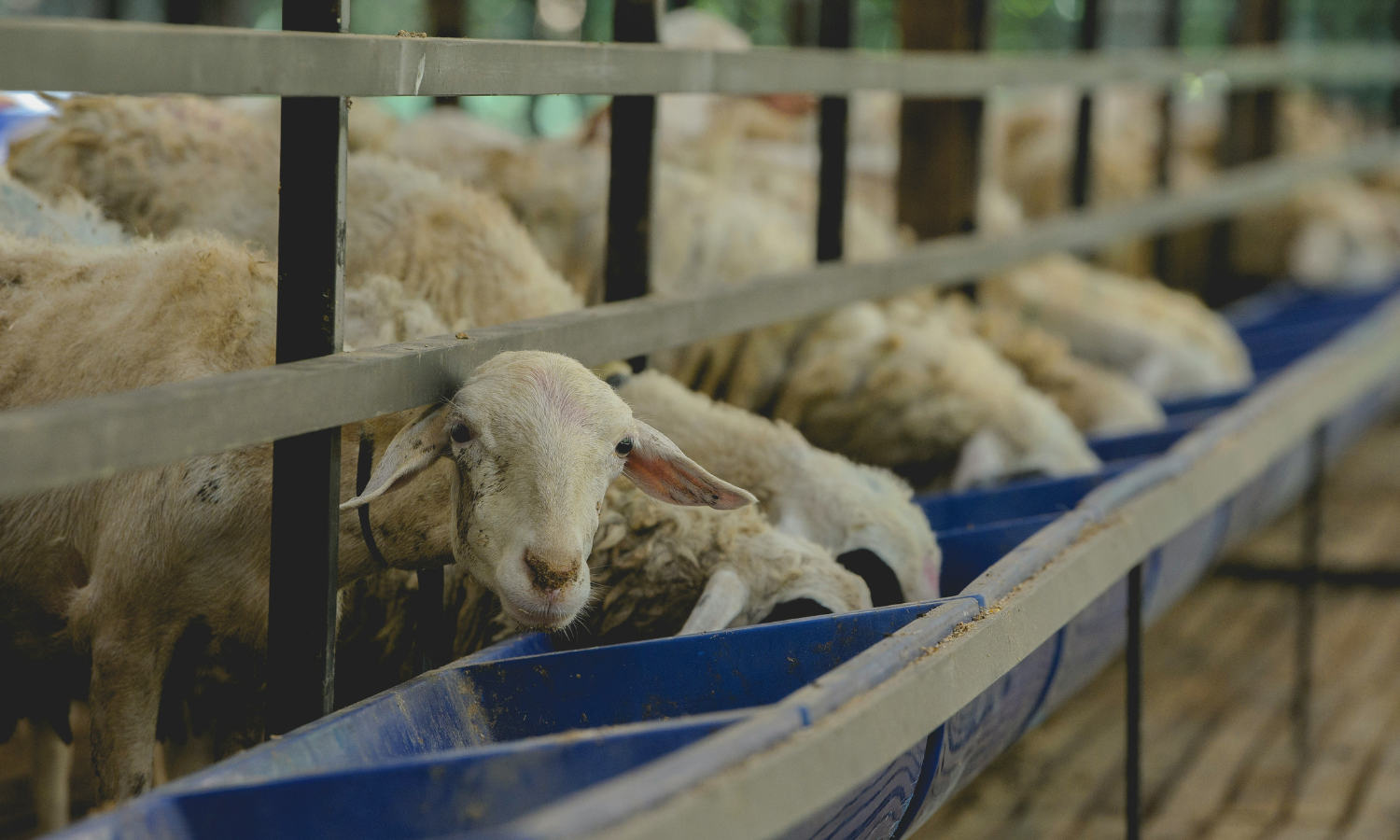
More than 70 percent of antibiotics worldwide are used in animals raised for food, and resistance in food animals has risen sharply. Part of the concern centers on antimicrobials used for purposes other than treating disease.
Several reports indicate that antimicrobials are used imprudently in agriculture, often being given to healthy animals for growth promotion and prophylactic purposes.
Experts suggest limiting antimicrobial use in food-producing animals when it is not needed to treat disease. WHO has called for restrictions on medically important antibiotics used for growth promotion and routine disease prevention in healthy animals.
FAO recommends reducing the conditions that create demand for these drugs. For example, by improving hygiene, biosecurity, and ventilation animal welfare, reducing crowding and stress, and farming breeds better adapted to local conditions.
Increasingly, experts approach these measures through a One Health approach, which treats human, animal, and environmental health as interconnected. A resistant bacterium that develops in livestock, for example, may spread through manure into soil and water, creating pathways for resistance to move between agricultural systems, animals, and people. Addressing AMR therefore requires coordination across sectors rather than focusing exclusively on antimicrobial use in human medicine or agriculture.
“One-Health is pivotal to combating AMR,” Haileyesus Getahun, Director of Global Coordination for the Joint Secretariat on AMR, tells Food Tank. “No sector or country acting alone can tackle AMR.” The Joint Secretariat—comprising FAO, WHO, the U.N. Environment Programme, and the World Organisation for Animal Health—coordinates international efforts to address AMR across human, animal, and environmental health.
Consumers can also influence antimicrobial demand in agriculture through their food choices. One study co-authored by Ramanan Laxminarayan found that limiting meat consumption to 40 grams per person per day could reduce antimicrobial use in livestock by 66 percent.
His advice to consumers is straightforward: “Don’t purchase meat raised on antibiotics. Reduce consumption of meat. Ask questions about where your food comes from,” Laxminarayan tells Food Tank.
Articles like the one you just read are made possible through the generosity of Food Tank members. Can we please count on you to be part of our growing movement? Become a member today by clicking here.
Photo courtesy of Bastian Wardana, Unsplash