Sugar Coated, a new book by Marion Nestle and Lisa Sutherland, reveals the influence American cereal companies have on food policy and public health.
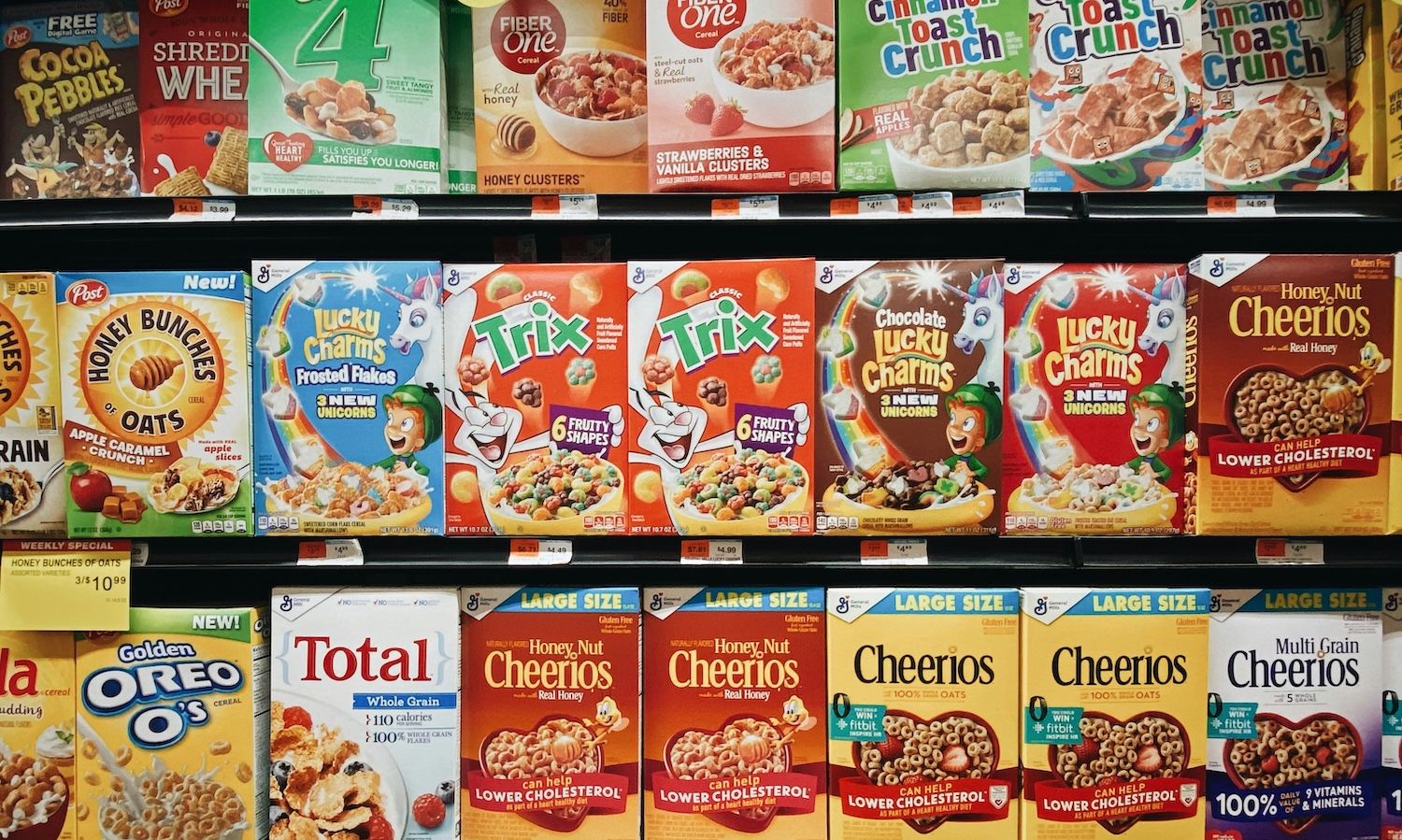
Nestle, a nutritionist and Professor Emerita at New York University, has been collecting cereal boxes for years, drawn to the “ridiculous health claims” they once displayed.
Consumer advocacy and government interventions have forced companies to alter their marketing over the years. But Nestle and Sutherland—the former Vice President of Nutrition at Kellogg Company—still see so much reflected in their design.
“The boxes are so big, they’re like billboards,” Nestle tells Food Tank. And because they change so frequently, “they can respond to every health claim in the world.”
Sugar Coated explores these health claims along with the ingredients and marketing strategies that Big Cereal companies have embraced to sell products and cover up their negative health effects. Throughout the book are full-color images of boxes over the years.
Nestle and Sutherland trace the history of cereal back to what they call its “bizarre start” in the 1860s, when early breakfast cereals emerged from health reform movements that promoted bland, grain-based foods as a path to better physical—and even moral—health. From there, they follow cereal’s evolution into a highly marketed staple and the public health debates that continue today. A section on color additives likely wouldn’t have existed if U.S. Health Secretary Robert F. Kennedy, Jr. hadn’t taken up the issue, Nestle explains.
Companies have worked hard to entice eaters from an early age—an important tactic for the sector and one they’re particularly good at, Sugar Coated shows. “The Big Four cereal companies were among the first to target marketing directly to young children,” the authors write.
When did it become okay to feed kids vitamin-supplemented cookies for breakfast, “which is basically what kids’ cereals are?” Nestle asks.
Cartoon characters, toys, and prizes have been used to draw children to sugary breakfast foods. For a time, toys disappeared in response to concern from eaters, but now they’re back, Nestle says. “It’s time for [advocates] to get busy again.”
But these efforts must go beyond plastic prizes, Nestle says, arguing that nothing substantive will change until corporations hold less influence over government. “Get money out of politics.”
Sugar Coated: Unboxing the Hidden Forces Shaping America’s Favorite Breakfast Food is now available from the University of California Press.
Articles like the one you just read are made possible through the generosity of Food Tank members. Can we please count on you to be part of our growing movement? Become a member today by clicking here.
Photo courtesy of Phil Aicken, Unsplash