
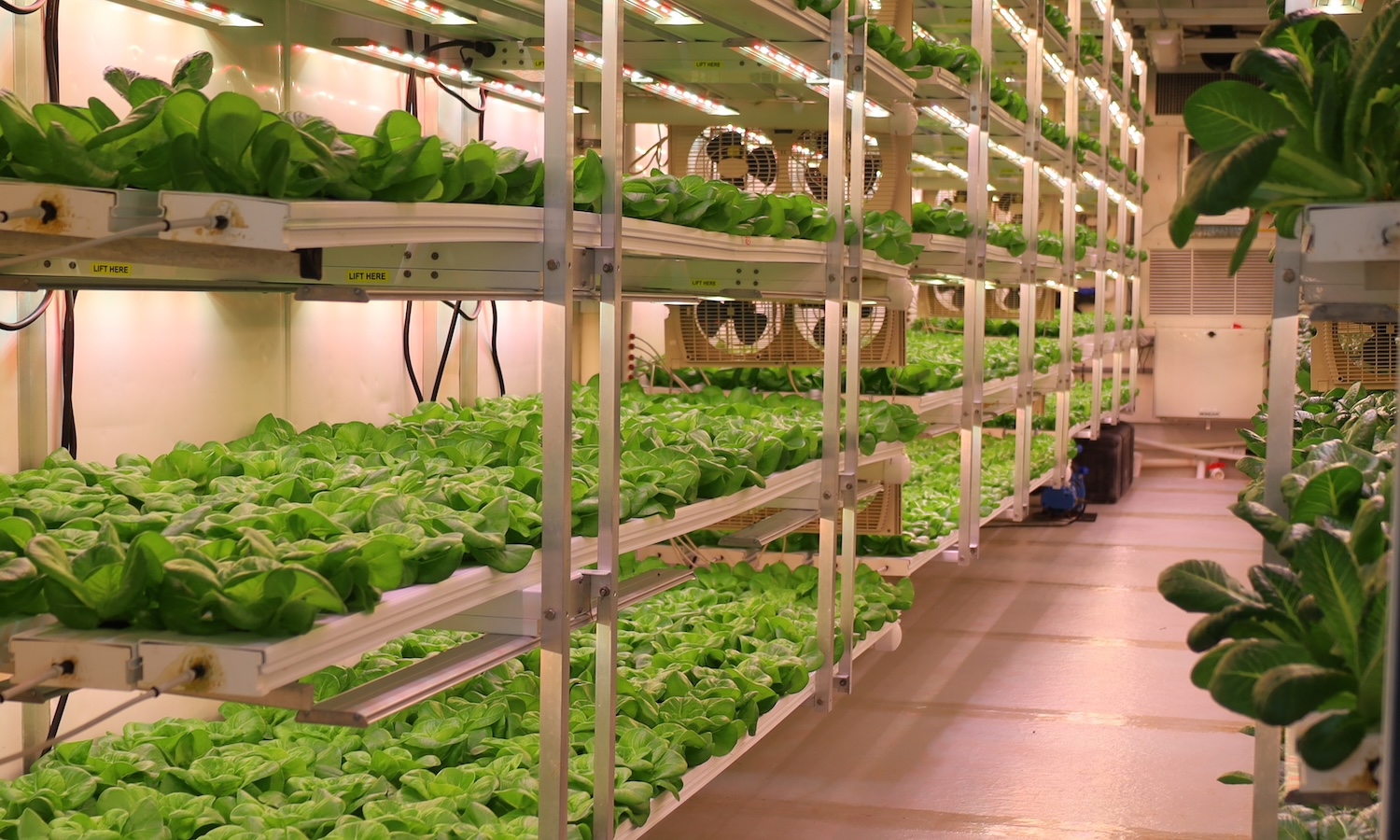
A vertical farm in the Camille Graham Correctional Institution in South Carolina serves education space for incarcerated women, where women gain skills in farming and workforce development.
The 20-week program teaches women how to plant, grow, and harvest hydroponic lettuce, along with other skills in food handling. Around 15 inmates participate, producing over 3,000 heads of lettuce every week. South Carolina’s Department of Corrections (DOC) then sells the lettuces back to the facilities, where they are served to inmates across Camille Graham and two neighboring women’s prisons.
The goal is to equip women with skills for life after incarceration and support their wellbeing through hands-on connection with agriculture and more nutritious meals.
In addition to being the first controlled agriculture operation in a U.S. prison, the Camille Graham farm is the pilot program for the Growing Justice initiative, operated by criminal justice nonprofit Impact Justice. This summer, Camille Graham began its third cohort of the program, and Impact Justice also launched a Growing Justice location at a correctional facility in California.
“Access to fresh vegetables and locally grown produce is pretty rare” in prisons, Kristina Bell, the Growing Justice Director at Impact Justice, tells Food Tank. “We’ve seen tremendous positive feedback around the fact that they have access to this lettuce, and tremendous pride as well. The participants know that others in the facility are benefiting and enjoying the produce that they’ve grown.”
The technology is sourced by vertical farm company AmplifiedAg. CEO David Flynn tells Food Tank that the farm is a repurposed shipping container with an HVAC system and LED lighting that allow multiple stacked rows of lettuce to grow.
One container has the capacity to produce 40,000 pounds of lettuce every year. Rick Doran, the Division Director of Agriculture for South Carolina’s Department of Corrections (DOC), says that around 4,000 servings of lettuce are harvested each week.
Doran remembers being “blown away” by the technology’s high output, low water intake, and logistical ease for a correctional facility. He was also inspired by the growing potential of controlled environment agriculture in South Carolina, which he said could create job opportunities for participants of the program, who train in this field, after their release.
“Any time we can show people how to be more self-sustaining and understand where their food comes from and what goes into producing and harvesting and being safe with that food—it fits terrifically into the whole idea that when the ladies finally move out of the institutional setting,” Doran tells Food Tank. “It helps keep the recidivism lower, and that’s one of the big goals.”
The Growing Justice curriculum has three main pillars: hands-on work at the farm, classroom instruction on agriculture and food production, and workforce development, which includes resume writing and interview preparation. Participants spend around 10 hours with the program each week, over the span of five months. By the end, they receive a U.S. Department of Agriculture Good Agricultural Practices food safety certification, as well as a US$1,450 stipend after their release from the facility.
As water depletion becomes a growing issue in farming-forward South Carolina, the DOC continues to seek newer technologies, like vertical farming, to build efficiency in its agricultural operations. Tom Osmer, one of the department’s Assistant Deputy Directors, is excited by the Camille Graham farm’s model. He believes the combination of resource-efficient production, revenue generation for the DOC, nutritional value for inmates, and its potential to improve participants’ wellbeing and livelihoods make it an all-around win.
Impact Justice and South Carolina’s DOC describe the program’s influence as immense. “When they’re a part of something, they take more interest in rehabilitation, and it’s a form of therapy for the inmates to work and see their work come to fruition,” Osmer tells Food Tank. “We want them to live a fruitful life on the outside, so these are skills and disciplines they’re learning to keep them productive.”
Articles like the one you just read are made possible through the generosity of Food Tank members. Can we please count on you to be part of our growing movement? Become a member today by clicking here.
Photo courtesy of Impact Justice