Baltimore, Maryland is leveraging a historic US$11 million grant to invest in holistic solutions that build resilience in the city’s food and agriculture systems.
The city’s Food Policy and Planning (FPP) Division received the funding through the American Rescue Plan Act (ARPA) to improve access to healthy food without depending on brick-and-mortar grocery stores. Taylor LaFave, Baltimore’s Chief of Food Policy and Planning sees the strategy as innovative thanks to its comprehensive approach. In total, it spans five programs covering food access, Food is Medicine, and urban agriculture education.
The strategy builds on lessons from Baltimore’s COVID-19 emergency food response between 2020 and 2022. The city led an almost US$40 million effort to distribute more than 180 million servings of fresh fruits and vegetables to residents in what it calls “healthy food priority areas.”
That experience reinforced the importance of providing foods residents needed. “They not only needed it, but they also wanted it, they valued it, and it made a significant improvement in their lives and in their health,” says LaFave.
The pandemic also highlighted the shortcomings of traditional food retailers. For more than 10 years, Baltimore operated a tax incentive program to attract and retain grocery stores. But when stores shuttered, they realized that it may not be possible to bring a supermarket to every neighborhood.
“We can’t continue to rely on large private corporations that are ultimately only interested in profit to solve our healthy food access issues, and to improve our city’s food system,” LaFave tells Food Tank.
The ARPA investment instead supports programs available across the city, with the goal of reaching residents through multiple channels.
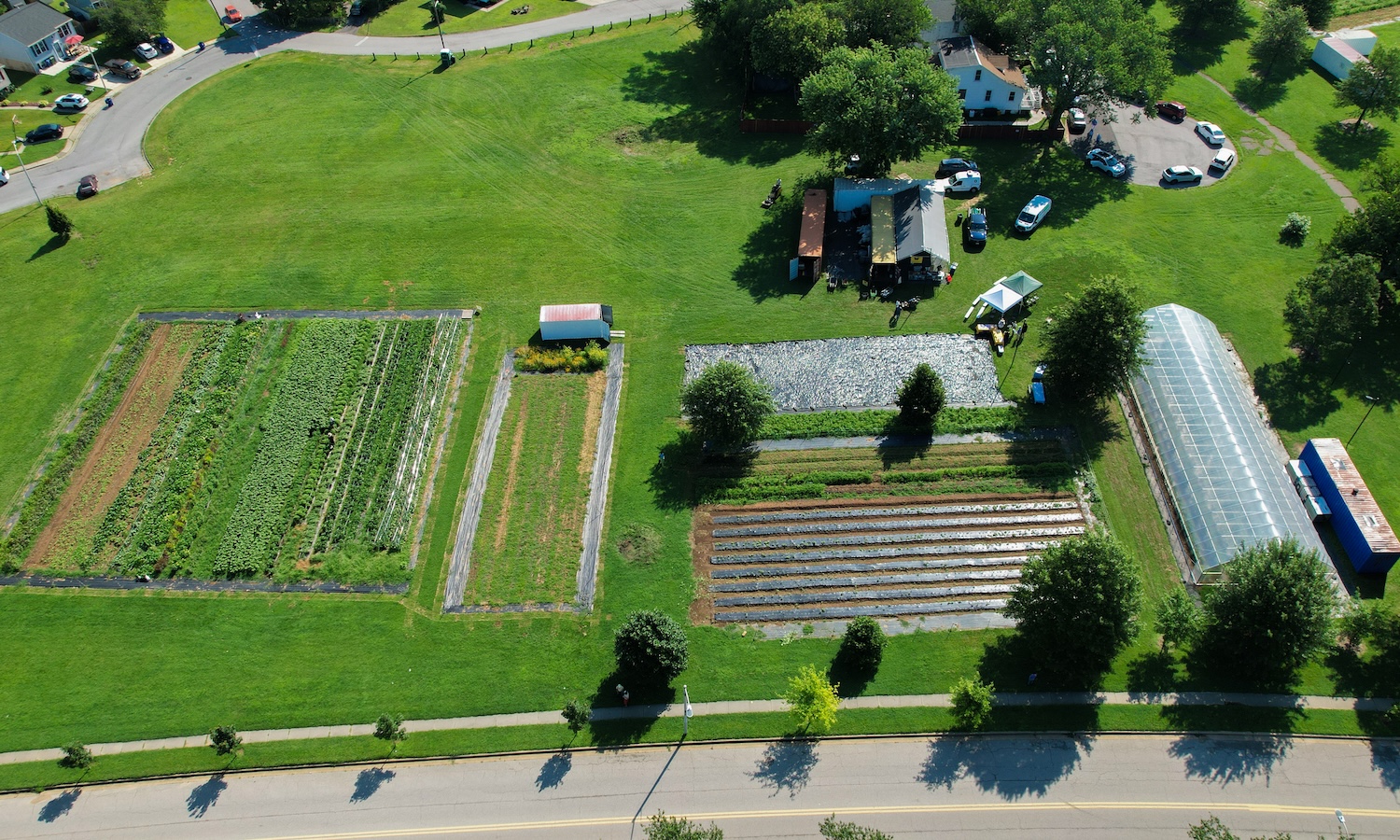
One initiative is the Black Butterfly Teaching Farm, supported through a partnership with the Farm Alliance of Baltimore. Located in a residential neighborhood near an elementary school and a high school, the farm combines food production with community engagement. It also offers mentorship and training for emerging farmers of color.
Neighbors have responded positively to the program, asking how to get involved and where they can buy the produce, says Najahla Olumiji, Baltimore’s Food Systems Planner.
The farm is also encouraging students to learn about urban food production. One group Olumiji saw during a recent visit was “shocked at how little space it takes to grow thousands of pounds of produce,” she tells Food Tank.
Another program under the strategy is Food Rx, hosted at MedStar Harbor Hospital and Good Samaritan Hospital. It provides enrolled patients with enough produce for 10 medically tailored meals per week to improve diet-related health outcomes and reduce the costs of care.
The city is also expanding access to fresh produce through the Produce Box Distribution Program, which connected residents with the equivalent of 195 million servings of produce since 2020. And with the B’More Fresh Program, they are able to provide US$30 in monthly fruit and vegetable vouchers to recipients of the Supplemental Nutrition Assistance Program (SNAP) when they shop online at Amazon and Safeway. The fifth program of the city’s strategy expands the use of electronic nutrition incentives at Baltimore City farmers markets.
Despite the successes that FPP has celebrated, the city is preparing for the end of ARPA funding at the end of October. “None of these programs will be able to continue how they’ve been operating by relying just on city funding,” LaFave explains.
But FPP doesn’t want these programs to disappear. They have secured some funding to put toward programs including Food Rx and Black Butterfly Teaching Farm. And each fiscal year, they receive US$150,000 from the city’s general fund, which they plan to use to help cover funding gaps and leverage additional grants.
In June 2026, the Division also received a grant from the Johns Hopkins Urban Health Institute. As part of this, the team will work with researchers from the Center for a Livable Future over the next year to evaluate the programs and explore options for continuing them.
Public-private partnerships will be particularly important to sustain this work, LaFave believes. “We need national funders to step up and work more collaboratively together across the food system.”
Articles like the one you just read are made possible through the generosity of Food Tank members. Can we please count on you to be part of our growing movement? Become a member today by clicking here.
Photo courtesy of the Black Butterfly Teaching Farm