If you ask people who care about food and the planet what they should eat, and the answer usually comes back the same: eat Mediterranean. Olive oil, vegetables, fish instead of beef. It is healthy, enjoyable, and politically safe.
It is also too modest. The Mediterranean diet is a real improvement over a typical Western diet. But treating it as the sustainable endpoint leaves most of the available benefit for climate and land on the table.
Food production accounts for roughly a quarter of global greenhouse gas emissions. Yet most claims about the footprint of specific diets come from modeling. Until recently, no one had compared the Mediterranean diet with a fully plant-based diet in a randomized trial.
My colleagues and I had the data to do it. In a randomized crossover trial, 62 adults with overweight followed two diets for 16 weeks each, in random order. One was a Mediterranean diet modeled on PREDIMED, the large Spanish trial behind the diet’s heart-health reputation. The other was a low-fat vegan diet of vegetables, fruits, whole grains and legumes. Because everyone ate both, each person served as their own comparison.
In a secondary analysis published this year in BMJ Nutrition, Prevention & Health, we calculated the environmental footprint of what participants actually recorded eating. The Mediterranean diet cut diet-related greenhouse gas emissions by about 20 percent. The vegan diet cut them by 57 percent, nearly three times as much. Cumulative energy demand, the energy used to grow, process, transport and dispose of food, fell 55 percent on the vegan diet and did not change significantly on the Mediterranean diet.
Per person, the vegan diet cut about 1,450 grams of carbon dioxide equivalent a day, compared with about 450 grams on the Mediterranean diet. That gap adds up to more than 350 kilograms a year for one person.
Vegetables were not the difference. Both diets were full of them. Removing meat accounted for most of the gap, followed by dairy and eggs, foods the Mediterranean pattern reduces but never removes. Olive oil, the diet’s signature ingredient, nudged the footprint slightly upward.
Our trial did not measure land use, but the same foods dominate it. Agriculture occupies about 44 percent of the world’s habitable land, and roughly 80 percent of that farmland goes to livestock through grazing and feed. Yet meat, dairy and farmed fish supply only about 17 percent of the world’s calories. The 2019 IPBES global assessment named agriculture as a key driver of biodiversity loss. A diet that keeps animal products at moderate levels keeps much of that land demand in place.
The health results pointed the same way, with one exception. In the parent trial, participants lost an average of 6 kilograms on the vegan diet and no weight on the Mediterranean diet, and insulin sensitivity improved only on the vegan diet. Blood pressure fell on both, and more on the Mediterranean diet. No single pattern wins every measure.
This analysis has limits. It was exploratory, built on a trial designed to study weight and cardiometabolic health, not emissions. It relied on self-reported food records from motivated volunteers and on average life-cycle values that cannot distinguish grass-finished from feedlot beef. It does not outweigh decades of evidence for the Mediterranean diet’s heart benefits.
But it does suggest how the food movement should talk about diets. All-or-nothing messaging tends to fail. A ladder works better. The Mediterranean diet is a real first rung, roughly a fifth off a person’s dietary footprint. Replacing meat with beans, lentils and whole grains is the largest single step. Reducing dairy and eggs is the next.
Institutions can climb that ladder faster than individuals. Hospitals, schools, universities and government cafeterias buy food at scale. Making plant-based meals the default, with animal products still available, shifts footprints without asking every diner to decide alone. Funders, meanwhile, should support head-to-head trials that measure what people actually eat and track environmental outcomes alongside health.
The Mediterranean diet remains a sensible place to start. We should stop presenting it as the most a person can do for the planet.
Articles like the one you just read are made possible through the generosity of Food Tank members. Can we please count on you to be part of our growing movement? Become a member today by clicking here.
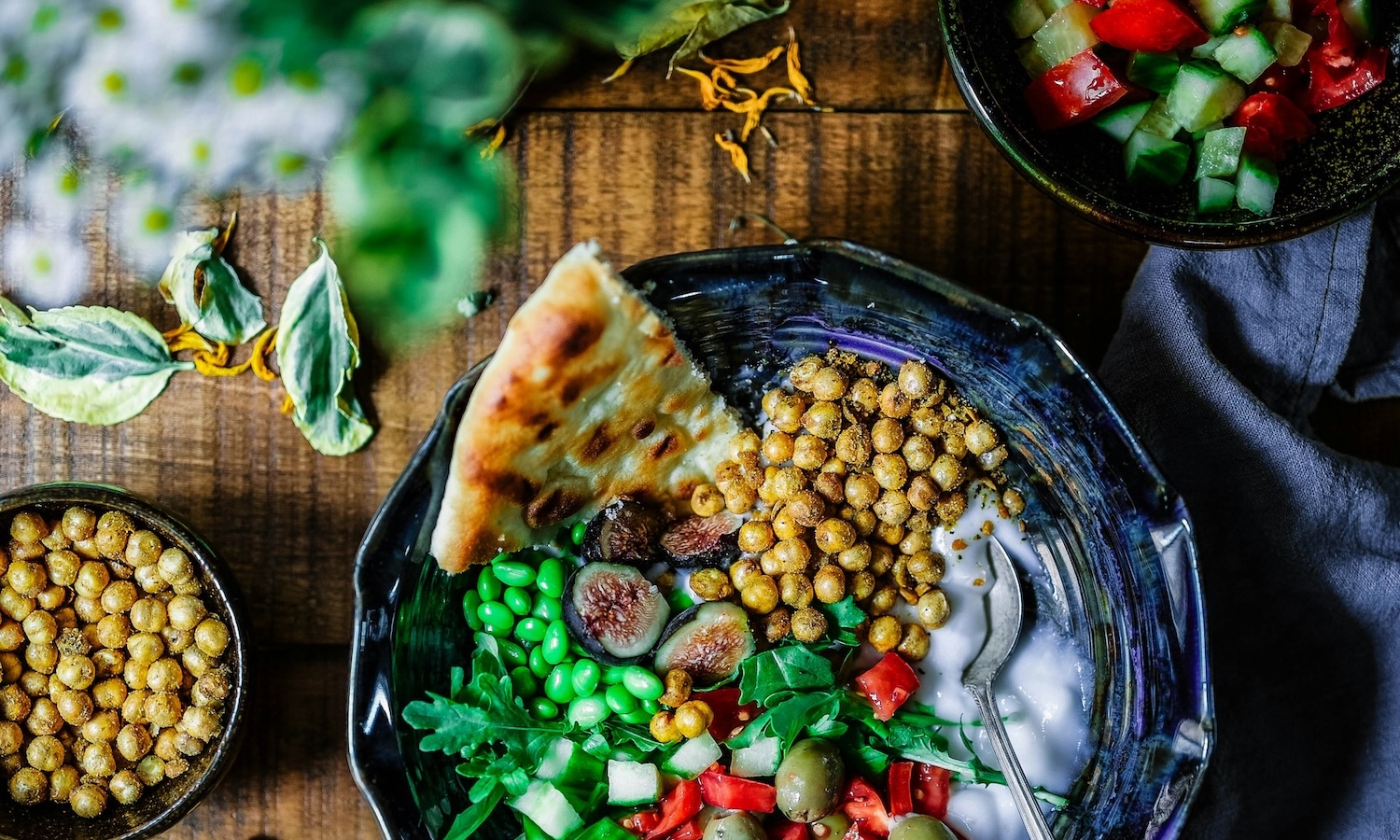
Photo courtesy of Odiseo Castrejon