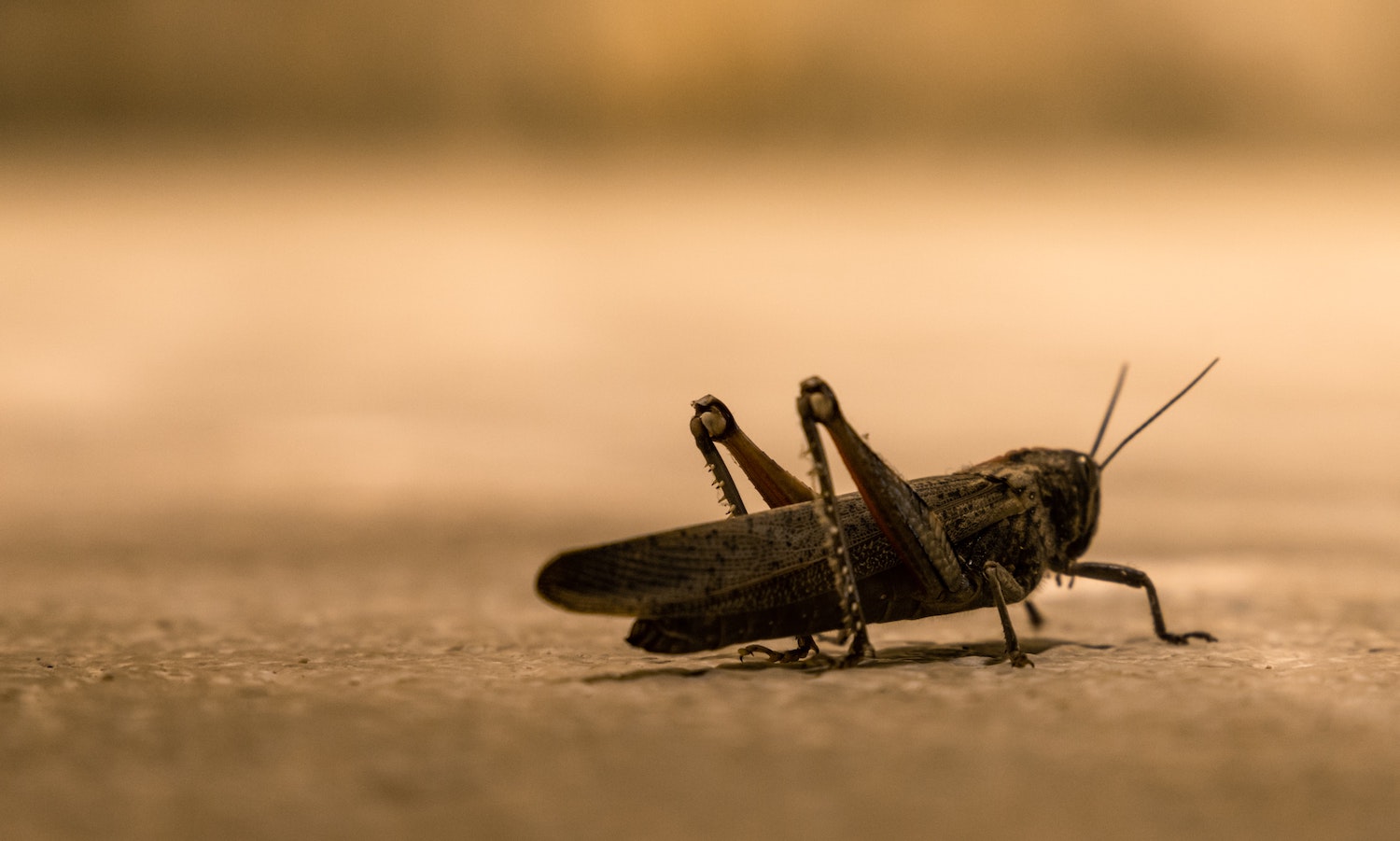
New research in Agronomy reveals that the use of traditional insecticides harmed local bird and honeybee populations during an upsurge of locusts in the Horn of Africa. But Somalia opted for a different approach, selecting a treatment option that controls swarms while protecting human health and wildlife. The results offer a path toward sustainable locust management.
The Desert Locust is “the most destructive migratory pest in the world,” according to the U.N. Food and Agriculture Organization (FAO). In a single day, their mobile swarms can consume the same amount of food as 35,000 people, threatening both food security and agricultural producers’ livelihoods.
The new paper focuses on Ethiopia and Somalia, which recently experienced the most extreme infestation of locusts in 25 years according to the World Bank, and Kenya, which saw the worst outbreak in more than 70 years. In these countries “the massive invasions of [the Desert Locust] overwhelmed existing control capabilities,” the authors state.
When swarms threatened to decimate crops, Ethiopia and Kenya responded with classes of insecticides that can kill locusts rapidly and at scale. But past upsurges in Western Africa have shown re-invasions are possible within weeks.
These chemicals are also known groundwater pollutants and soil contaminants. During the recent invasion, monitoring of the environmental impact of insecticide application was limited, but the authors state it is safe to assume that negative environmental side effects “were widespread but remained largely unreported.”
The paper estimates that spraying these chemicals led to the mortality of “thousands” of birds and the displacement of tens of thousands. In Ethiopia—one of the top ten natural honey producing countries in the world, according to research from Injibara University—honey production declined by as much as 75 percent. This is due to honeybee deaths, a reduction in honeybee lifespan, and delayed development caused by the insecticide treatment.
“The fight with highly toxic pesticides against the devastating outbreak of desert locust in years 2019 to 2022 created very high costs for people and the environment,” Alexander Müller, Founder and Managing Director of TMG – Think Tank for Sustainability tells Food Tank. A co-author of the paper, Müller continues, “The revenue loss for the honey producers can be estimated around US$500 million. An initial True Cost Analysis of the loss of environmental services (pollination) is 15 times higher! And the question arises how much biodiversity, and especially insects, has been destroyed with this action.”
In contrast, Somalia’s response to the locust swarms included the bio-insecticide Metarhizium acridum, and outcomes were promising. Treatment resulted in the disintegration of swarms within days. More importantly, the authors state, the locusts lost their appetite. Thoroughly tested, M. acridum also protects the environment and human health in a way that the other insecticides do not, according to the researchers.
To make the treatment of the bio-insecticide even more effective, the paper recommends combining it with another intervention: predator birds.
While a bird’s consumption of locusts varies by season or geography, they can slash locust populations by as much as 50 percent in 17 days. Though promising on its own, the application of M. acridum can reduce locust populations even further. Locusts affected by the bio-insecticide tend to move to the top of crops to bask in the sun. And once locusts are exposed, birds can more easily locate them, further reducing swarm sizes.
The authors find that the use of M. acridum, either alone or in combination with predator birds, is most effective as an early means of control.
“We need an innovative early warning system and better early action to make the fight against locusts and other pests and diseases more efficient and less dangerous for people and the environment,” Müller tells Food Tank. The Intergovernmental Panel on Climate Change “has warned us that climate change will make such outbreaks more frequent and will change the spread of the risks.”
If utilized correctly, the authors recommended approach can manage locusts “before they develop to threaten crops, pastures, and ultimately livelihoods.”
Articles like the one you just read are made possible through the generosity of Food Tank members. Can we please count on you to be part of our growing movement? Become a member today by clicking here.
Photo Courtesy of Nicolas Lindsay, Unsplash