
House Agriculture Committee Chairman Glenn Thompson recently introduced the Farm, Food, and National Security Act of 2026. Shortly after, Trump issued an executive order to expand domestic glyphosate supply. Environmental advocates say both could significantly reshape the regulation of pesticides in the United States.
The Bill includes a provision to create uniformity in pesticide labeling. It would prohibit states and courts from requiring manufacturers to include health warnings not recognized by the U.S. Environmental Protection Agency (EPA). Nonprofits including the Center for Food Safety and Food & Water Watch say that it will restrict states and local governments from adopting stronger pesticide regulations. They also worry it will limit state-level protection for farmers, public health, and the environment.
The Bill has drawn backlash from environmental groups, with critics arguing it aims to protect pesticide companies from litigation. “A liability shield for pesticide manufacturers would mean indiscriminate use of thousands of harmful pesticides linked to cancer and water pollution,” Mitch Jones, Food & Water Watch’s Managing Director of Policy and Litigation, tells Food Tank.
Under existing law, pesticide regulation operates through a shared federal-state system. The EPA evaluates pesticide safety and approves product labels under the Federal Insecticide, Fungicide, and Rodenticide Act (FIFRA). And states retain authority to regulate pesticide use and to pursue legal action related to health risks or labeling disputes. The provision will shift authority to the federal government by making EPA-approved labels the benchmark for liability.
“Because it’s much easier for industry to capture a single federal agency than to capture 50 statehouses, this would be a huge win for industry. Conversely, it would be a huge loss for states: guaranteeing their residents’ health and safety lies at the core of their historic powers,” Claudia Polsky, Director of the Environmental Law Clinic at UC Berkeley, tells Food Tank.
Days after the Farm Bill draft was introduced, President Trump issued an executive order to expand domestic production of glyphosate-based herbicides, one of the most widely used weed-control tools in American agriculture. The executive order invokes the Defense Production Act and frames domestic herbicide supply as critical to national security and agricultural productivity.
Polsky believes the executive order “nonsensically tries to tie glyphosate to national defense needs” and acts as another attempt to protect industry from the financial consequences of litigation.
“No matter where it’s produced, glyphosate is extremely dangerous for our health and environment,” Jones says. “Trump’s executive order is a slap in the face to the thousands of people who die from cancer every year.”
Bayer maintains that glyphosate is safe and not carcinogenic when used as directed, calling the herbicides “critical tools that farmers rely on to produce affordable food and feed the world.” And the EPA’s assessment finds glyphosate is “unlikely to be a human carcinogen.”
But the International Agency for Research on Cancer classifies glyphosate as “probably carcinogenic to humans” and a meta-analysis in PubMed suggests a “compelling” link between glyphosate-based herbicides and increased risk for non-Hodgkin lymphoma. And pesticide manufacturers continue to face extensive litigation over alleged links to cancer and other health effects.
Bayer recently proposed a US$7.25 billion class settlement to resolve non-Hodgkin lymphoma claims related to the use of its herbicide Roundup, which contains glyphosate as the primary active ingredient.
“Against this backdrop, the agrochemical industry and Administration are engaging in complementary (and one suspects, highly coordinated) actions to thwart compensation to the chemically injured,” Polsky tells Food Tank.
Bayer is also backing efforts that would limit similar claims in the future. In Monsanto Co. v. Durnell, Bayer is arguing before the U.S. Supreme Court that state law cannot require warnings beyond those approved by the EPA. The company has also supported bills in states, including North Dakota and Georgia, that would limit lawsuits against pesticide manufacturers whose labels comply with EPA requirements.
In a recent statement, Bill Anderson, CEO of Bayer, states that the litigation and class settlement agreement demonstrate the need for guidance from the Supreme Court on clear regulation in American agriculture.
But Jones tells Food Tank that these efforts are part of a broader shift intended to shield pesticide manufacturers from liability. “The pesticide industry is trying any tactic they can, asking everyone from Congress and state legislatures, to EPA, Trump, and the Courts to help manufacturers skirt accountability, protect profits, and silence the sick.”
Polsky believes that a win for industry—whether it’s through Congress or the Supreme Court—would mean that EPA approval could become the ceiling for warning labels. And this could make it difficult to sue manufacturers under state law for failure to warn about dangers.
“Trump should be working to protect rural communities from glyphosate,” Jones says, “not protect Bayer from rural communities harmed by its product.”
Articles like the one you just read are made possible through the generosity of Food Tank members. Can we please count on you to be part of our growing movement? Become a member today by clicking here.
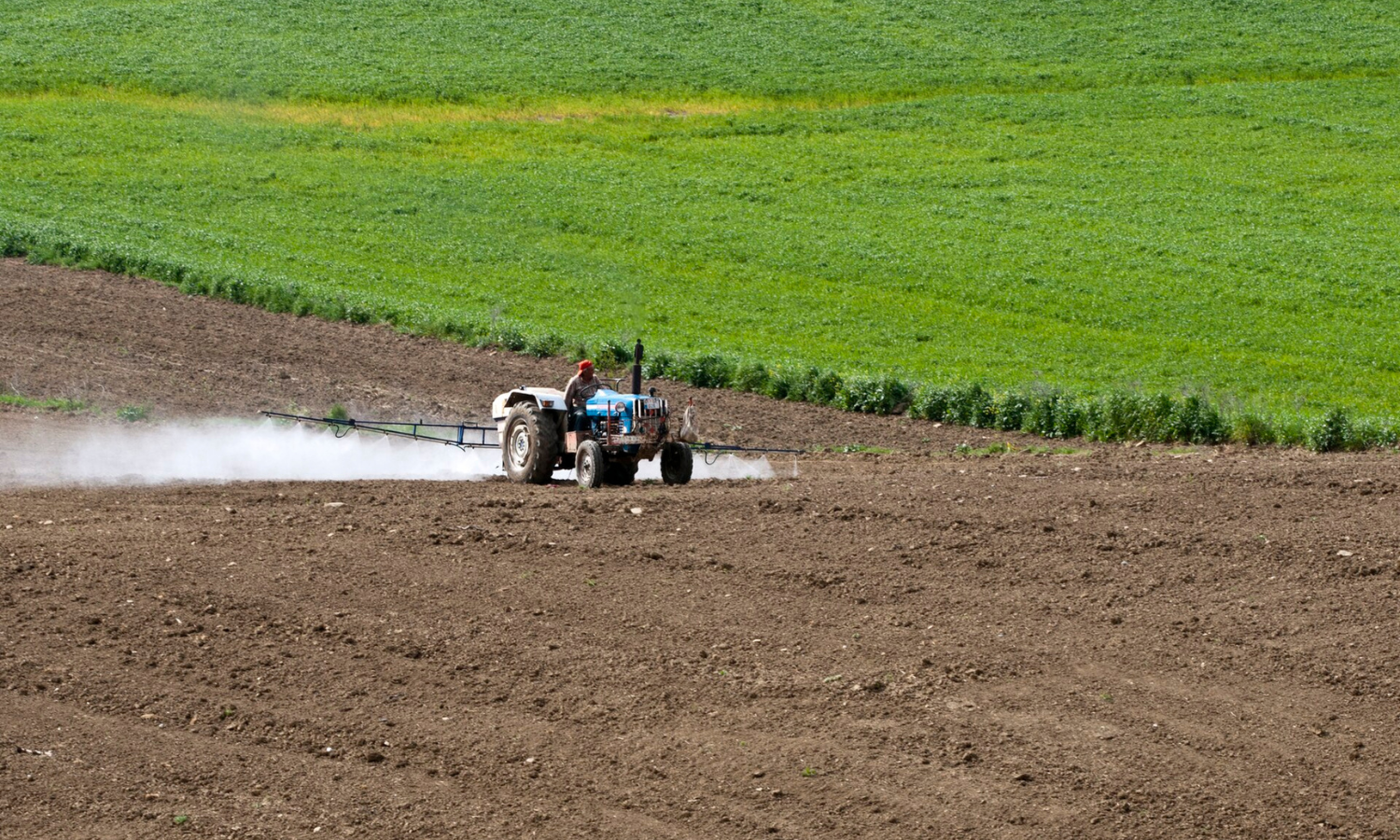
Photo courtesy of Zeynel Cebeci