In 1946, more than half the world’s population faced hunger. Today, this figure has fallen dramatically—to 8 percent—even as the global population has tripled. Progress the past 20 years has been significant with, for example, Cambodia bringing its hunger levels down from 25 percent in 2000 to 5 percent in 2025.
Unfortunately, progress has not only stalled—it has reversed in some regions. At the same time, we are facing colossal health and environmental problems worldwide because of an approach used to end hunger that focused heavily on a few staple crops: wheat, rice and corn. Today, one out of three people in the world suffer from malnutrition with overweight and obesity rates skyrocketing. An estimated 20 percent of global mortality is now attributed to poor-quality diets.
This is further compounded by an affordability crisis. Healthy diets remain economically out of reach for most people living in low- and middle-income countries, estimated to cost US$4.50 per day (global mean) while 45 percent of the global population lives below US$6.85 a day, and 10 percent lives below US$3.00 a day. Poverty and a lack of access to healthy diets go hand in hand.
These results are not accidental. They reflect decades of policy choices that promote the production and marketing of staple and oilseed crops through price incentives, procurement measures and subsidies. These policies have subsidies overwhelmingly favor staple foods and limited incentives for farmers to diversify their production systems.
The problem is not a lack of calories. It is a lack of diverse foods needed for healthy diets, the discrepancies between where food is produced and where it is consumed, and the inability of vulnerable populations to afford healthy food options. This is the hunger problem we face today.
But this problem can be fixed. Agriculture remains the first line of defense against hunger and malnutrition. Investing in nutrition-sensitive agriculture ensures that these systems deliver not just more food, but more healthy food. This needs to be driven by a multi-sector approach with co-investments in health, education, as well as water, sanitation, and hygiene alongside agriculture and food systems.
A new report published by researchers from CABI, the U.N. Food and Agriculture Organization (FAO) and the Shamba Centre for Food & Climate, shows how we can integrate nutrition into current agriculture and food aid programs. It identifies 10 high-impact nutrition-sensitive interventions based on a review of scientific evidence spanning 1,732 individual studies across 83 countries and published in 52 high quality systematic reviews over the past 20 years.
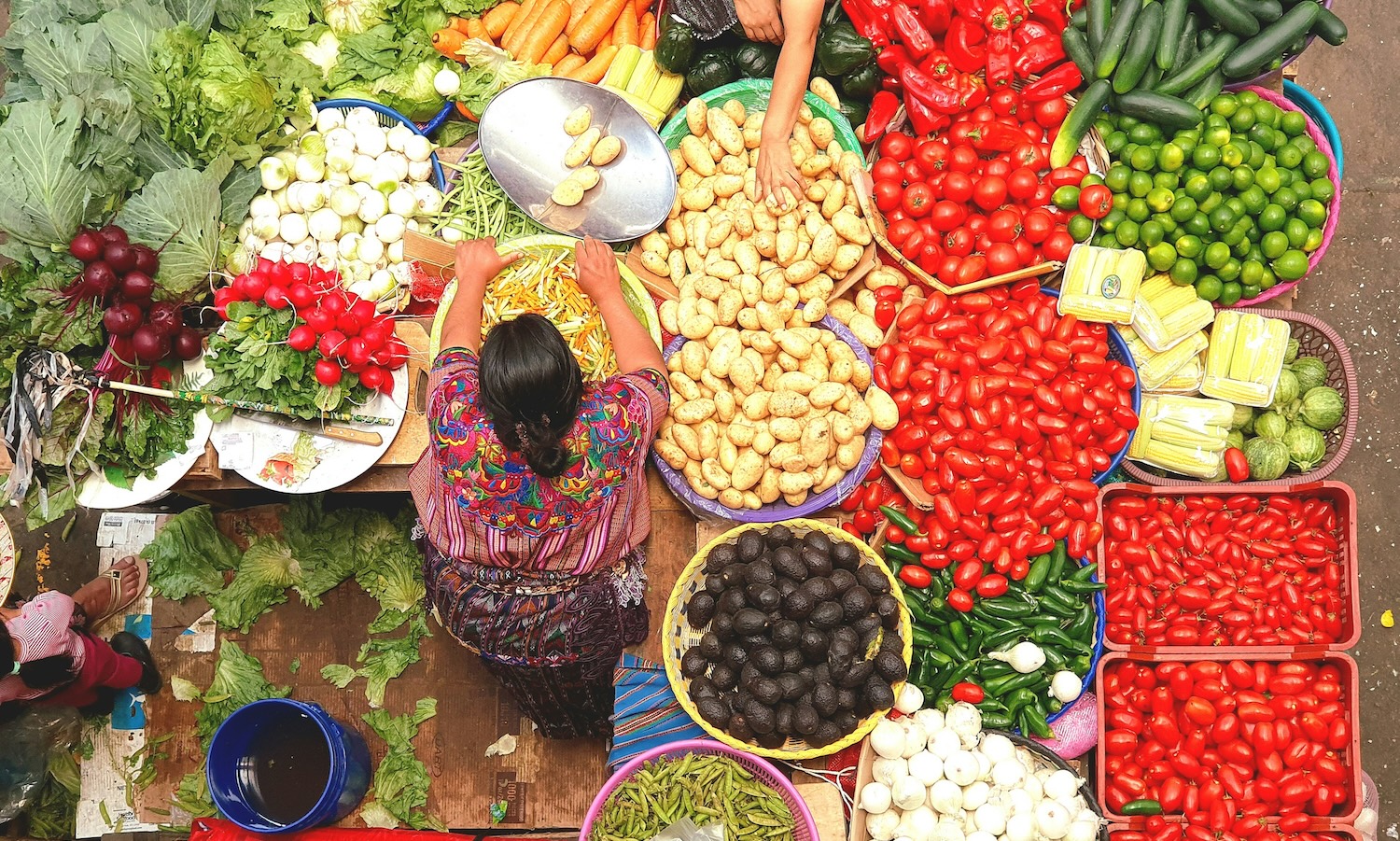
According to the report, we first need to enhance household-level food production to increase the availability of nutrient-dense foods. We do not produce enough fruits, vegetables, and pulses for everyone to be able to access and afford them. And while we produce enough proteins, they remain over-consumed in some places and under-consumed in others. We need to support those that do not produce enough animal source foods to sustainably increase the production of aquaculture and poultry—two animal-source foods that can be relatively cheap, relatively low-emissions, and high in nutrients.
Second, we need to focus on improving access, efficiency, and safety within agriculture and food systems. Infrastructure is lacking—from storage and processing to roads and electricity—to preserve nutritious food for longer, get the missing micronutrients to consumers and ensure that food is safe to eat. This is particularly important when considering fresh fruits and vegetables as well as animal-sourced proteins.
And we need to address consumer choice. As we start to produce and market healthy food options, consumers need to be accompanied and understand the change in their food environment. We need to directly shift and influence diet choices at the household level.
Every intervention brings trade-offs. Poorly designed interventions and policies can reinforce existing inequities. For example, infrastructure investments could uphold the exclusion of marginalized groups. Food safety reforms can unintentionally push small-scale out of formal markets. At the household level, power dynamics can influence who consumes nutrient-dense foods. Environmental sustainability is also key. For this reason, production should focus on agroforestry and diversification towards fruit and vegetables to enhance resilience while improving diets.
The evidence makes clear that single interventions rarely work on their own. We have learned that outcomes and design matter. In practice, this means combining multiple interventions together to reduce costs and enhance effectiveness and being intentional in nutrition objectives. School meals, for example, may be more effective at improving education outcomes than nutrition outcomes. But when designed with nutrition objectives and using local procurement, they can also enhance children’s diet quality and dietary diversity, particularly in low-income countries.
Unfortunately, all too often, agriculture and food security projects omit the integration of nutrition objectives. The report found that 80 percent of agriculture and food security aid projects screened with the OECD nutrition policy marker did not target nutrition—only 20 percent of projects included significant or principal nutrition objectives. Better integration of nutrition objectives in agriculture and food security aid projects is quickly achievable.
We also need to accelerate the nascent blended finance strategies and get better at using aid to catalyze much larger resource flows from the domestic public and private sectors. And let’s make sure that our economies work well so that all producers have the opportunity to thrive.
Articles like the one you just read are made possible through the generosity of Food Tank members. Can we please count on you to be part of our growing movement? Become a member today by clicking here.
Photo courtesy of Andy Arbiet, Unsplash