
Coffee Watch and the Tropical Agricultural Research and Higher Education Center (CATIE) recently launched the Coffee Agroforestry E-Library. The freely accessible database compiles more than 60 years of global scientific research on agroforestry coffee systems.
Coffee Watch finds that research has been scattered across journals and institutions, with much of it sitting behind paywalls. This forces researchers, policymakers, and farmers to conduct time-intensive searches to locate relevant literature.
The e-library contains over 1,300 peer-reviewed studies, manuals, and technical reports. By consolidating decades of research into a single open platform, Coffee Watch and CATIE hope to make agroforestry evidence more accessible to governments, NGOs, industry actors, and farmers.
The database has also revealed opportunities for future research. Studies can often examine individual elements rather than holistic approaches, says Arlene López-Sampson, a lead researcher involved in developing the database. “Publications are focused on the implication of one variable on crop management or conservation, not the intersection of these variables on different dimensions,” she tells Food Tank. She adds that economic and social benefits of coffee agroforestry systems remain underexplored.
Coffee is the most widely traded tropical product and an important export for many producing countries, according to the U.N. Food and Agriculture Organization (FAO). Many countries depend on coffee, says Coffee Watch Founder Etelle Higonnet. “Without that money, they would not be able to pay for things like law enforcement. There would be system-wide collapse,” Higonnet tells Food Tank. But Coffee Watch notes that coffee supply chains have long been linked to environmental degradation, deforestation, and human rights violations.
To increase short-term yields, sun-grown monoculture systems that remove trees and rely heavily on synthetic pesticides have been widely adopted by major producing countries, including Brazil and Vietnam. Coffee Watch reports that these practices degrade soils and contribute to water contamination, ecosystem damage, and public health risks.
Monoculture further contributes to the climate crisis through deforestation, reduced carbon storage, and intensive chemical use. A study in the journal Climatic Change warns that the climate crisis may reduce the land fit for coffee cultivation by 50 percent by 2050.
But governments and industry are promoting full-sun monoculture and pesticides, Higonnet says. “They are pulling farmers in the wrong direction,” she tells Food Tank.
Higonnet views agroforestry as part of the solution. According to the FAO, these systems can improve biodiversity, resilience to climate stress, farmer income, and carbon storage. But Coffee Watch reports that adoption of these practices remains uneven. Transitioning to agroforestry requires support for farmers in choosing tree species to plant, accessing markets for diversified products, and financing the change.
“You cannot roll out a good agroforestry program at scale if you do not put people at the heart of it,” Higonnet says. “The human rights and environmental reforms that need to happen in coffee are indissociable.”
Many coffee farmers live on less than US$1.25 per day. And the U.S. Department of Labor reports persistent human rights violations across coffee supply chains, including child labor and forced labor in several producing countries such as Vietnam, Brazil, and Costa Rica.
Dependence on monocropping can reinforce this vulnerability, Higonnet says. “Monocropping keeps farmers hostage to the vicissitudes of market shocks and impoverishes them catastrophically if the price of coffee falls on the world market,” she says. “Not being able to do agroforestry means no income diversity and less food security for coffee farmers.”
Coffee Watch views the e-library as one component of a broader push for the sector to support farmers absorbing the financial risks of switching to agroforestry. Complex supply chains, limited traceability, and inconsistent reporting standards continue to make it difficult to assess corporate progress on environmental and social commitments.
Coffee Watch plans to publish a scorecard ranking major coffee companies based on their agroforestry practices and policies. It will highlight strengths and gaps in publicly available sustainability disclosures while inviting companies to provide additional detail about their initiatives.
Higonnet notes that where coffee agroforestry research exists, it is rarely written for those implementing it. “The science is written to get tenure or grants or things like that, not to make sense to regular people or coffee companies, far less farmers,” she says. “The e-library does not make the information more digestible; it makes it more accessible.”
Over time, Higonnet hopes the e-library will be used by ministries of agriculture and farmer organizations to translate the science into more practical guidance that farmers can apply.
“The science is crystal clear: agroforestry coffee is a big win for farmer food security and income diversification, a massive win for carbon and biodiversity, and the best way to climate-proof our coffee,” Higonnet tells Food Tank. “We’re at the edge of a cliff, but we can walk back. If we care and if we act, we can make the world a better place with every cup.”
Articles like the one you just read are made possible through the generosity of Food Tank members. Can we please count on you to be part of our growing movement? Become a member today by clicking here.
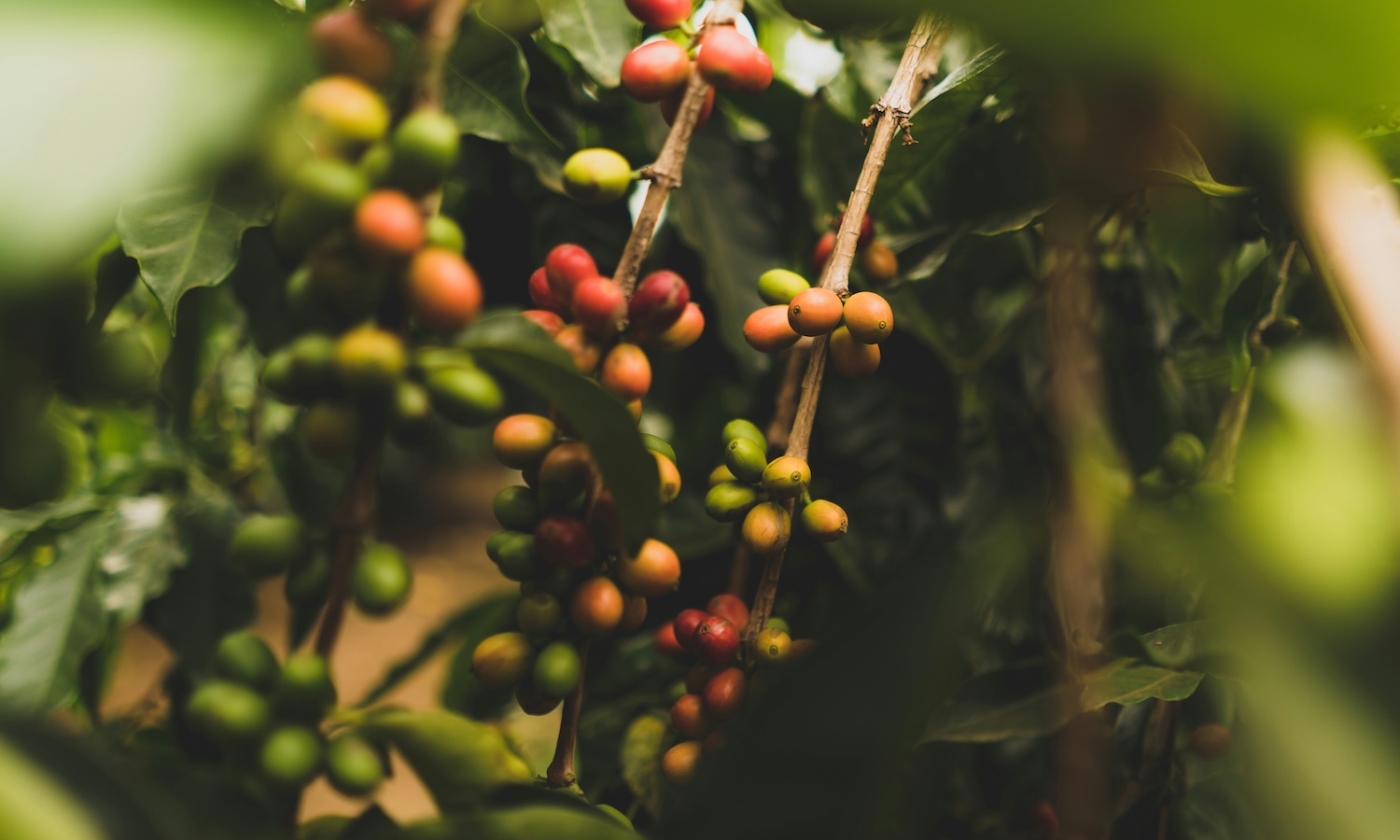
Photo courtesy of Clint McKoy, Unsplash