Water is becoming more scarce across the globe, and the consequences are reaching far beyond the tap. Rivers are shrinking, aquifers are being depleted, oceans are warming, and the pressure is rippling throughout the food systems that depend on them.
“Climate change is a water story. Food security is a water story. Public health, livelihoods, biodiversity, and resilience are all water stories,” says Danielle Nierenberg, President of Food Tank, at the “Water and Blue Foods Summit” at Climate Week NYC, which was held in partnership with the Future Food Institute, Monterey Bay Aquarium, and Venice Climate Week. Click here to watch the full summit replay on YouTube.
The morning began with a discussion of water bankruptcy—when the rate of water consumption and pollution exceeds nature’s capacity to replenish. Kaveh Madani, Director of the U.N. University Institute for Water, Environment and Health, warns that water systems can only absorb so much pressure before they lose their ability to recover.
“Nature at the beginning is generous, resilient, but after a while it loses its resilience and can never go back to where it was,” says Madani. “We are seeing more and more systems getting pushed into that stage and losing their capacity to bounce back.”
Meanwhile, fisheries are struggling to meet global food demand. According to the U.N. Food and Agriculture Organization, just 62.3 percent of marine fish stocks were fished at biologically sustainable levels in 2021. Aquaculture has become a major part of the global food system, producing 51 percent of aquatic animals for human consumption in 2022—surpassing wild capture fisheries for the first time.
But even beyond blue food production, speakers emphasized that water issues are inseparable from the global food system—water is critical at every step of the food supply chain, from irrigating fields to moving food products from processing to plates.
“When we talk about food, it doesn’t come from the air. We have to grow it. You need water to grow your crops, feed your animals, process your food, and move things around,” says David Laborde, Director at the U.N. Food and Agriculture Organization.
That makes protecting the landscapes that supply water essential. Brendan Shane of Trust for Public Land says, “It’s all a system. The water is flowing from the land, so if you want to protect the water, you need to protect and sustainably manage the land.”
Those same connections extend into the ocean, where climate change is reshaping both ecosystems and the seafood people eat. For Chef Barton Seaver, a more sustainable future means looking not only at how seafood is produced but how it is consumed: “So much of the sustainability conversation has been about the producers…but there’s an entire behavioral aspect of the consumers” and their seafood purchasing choices.
Wendy Norden, Director of Science and Global Strategies at Monterey Bay Aquarium, points to changing marine ecosystems as an opportunity to rethink how people eat seafood.
“Invasive species are quite important,” says Norden. “It’s often seen as a threat…but it’s really a story of adaptation. It can be a story of hope.” For example, catching and eating invasive aquatic species—known as invasivorism—is a growing conservation strategy used to help reduce the populations of harmful, non-native animals.
That shift will require consumers to become part of the solution. Jenn Kemmerly, Vice President of Global Ocean Conservation at Monterey Bay Aquarium, says U.S. demand has global consequences because so much seafood consumed in the country comes from elsewhere. “To choose sustainable seafood is the easiest, most in your face, top of mind choice to make right now.”
“We need to connect the research to the policymakers, but unfortunately, what we are seeing is that policymakers are not looking at the science at all,” says Sara Roversi, Founder of the Future Food Institute.
Finance can help turn that hope into action. Sarisher Mann of BNP Paribas points to growing investment in water resilience, but says stronger collaboration is needed between scientists and financial institutions. “Finance doesn’t necessarily speak the language of the science…We need much more translation of that science.”
Cities, meanwhile, can serve as laboratories for solutions. Simone Venturini, Mayor of Venice, says, “If something can work in Venice, it can work anywhere…we need to use Venice as an experimental field to put practice into theory.” Riccardo Luna, Co-Curator of Venice Climate Week, puts the challenge even more simply: “Climate change is here to stay. It’s accelerating. But we have an opportunity….We have the playbook; we need to scale the solutions and take action.”
From sustainable fisheries and aquaculture to watershed protection, climate finance, and city-led experimentation, the solutions are already taking shape. The challenge now is connecting them—and scaling them fast enough to keep water systems, food systems, and communities resilient.
“Water is life. If we don’t start from the essentials, we’re going to miss a big part of the story,” says Roversi.
Explore the entire Food Tank event schedule during Climate Week NYC 2026, and live-stream every Summit on FoodTank.com and Food Tank’s YouTube channel.
Articles like the one you just read are made possible through the generosity of Food Tank members. Can we please count on you to be part of our growing movement? Become a member today by clicking here.
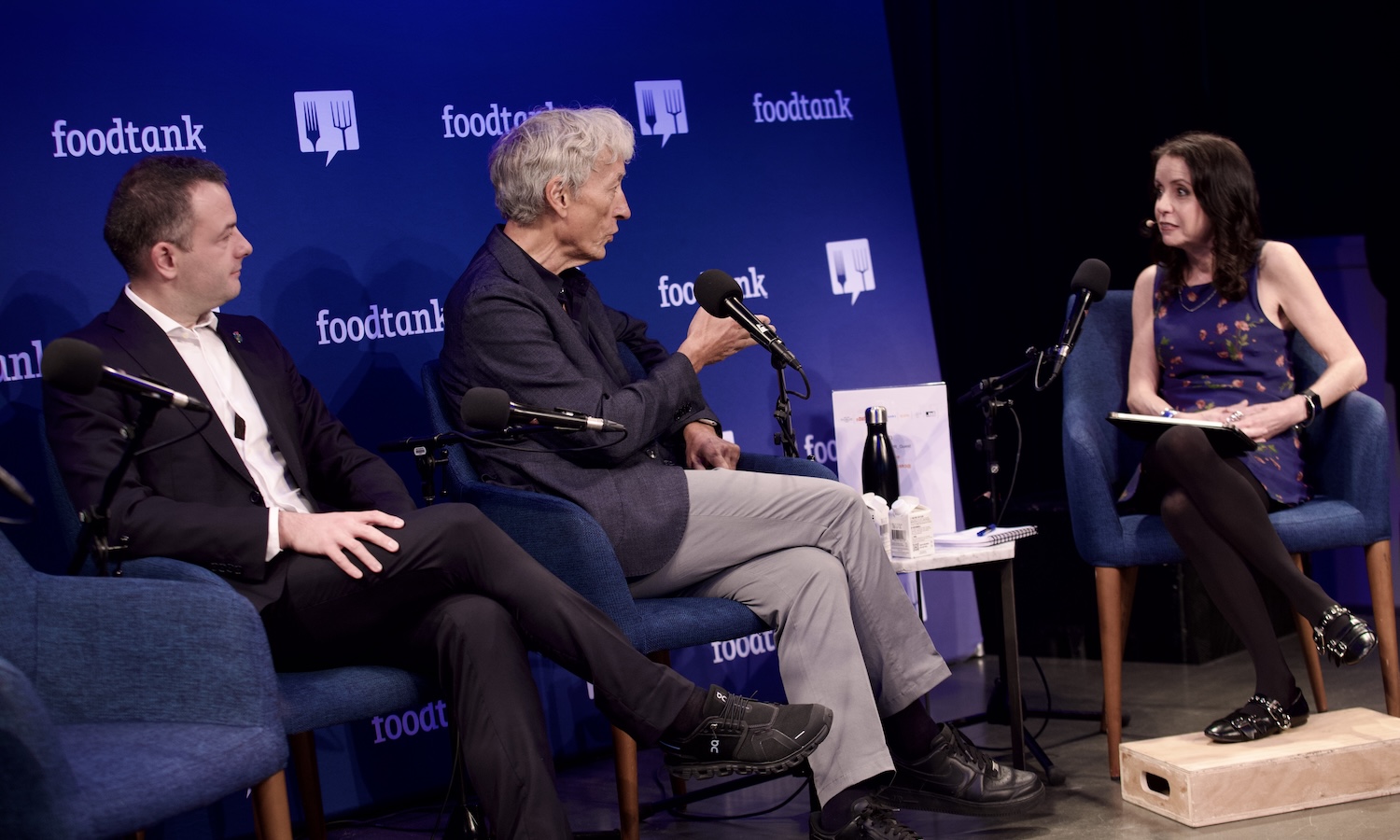
Photo by Ryan Rose for Food Tank.