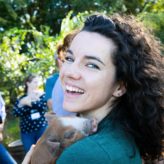
For southeast Iowa farmer Amos Graber, the path to healthier food begins in the soil.
“I firmly believe that if I have healthy soil, then I can raise healthier crops, which in turn will mean healthier livestock,” says Graber. “And then, really the end goal, all this is healthier food for the consumer.”
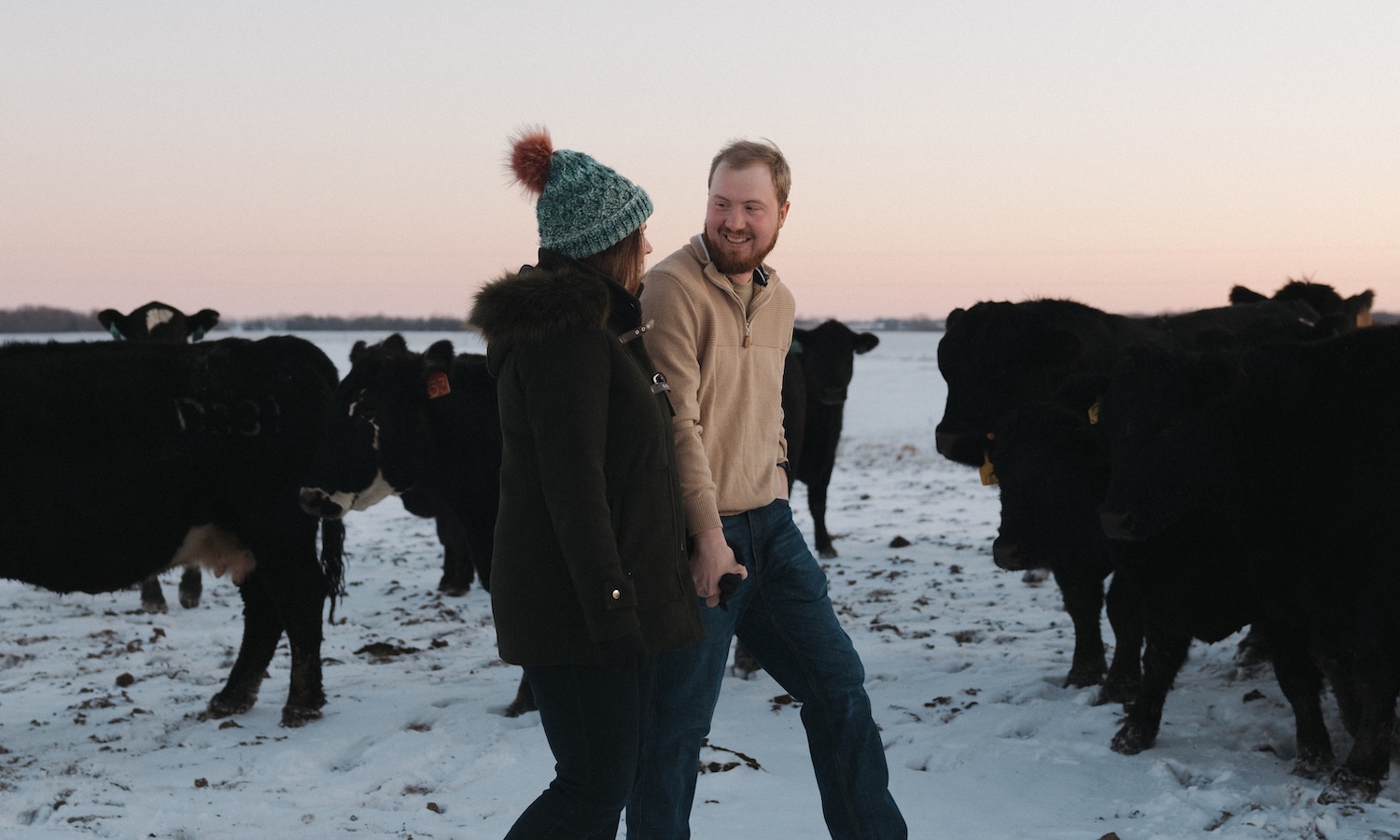
Graber is the seventh generation to farm his family’s land. Alongside his father, he raises cattle in partnership with specialty meat company Niman Ranch and grows a mix of non-GMO and organic crops, including corn, soybeans, oats, alfalfa, and clover hay.
At 25 years old, Graber is experimenting with new practices to continually improve the family farm. He feeds their cattle a mineral mix including yeast and essential oils, which support animal health without synthetic antibiotics, and applies a worm compost extract to corn and soybean fields to help boost nutrient absorption.
But Graber knows that building healthier soil and livestock does not happen overnight. He is focusing on improving his land, not just sustaining it, and that’s a long-term project.
“By going the natural route, focusing on the soil health, it’s a slow grind, but you’ll start seeing the rewards from it,” says Graber. “We’re not here to just be sustainable in the soil. We’re trying to make it better.”
For Graber, this means being willing to question conventional approaches and experiment with alternatives. He says farmers can feel pressure to follow the practices of those around them, even when those methods may not be working financially or environmentally.
“Some farmers, [they say], ‘Well, this is what my neighbor does, and that’s just the only thing we can do around here,'” says Graber. Instead, he tries to think beyond the status quo at Graber Farms, recognizing that there may be more than one way to make a farm successful.
In his area, it is typical for cattle to move between several separate, specialized operations: a cow-calf ranch from birth, a backgrounder farm for early life, a feedlot for later life, and finally a packing plant. But Graber Farms raises its herd for their entire lifetime, from calves to market, and Graber believes this reduces stress on the animals while allowing him greater control over the conditions in which they are raised.
Maintaining a small, independent, sustainable farm in a highly consolidated and specialized industry is difficult, Graber says. For farms like his to survive, he argues that young farmers need more opportunities to build businesses that are diversified rather than dependent on producing a single commodity.
“To stay farming, I think we’re going to have to think outside the box,” he says. “We’re not just going to be able to grow corn one year and soybeans the other year.”
For Graber, that could mean integrating livestock with crop production, producing value-added foods, or finding markets that reward farmers for more sustainable practices, such as Niman Ranch. The network of more than 600 independent U.S. farmers and ranchers offers a guaranteed market for cattle raised to high standards of sustainable and humane farming practices.
Graber sees a growing group of farmers experimenting with cover crops, grazing livestock, and taking other approaches to improving soil health. He says change may happen gradually, but he is encouraged by a willingness among farmers to question conventional systems and try something different.
“To see people’s minds click, even if it’s just on little things, just to start thinking about it…Then [people can] hopefully see where that health of the livestock and health of the crops and health of the soil comes together,” says Graber.
Graber believes the future of farming will depend on rebuilding connections between soil, crops, and livestock, as well as between farmers and eaters. He believes farmers themselves will need to take an active role in shaping that future.
“At the end of the day, government’s not going to save anybody,” he says. “So, it’s up to us as farmers, and the local people, to work together and figure it out.”