
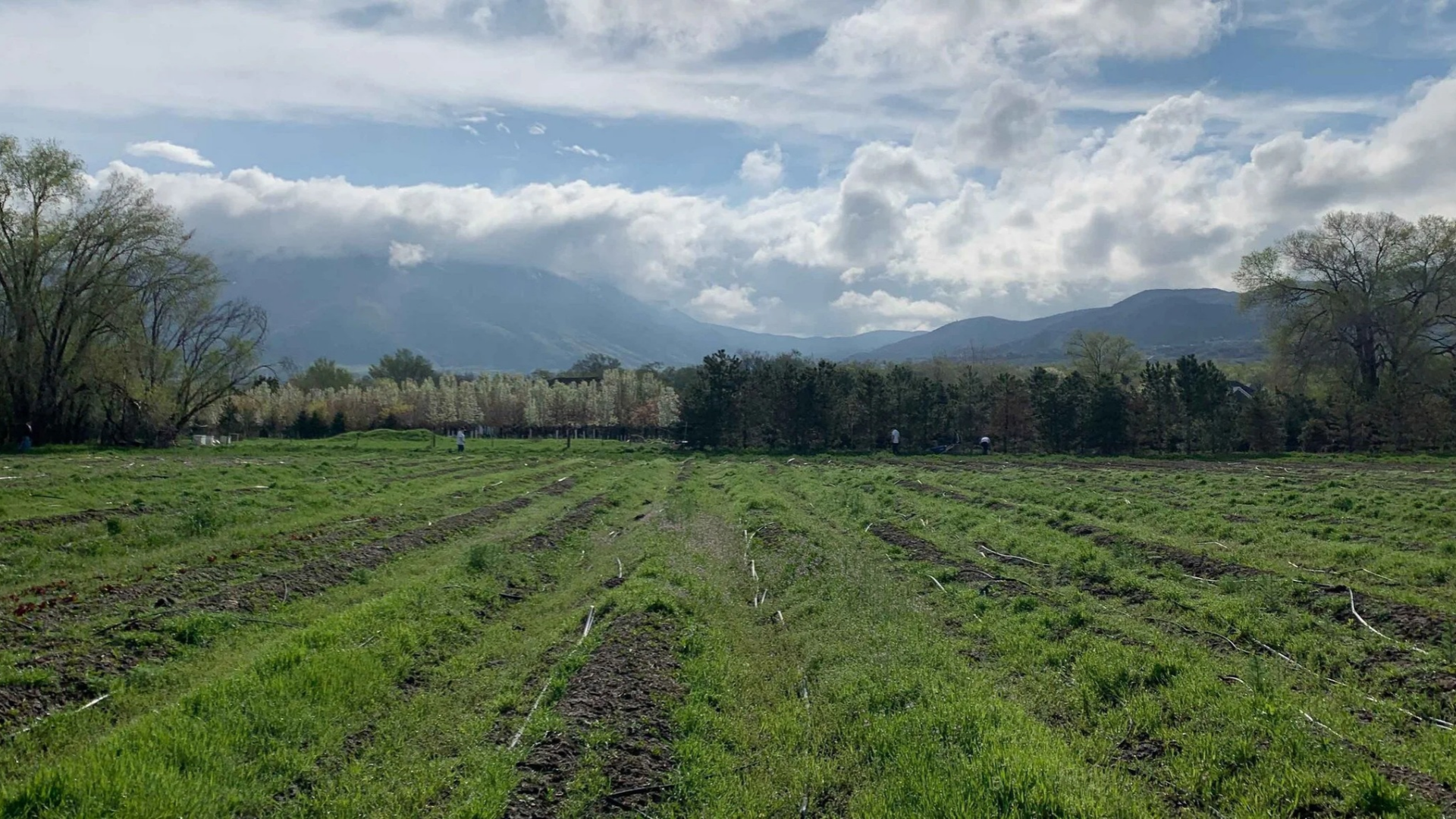
When Albert Betoudji’s family—who are from Chad—visited him in Utah, he took them to his farm. They were surprised to see maize, squash, okra, and other familiar Central African crops growing so far from home.
“My mom was very, very happy,” says Betoudji. “They showed me [how to farm] at a young age, and I continue doing the same thing here in the United States.”
Growing up in Chad, Betoudji’s grandparents taught him to plant seeds and harvest crops when he was just five years old. He would later return home during school breaks to farm with his parents, learning to pay attention to and time planting around the seasons’ climates.
But in 1979, civil war forced Betoudji to leave Chad, and he traveled to West Africa in search of safety. He eventually settled in Burkina Faso, where he earned his high school diploma, studied management accounting at the University of Ouagadougou, and started teaching accounting. And in 1999, he emigrated to the United States.
For several years, Betoudji helped other refugee families settle into life in their new communities—everything from navigating public transportation systems to using American kitchens and toilets. Then in 2005, he began growing food again, starting simply with corn, tomatoes, and peppers in his backyard.
Betoudji soon became one of the first farmers in a Salt Lake County, Utah, community farming effort that would eventually become the International Rescue Committee’s New Roots program, which supports refugee and immigrant farmers as they build sustainable livelihoods through agriculture.
Betoudji was able to expand to growing crops he remembered from home, including okra and roselle, a type of hibiscus native to Africa that cannot fruit in Utah’s cooler climate, but he grows it for its edible leaves.
Eventually, with help from the New Roots staff, he began selling produce to stores and restaurants and at farmers’ markets. There, Betpoudji says, he and fellow refugee and immigrant farmers sell food while sharing the stories behind it—where they come from, how they arrived in the United States, and how to eat the crops they grow.
The income from farming can be limited, Betoudji says, but the work is meaningful: “Working at the farm makes me happy, because it is a physical activity; you use all your body.” This includes not only the arms and legs but the mind, Betoudji says, which “helped me with my mental and physical health.”
The farm also connects Betoudji to a community of people who, like him, have arrived in Utah from different places and backgrounds: “I came to Utah as a refugee, and I met other refugee families with different backgrounds, different cultures, but we farm together.”
For him, these relationships are at the heart of New Roots: The name reflects the experience of people who have left one place and built lives in another, bringing their knowledge, traditions, and foodways with them.
“We come from different backgrounds, but we farm together in the same place, and we grow food for family and for community,” says Betoudji.
Watch Betoudji’s story below and find others from our farmer storytelling events on Food Tank’s YouTube channel.
This article is part of Food Tank’s ongoing Farmer Friday series, produced in partnership with Niman Ranch, a champion for independent U.S. family farmers. The series highlights the stories of farmers working toward a more sustainable, equitable food system. Niman Ranch partners with over 500 small-scale U.S. family farmers and is committed to preserving rural agricultural communities and their way of life.
Articles like the one you just read are made possible through the generosity of Food Tank members. Can we please count on you to be part of our growing movement? Become a member today by clicking here.