

A version of this piece was featured in Food Tank’s newsletter, released weekly on Thursdays. To make sure it lands straight in your inbox and to be among the first to receive it, subscribe now by clicking here.
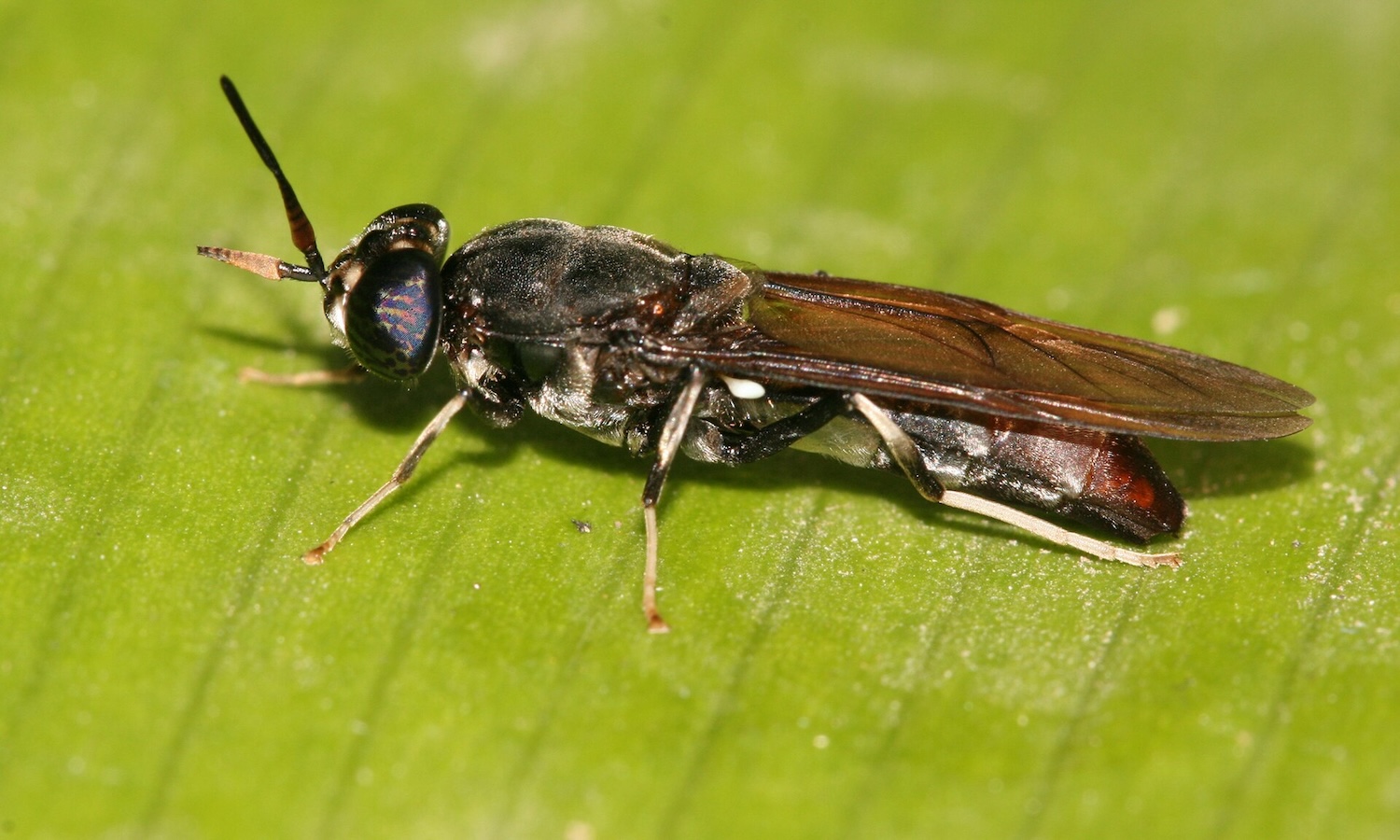
I want to share something that’s really been bugging me lately. We don’t always take insects—black soldier fly larvae (BSFL), in particular—as seriously as we should in farming.
Earlier this year, when I was doing ground-truthing research in Kenya, our partners at the International Centre of Insect Physiology and Ecology (icipe) shared their research on how black soldier fly larvae can be used to drive the development of a more sustainable circular economy. It’s really fascinating stuff.
To be honest, I have always been skeptical of BSFL. It seemed like something that worked well in research stations but not actually on farms. But I think changing one’s mind is one of the greatest superpowers we have as humans. And my visit to icipe helped me understand how useful BSFL can be for farmers.
The director-general of icipe, Abdou Tenkouano, compared the larvae to municipal workers “cleaning the cities by taking away all the organic refuse…and then they turn that into high-value products.”
If you’re a home composter, you might already be familiar with black soldier fly larvae, which have been shown to efficiently convert organic wastes into high-quality essential nutrients.
But we can’t confine them to backyards, because these larvae have pretty wide-ranging benefits across the food chain. That nutrient-production is a food waste solution, giving new life to scraps by producing protein-rich feeds for pigs, cows and fish. For poultry, feed made with larvae’s help can actually increase animals’ beneficial gut bacteria and cut down on the need for antibiotics, icipe research shows.
Black soldier fly larvae also produce an organic fertilizer called frass, which has been shown to increase crop yields by as much as 27 percent over similar artificial fertilizers!
And just like farming livestock in certain agricultural systems, rearing insects is becoming a pathway toward employment and resilient livelihoods in places like Kenya. I was particularly struck by these findings—that certain insects don’t just have the ability to help the land but also the people who live on it.
Of course, like any solution, these insects are not a silver bullet. No one approach will fix everything—but black soldier fly larvae can give a much-needed boost to a variety of food system approaches we’re already taking. And with such a powerful partner right under our feet, how can we continue to ignore them?!
“We cannot substitute entirely for agrochemicals,” Abdou tells me, “but we have a combination of options that can reduce the amount of destruction that we could be causing to the environment by using purely chemical approaches.”
We’re talking about black soldier fly larvae because they’re worth paying attention to on their own, but I’m also using them to illustrate a larger point.
To be quite frank, I know that black soldier fly larvae are not quite as pleasing to look at as ‘cute’ animals like butterflies and bumblebees, and we sometimes tend to ignore really beneficial plants and animals that we find uncomfortable. But black soldier fly larvae are a good example of how this only ends up hurting us in the end, because we lose out on the exact benefits we’re talking about here.
Food systems transformation means getting down into the dirt, into the nitty-gritty, and working alongside ecosystem partners like insects to help rebuild these complex ecosystems!
Today on the Food Talk podcast feed, we’re dropping a conversation I had with Abdou Tenkouano of icipe about not just insects but a wide variety of solutions to build more resilient food systems. I hope you’ll give it a listen:
Articles like the one you just read are made possible through the generosity of Food Tank members. Can we please count on you to be part of our growing movement? Become a member today by clicking here.
Photo courtesy of Geoffrey Moffett, Unsplash