
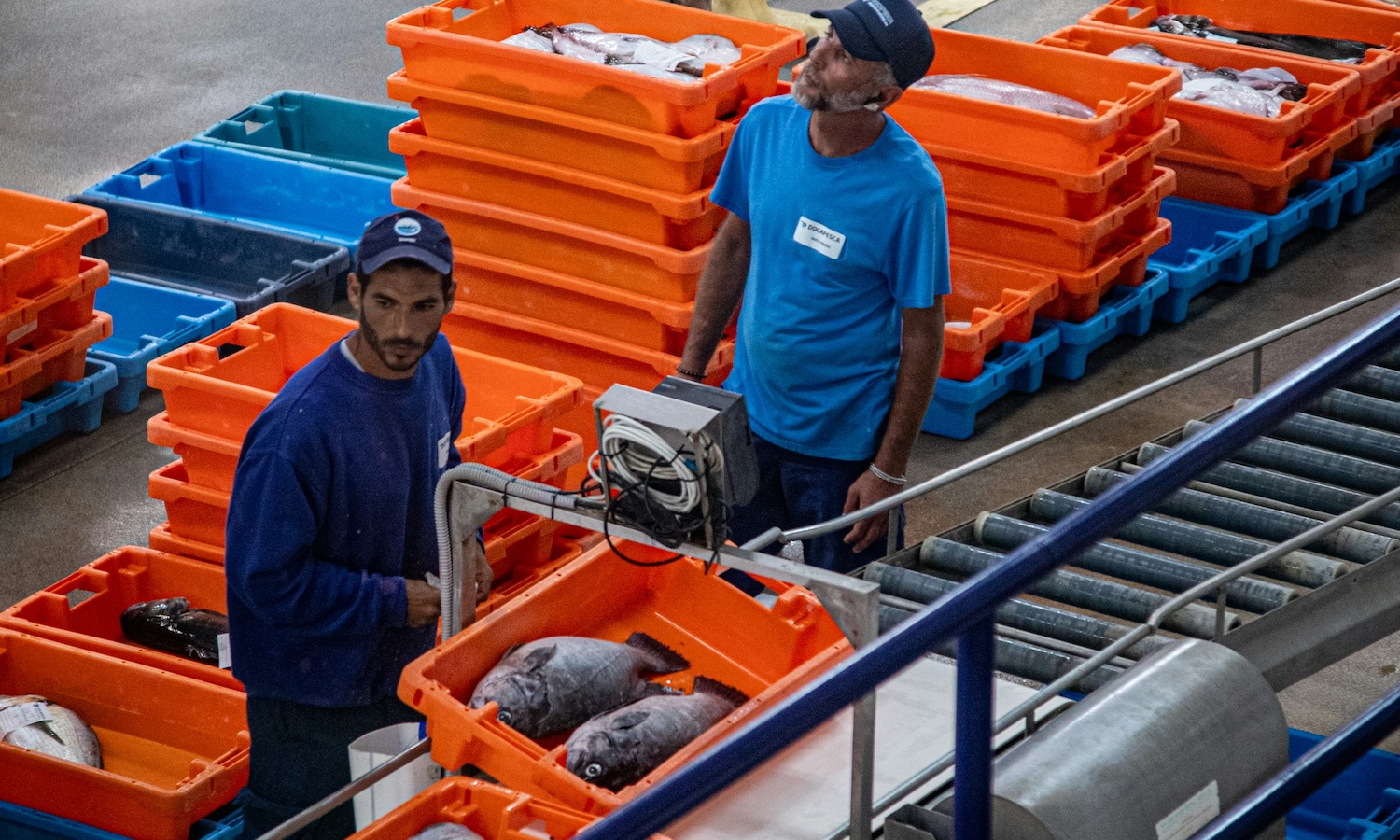
The food and agriculture sector employs 1.4 billion people—more than any other in the world. It’s also the most exploitative, according to a new report from the International Panel of Experts on Sustainable Food Systems (IPES-Food). But stronger labor protections and worker-led movements can help build food systems that work for those who sustain them.
Roughly two out of every five people in the global workforce depend on food and farming systems for their livelihoods. But whether they are in a field, on a boat, in a processing facility, or a supermarket, many lack the protections needed to keep them safe.
Informal employment agreements, legal loopholes, and systemic discrimination make food systems workers some of the most vulnerable on the planet. The climate crisis, expanding gig economy, and corporate consolidation are adding new layers of uncertainty and risk.
“This report confirms what we’ve seen for many years: That there’s widespread exploitation throughout these systems,” says Susan Longley, a labor rights expert and member of the external Advisory Group for IPES-Food.
The authors highlight a stark gender imbalance. One in three food systems workers makes below a living wage with women earning, on average, 50 percent of what men do. Women are also more likely to engage in unpaid care work, from cooking to cleaning, which makes up an estimated 12.5 billion combined hours of labor per day. This often prevents them from holding full-time jobs, resulting in lower wages and weaker protections.
“One of the things that is fairly central is our insistence that care be centered in the way that we think about food and food work,” says Raj Patel, a member of IPES-Food’s Expert Panel. “That means that we need to recognize care [and] we need to reduce the amount of it that is disproportionately on women’s shoulders.”
Migrant workers also face a uniquely precarious position. Despite the essential role they play in food and agriculture systems, they face “some of the highest rates of workplace abuse,” the report states.
The authors reveal that migrant workers are three times more likely to experience forced labor and they are 70 percent more likely to die on the job compared to the general population. They are also “routinely victims of wage theft,” says Olivier De Schutter, Co-Chair of IPES-Food’s Expert Panel. The International Labor Organization estimates that, collectively, migrant workers lose US$31 billion in underpaid wages every year.
The report makes clear that the exploitation experienced by food workers is no accident. It is built into the systems and structures that shape how food is produced, processed, prepared, distributed, and sold.
Patel sees efforts to upend these harmful power dynamics, but notes that “we are at the very early stages of the transformations that we need.”
Outlining 12 levers for change, the authors call for legislation that guarantees protections for workers, regardless of status, and demand accountability for employers guilty of labor abuses. And at the heart of solutions are the workers, who are empowered through stronger trade unions, collective bargaining, and broad cross-movement coalitions.
“The key to resolving a lot of these problems is through building worker power,” Longley says.
Articles like the one you just read are made possible through the generosity of Food Tank members. Can we please count on you to be part of our growing movement? Become a member today by clicking here.
Photo courtesy of Bernd Dittrich, Unsplash