This article is part of Food Tank’s primer series, “Food Tank Explains.” Each installment unpacks the ideas, innovations, and challenges shaping today’s food and agriculture systems, offering clear insights into complex topics. To explore more articles in the series, click here.
Food labels provide information about food products and their contents. Most identify the product and list its ingredients and net quantity. Labeling requirements generally apply to packaged and prepared foods, although the information required—and how manufacturers must present it—varies across countries and food categories.
Food labeling has expanded beyond identifying a package’s contents. Today, labels communicate information about nutrition, allergens, food safety, preparation and storage, production practices, and other product characteristics.
The U.N. Food and Agriculture Organization (FAO) identifies nutritional information as a central feature of food labels. Nutrition labels typically provide a product’s energy content and levels of nutrients including carbohydrates, protein, fat, sugars, sodium, vitamins, and minerals, typically reported per serving or specified quantity.
Labels also communicate food safety information. Allergen disclosures identify ingredients that may trigger reactions, while storage, preparation, and handling instructions help consumers use foods safely. Date markings such as ‘sell by’ and ‘best before’ can provide information about a product’s safety or quality over time. But date labeling can also be confusing to consumers, leading to safe food going to waste.
According to the European Commission and the FDA, food labels are intended to help consumers make informed choices by explaining what a product contains and allowing them to assess dietary needs and compare products.
They aim to provide clear comprehensible information to enable efficient decision-making at the point of sale, describes the World Health Organization (WHO). Data from the Ehrenberg-Bass Institute shows that the majority of in-store shoppers spend an average of 13 seconds evaluating a brand before purchasing, with most decisions taking less than 10 seconds.
Food-labeling requirements vary globally. Research published in Frontiers in Public Health has identified mandatory nutrient-declaration policies for processed foods in at least 95 countries, with differing requirements for front-of-package labels and health and nutrition claims.
The FAO and WHO develop international standards through the Codex Alimentarius Commission, including baseline principles for labeling prepackaged foods that can inform national regulations.
In the United States, the FDA and U.S. Department of Agriculture (USDA) share primary responsibility for food labeling. Federal regulation dates to the Pure Food and Drug Act of 1906, which targeted adulterated and misbranded foods. The Federal Food, Drug, and Cosmetic Act of 1938 expanded labeling requirements, while the Nutrition Labeling and Education Act of 1990 established mandatory nutrition labeling for most FDA-regulated foods.
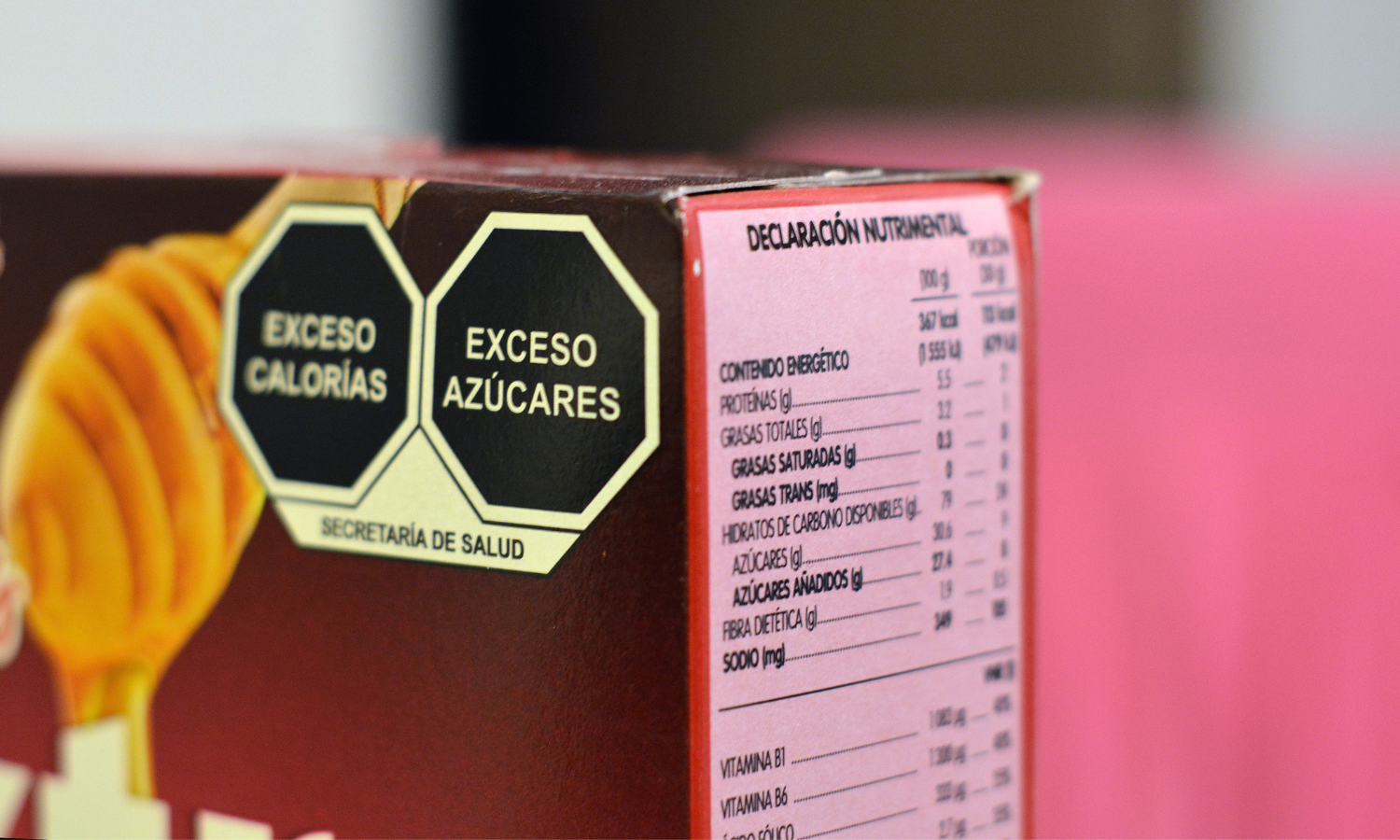
The European Union takes a more centralized approach, establishing common labeling requirements across its member states. The United Kingdom’s voluntary ‘traffic light’ system uses green, amber, and red to identify nutrient levels, while Chile requires black, octagonal ‘high in’ warnings on products exceeding thresholds for calories, sugar, sodium, or saturated fat.
As food labels communicate more information, they can also become more difficult to interpret. Consumers must navigate nutrition and ingredient information alongside claims, certifications, warnings, and other disclosures, making relevant information harder to identify and understand.
Government labeling resources often target producers and use technical language that consumers may struggle to interpret, Laurie Beyranevand, Director of Vermont Law School’s Center for Agriculture and Food Systems and Professor of Law, tells Food Tank.
And because the pages contain technical jargon, consumers may not always understand what they read.
A study published in the Journal of Nutrition Education and Behavior finds that 89 percent of respondents believed they understood date labels, but just 24 percent correctly identified their meaning.
“I think there are real trust issues with our food supply. Having access to information and having clarification of what those things mean is really important,” Dr. Roni Neff, Professor at Johns Hopkins University Bloomberg School of Public Health Center for a Livable Future, tells Food Tank.
Confusion around date labels can also contribute to food waste. A European Commission study estimated that confusion and other practices surrounding date marking contribute to approximately 10 percent of food waste in the EU. Consumers may discard food that remains safe to eat after misinterpreting ‘best by,’ ‘sell by,’ or ‘use by’ dates.”
Public health organizations increasingly identify food labels as a potential policy tool. The World Health Organization (WHO) identifies nutrition labeling as one approach to helping consumers make healthier food choices, while UNICEF reports growing evidence that nutrition labels can improve consumers’ understanding of nutritional quality.
But labels can only serve that purpose if consumers can understand and use the information they provide. WHO recommends that front-of-package labels present nutrition information in a convenient and readily understood format, while the U.N. Food and Agriculture Organization (FAO) emphasizes the need for clear, reliable labeling as global food supply chains increase the distance between consumers and producers. For policymakers, Beyranevand says, that means prioritizing accessibility and comprehensibility when developing labeling requirements.
Articles like the one you just read are made possible through the generosity of Food Tank members. Can we please count on you to be part of our growing movement? Become a member today by clicking here.
Photo courtesy of Wikimedia