
The total number of Iowa farms recently increased for the first time in 15 years, according to the U.S. Census of Agriculture. Still, many farmers struggle to make ends meet. The state’s average farm size is 345 acres, and Iowa State University reports that this is generally not large enough to support an individual—especially not a family. Only 40 percent of Iowa producers worked exclusively on their farm in 2022, while 41 percent worked 200 days or more off the farm.
The Wilson family of northwestern Iowa is doing what might seem impossible to many: all seven members, comprising four families, work full-time on the 660-acre Seven W Farm. They attribute their success to going against standard practice.
“We’ve been called the crazy ones for a long, long time,” says Dan Wilson. “I guess we’re kind of bold, and we really don’t care what our peers think of us. And that’s refreshing because if you’re totally wrapped up in peer pressure, it gets pretty hard to change.”
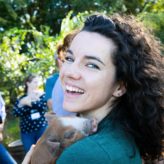
Dan and his wife, Lorna, grow Certified Organic corn, soy, rye, barley, oats, and more with their son Jaron. Their son Torray’s family manages dairy cattle. And their daughter April raises chickens and pigs. The family fits the typical, idyllic vision of an American family farm: multiple generations working together to continue the family legacy. But “we’re definitely the minority,” says April.
Over the past few decades, the family lost about half of their neighbors as farmland consolidated, which has directly impacted their rural community. There were four school districts in the area when Dan was growing up. Now that his grandchildren are school-aged, that same area comprises one, significantly smaller district. Today, their property is surrounded by Concentrated Animal Feeding Operations, known as CAFOs, which raise hogs indoors with tightly controlled environments and limited mobility.
“It’s affected our environment drastically,” says Dan. “We live in constant stink now when we used to have clean air.”
Years ago, after hearing from the family’s veterinarian that they “needed to jump on current and modern ways,” the Wilsons briefly tried a confinement barn, says Dan. It worked financially, “but we just absolutely hated it. It did not meet our goals in life. We didn’t like the pigs confined. We didn’t like the smell.”
April recalls that their pigs’ behavior was dramatically different in confinement: “It was like they just dumbed down. You had to push them and pull them everywhere you went.”
Dan and April are now keeping the family tradition of pasture-raising pigs, which Dan’s father started in the 1960s. Their pigs are raised outdoors, without antibiotics or hormones, for the specialty meat company Niman Ranch. This is how they keep the whole family on the farm, says Dan.
“Livestock is the total reason we can all be here. If it weren’t for all the livestock operations, if we just had to make it on row crops, we couldn’t sustain this many people,” says Dan.
Milk and pork producers are typically subject to volatile market prices. However, the Wilsons have a guaranteed market for their products by raising pork for Niman Ranch and milk for Organic Valley. This means a steady, reliable source of income despite current market conditions.
“I would not be here without Niman,” says April. “Because of them, I was able to have enough income in the beginning, because I knew I had a guaranteed market for my pigs right away when I came home. It’s been enough of a sustainable operation that it keeps us going.”
Specialty markets also allow the Wilsons to farm how they want: sustainably, humanely, and relatively small-scale. And locally, they have seen a shift toward more sustainable farming practices. Today, the Wilsons communicate with almost a dozen other Certified Organic farmers in their region, and they are just starting to see cover crops come into nearby fields. But Dan says the food industry is moving “not nearly fast enough.”
“People are still of the mindset of, ‘got to get bigger, got to have more land, got to have more fertilizers so that everything goes more, more, more, bigger, bigger, bigger,’” says April. “That has to shift. And it’s starting to, but it’s a slow change because it was a slow change to get there.”
April and Dan both emphasize that running a financially and environmentally sustainable farm means constantly innovating and having an open mind: “Regularly, we sit down and discuss, how can we gain more income from the size that we are? What can we do? How do you gain more from less?” says Dan.
“Keeping everything sustainable and keeping it going is our goal. If it looks different in 50 years, then it looks different in 50 years,” says April. “It’s not necessarily staying with one thing but trying a variety of things to see what’s going to make it work.”
April recently shared her story at Climate Week NYC: A Night of Storytelling Honoring Our Farmers. Watch her story and others on Food Tank’s YouTube channel.
Articles like the one you just read are made possible through the generosity of Food Tank members. Can we please count on you to be part of our growing movement? Become a member today by clicking here.
Photo courtesy of Niman Ranch