In Virginia, the JK Community Farm is growing 100 percent of its food to donate to the state’s food-insecure population. This model aims to address nutritional and supply gaps in current food pantry distribution chains.
The 150-acre regenerative operation works with a network of community partners, including food kitchens such as Loudoun Hunger Relief, Food for Others, Arlington Food Assistance Center, and DC Central Kitchen, to get produce from field to table as quickly as possible. “In many cases, food pantry partners are picking up and distributing our food on the same day it is harvested, often straight out of the field,” the farm’s Executive Director Samantha Kuhn tells Food Tank.
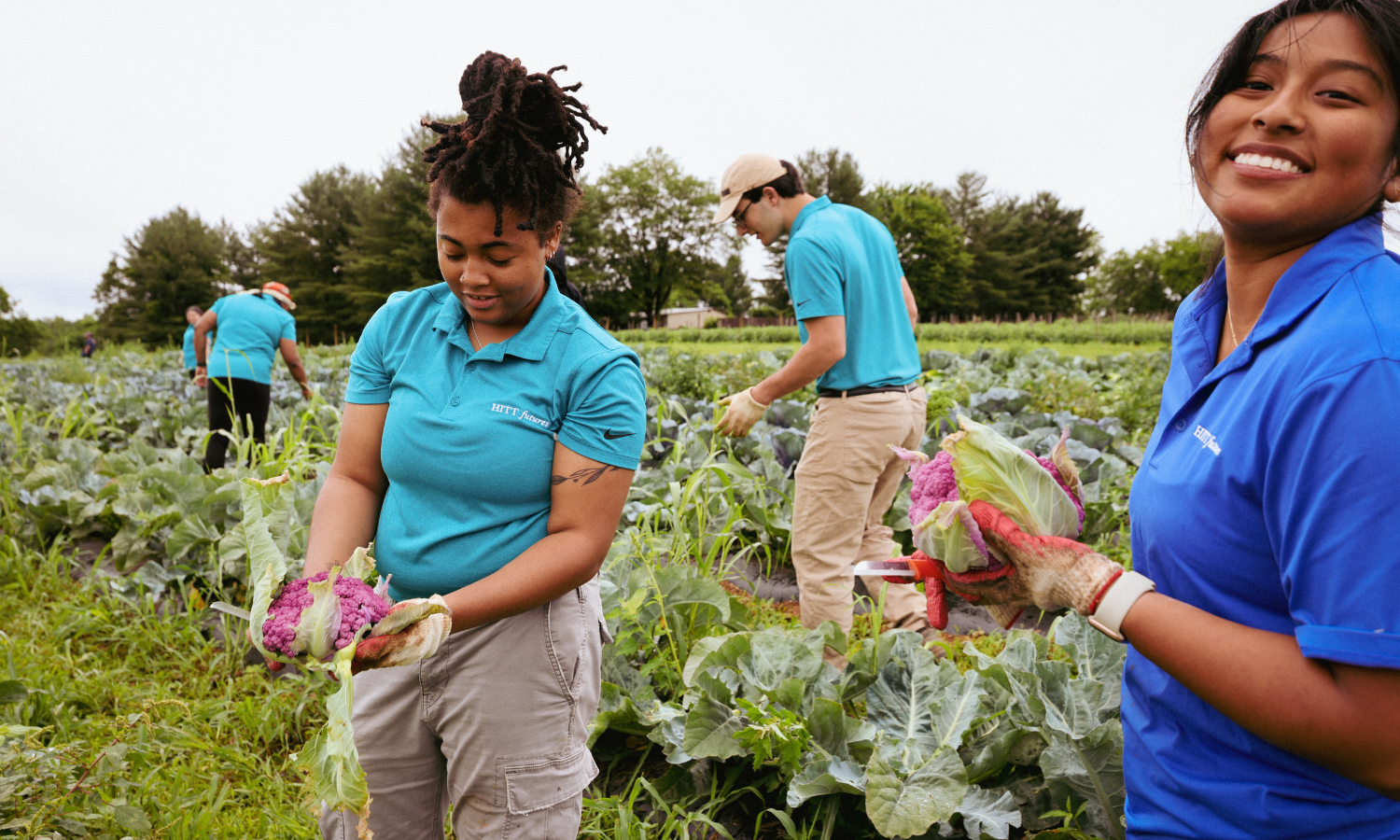
Through this network, the JK Community Farm has grown and distributed close to 1.5 million pounds of organic produce to food-insecure neighbors. The farm operates with a staff of just three people, relying heavily on its volunteer community to plant and harvest. Staff members work alongside volunteers in the fields, providing clear instruction and creating an environment where people of all ages and skill levels—from complete beginners to experienced gardeners—feel capable and valued.
Since its founding in 2018, the farm has welcomed over 32,768 volunteers. Each year, roughly 4,500 people volunteer through individual shifts, internships, and corporate group projects. Kuhn explains this model helps keep production costs low while maintaining high output and quality.
As a regenerative farm, the JK Community Farm uses no chemical fertilizers or pesticides in its production model. “The quality of food we provide is something that is uncommon in emergency food settings,” says Kuhn.
Research from the National Library of Medicine notes that many food pantries receive surplus, waste, or gleaned produce and protein from grocery stores and for-profit farms and markets, supplemented by shelf-stable processed items. While that food serves an important purpose, the produce and protein are often already days or weeks past harvest and less nutritionally dense, while the packaged goods lack the nutrients found in fresh whole foods.
That same research states that in the United States, “[food bank] parcels are often insufficient in dairy, meat, FV [fruits and vegetables], and micronutrients” including calcium, iron, and vitamins A and C.
The JK Community Farm operates on a universal access model, providing fresh food through partner pantries at no cost to anyone who needs it, regardless of financial circumstances. According to Kuhn, demand for fresh food has been growing.
Data from Feeding America reveal hunger has increased by 4.4 percent since 2020. There are now more than 1 million food-insecure Virginians, about 12.1 percent of the state’s population. They also estimate that roughly 39 percent of those food-insecure Virginians earn more than 200 percent of the federal poverty level, making them ineligible for the Supplemental Nutrition Assistance Program (SNAP) and some other nutrition assistance programs.
The JK Community Farm also places a strong focus on youth education. Through its partnership with FoodPrints DC, it developed a food education curriculum that offers robust hands-on activities and field trip opportunities for visiting students. By participating in the harvest and knowing their work feeds local families, students learn how they can make a tangible difference in their community.
“Many children are growing up far removed from how food is grown, while highly processed food is heavily marketed to them. We believe it is important for kids of all backgrounds to understand where real food comes from, how it is grown, and how it supports their bodies,” says Kuhn.
The JK Community Farm believes that when children have an opportunity to connect to their food system, they will learn to love it.
“I have had a child introduce himself as an ‘indoor kid’ when he arrived, and by the end of the morning he was fully immersed in the farm, eager to help and explore,” Kuhn continues.
To meet the community’s needs, the JK Community Farm likewise conducts annual surveys with both pantry partners and their clients. Partner feedback gathers data on client preferences, storage capacity, logistics, packaging, and food waste, helping improve distribution and prevent waste. Client assessments evaluate dietary patterns, produce and protein consumption, cultural food preferences, health challenges, and barriers to access.
This feedback allows the farm to grow culturally appropriate foods families already know how to prepare while providing education about unfamiliar varieties. The goal is to deliver nutrient-dense food that supports health, respects cultural traditions, and can be easily used by the families served.
“People should not have to choose between eating healthy food and paying for electricity. Showing families that this food is grown intentionally for them, rather than as an afterthought, reinforces dignity, care, and the belief that everyone deserves access to the highest quality food possible,” says Kuhn.
Articles like the one you just read are made possible through the generosity of Food Tank members. Can we please count on you to be part of our growing movement? Become a member today by clicking here.
Photo courtesy of the JK Community Farm